'Drop Hillel' Movement Gains Foothold at The New School
Student Senate defunds Hillel in first in the country vote
'Drop Hillel' Movement Gains Foothold at The New School
Student Senate defunds Hillel in first in the country vote
- 1. The New School’s Senate Votes to Defund Hillel
- 2. The Student Senate's Action
- 3. The Allegations Against Hillel
- 4. ‘Totally Made Up’
- 5. The New School’s Hypocrisy
- 6. Laying the Vote’s Groundwork
- 7. The Precedent
- 8. Hillel Mobilizes Legal Defense
- 9. Letter Supporting The New School’s Student Senate’s Move Against Hillel
- 10. Profiles
Share:

The New School’s Senate Votes to Defund Hillel
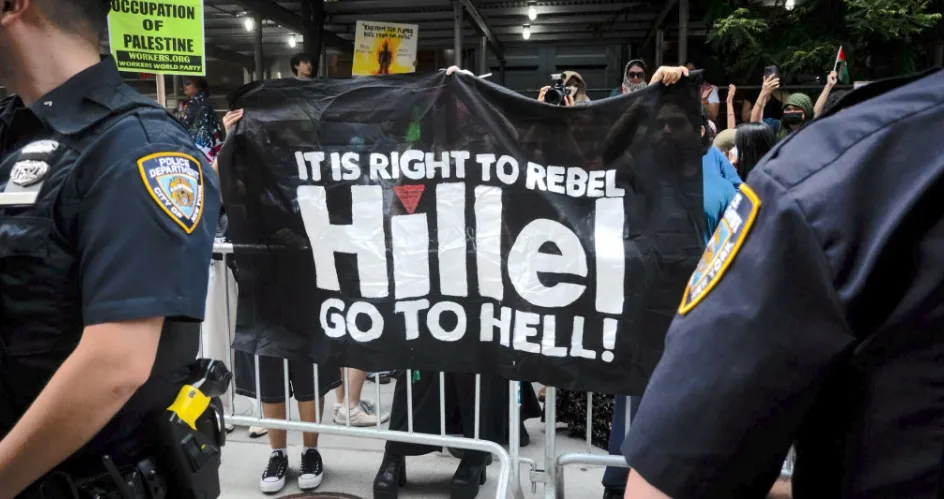
In May 2026, The New School’s University Student Senate voted to strip the Jewish organization Hillel of its funding by declaring it a group “not in good standing.” The move was the first time an American university student government officially defunded and severed ties with a campus Hillel chapter.
Hillel is a leading international Jewish student organization with nearly 850 chapters in the U.S. The New School’s chapter is part of a network centered at the nearby Baruch College that serves students at nine colleges.
The incident made national headlines, as it was the first time a U.S. university’s student government voted to defund a campus Hillel chapter, setting a precedent that has already seen consequences.
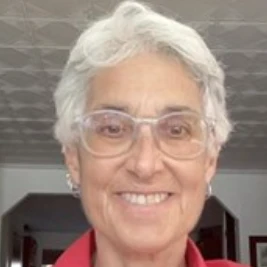
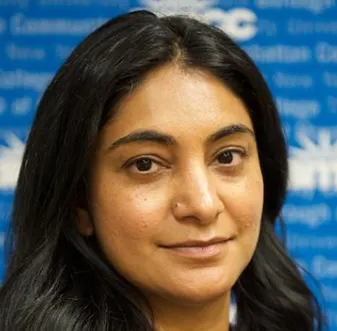
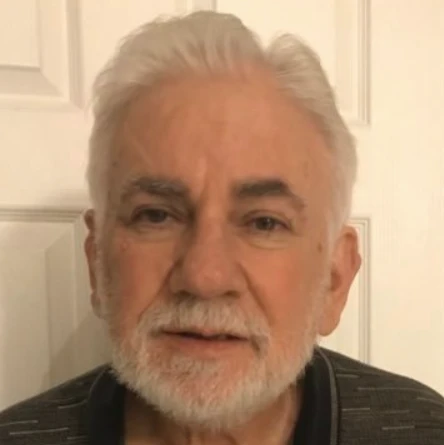
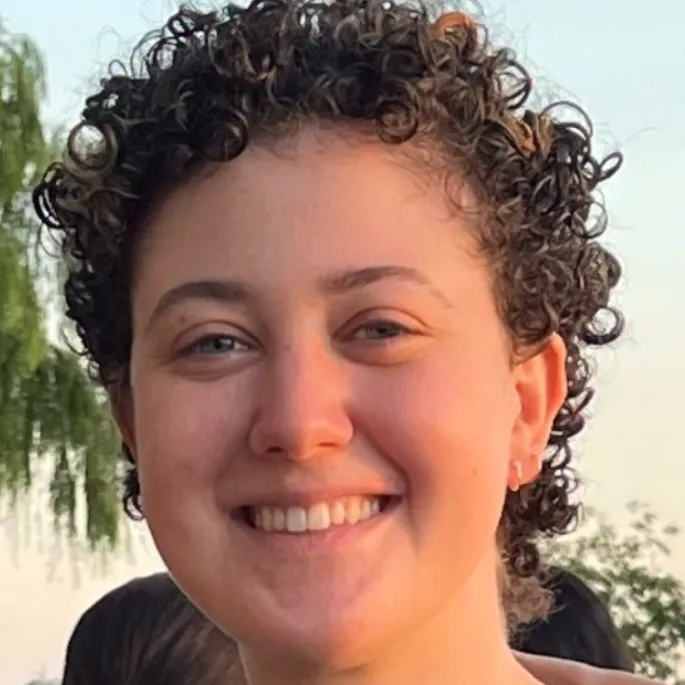
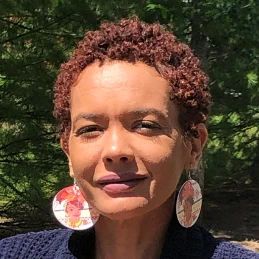
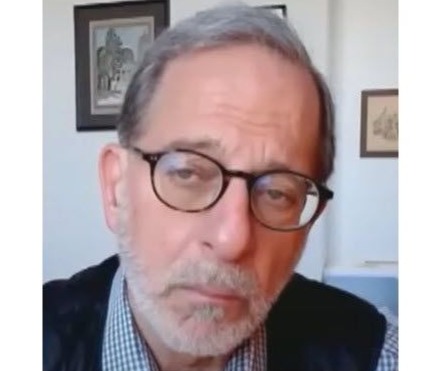
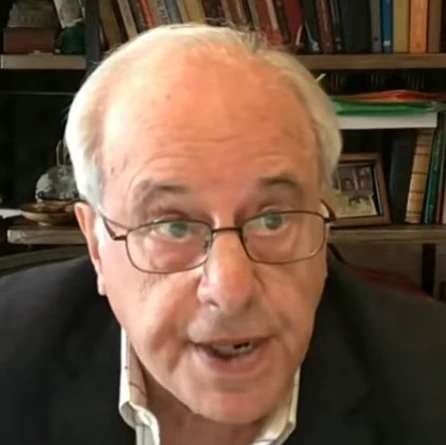
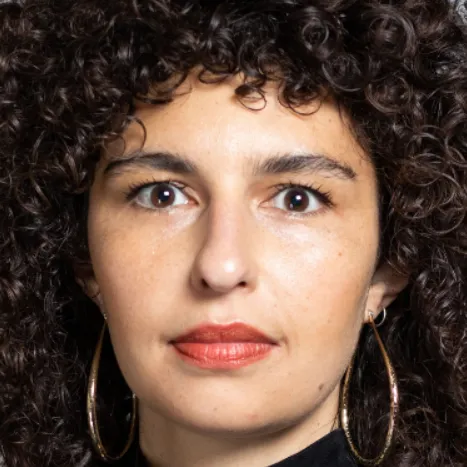
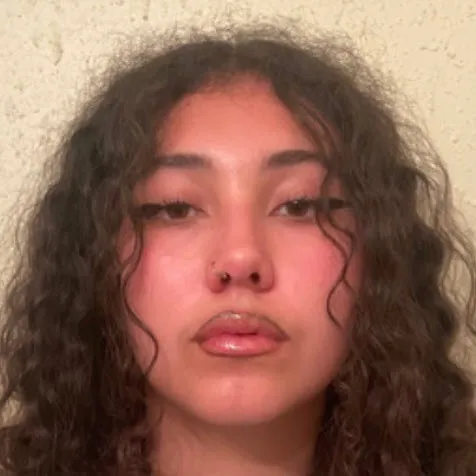
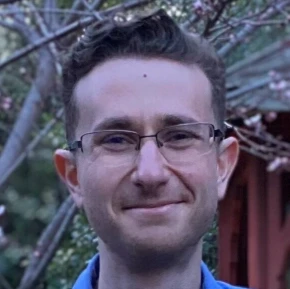
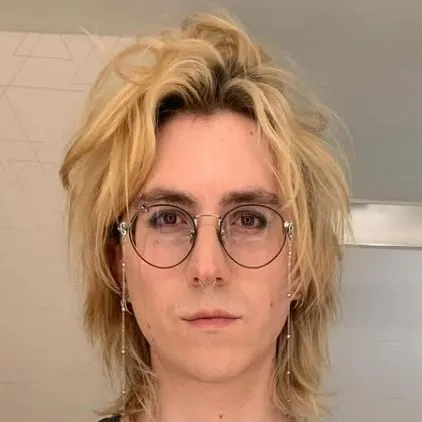
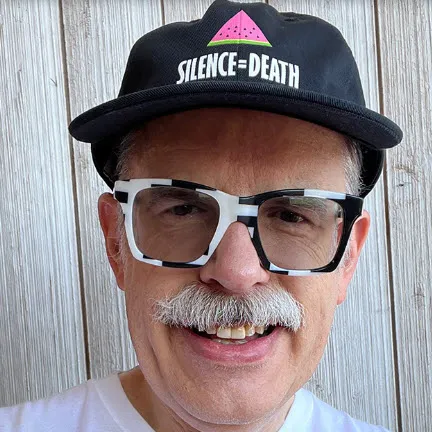
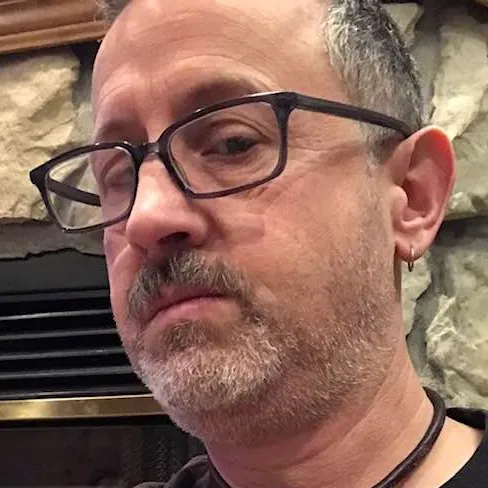
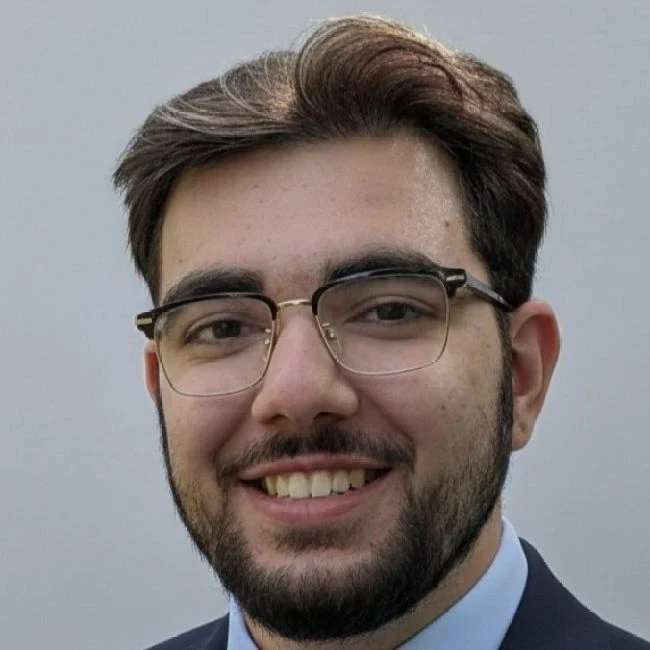
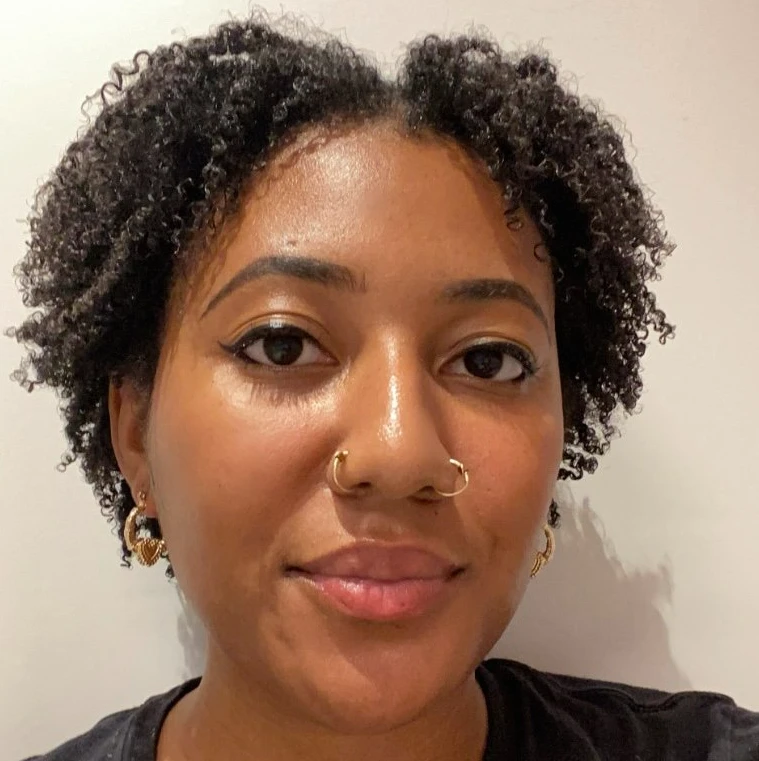
Already more than 330 anti-Israel activists, including faculty at the New School and other universities, have signed a letter supporting the resolution and decrying the administration’s response.
See below Canary Mission profiles of all the signatories

-1080x1350.webp)
-1080x1350.webp)
-1080x1350.webp)
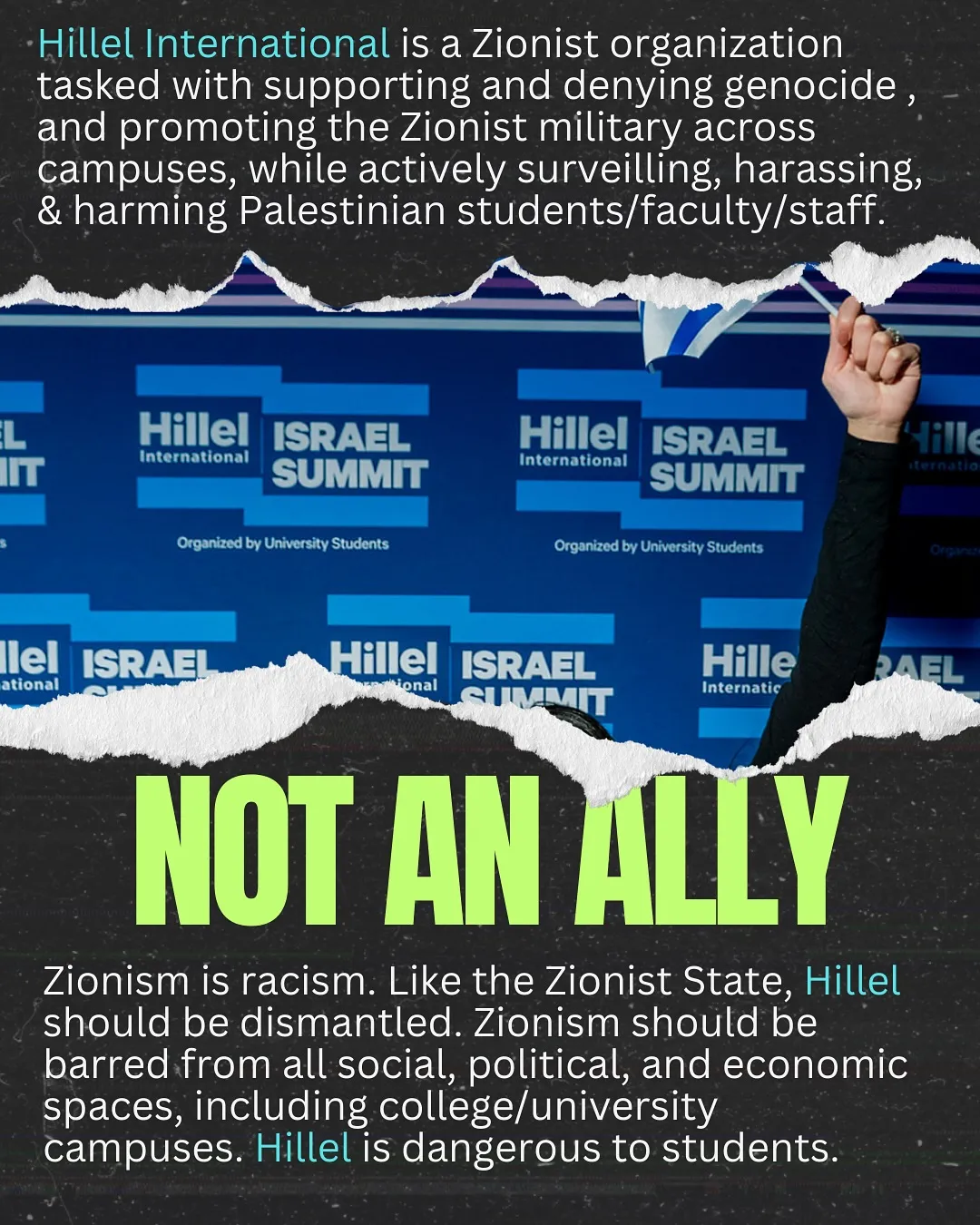
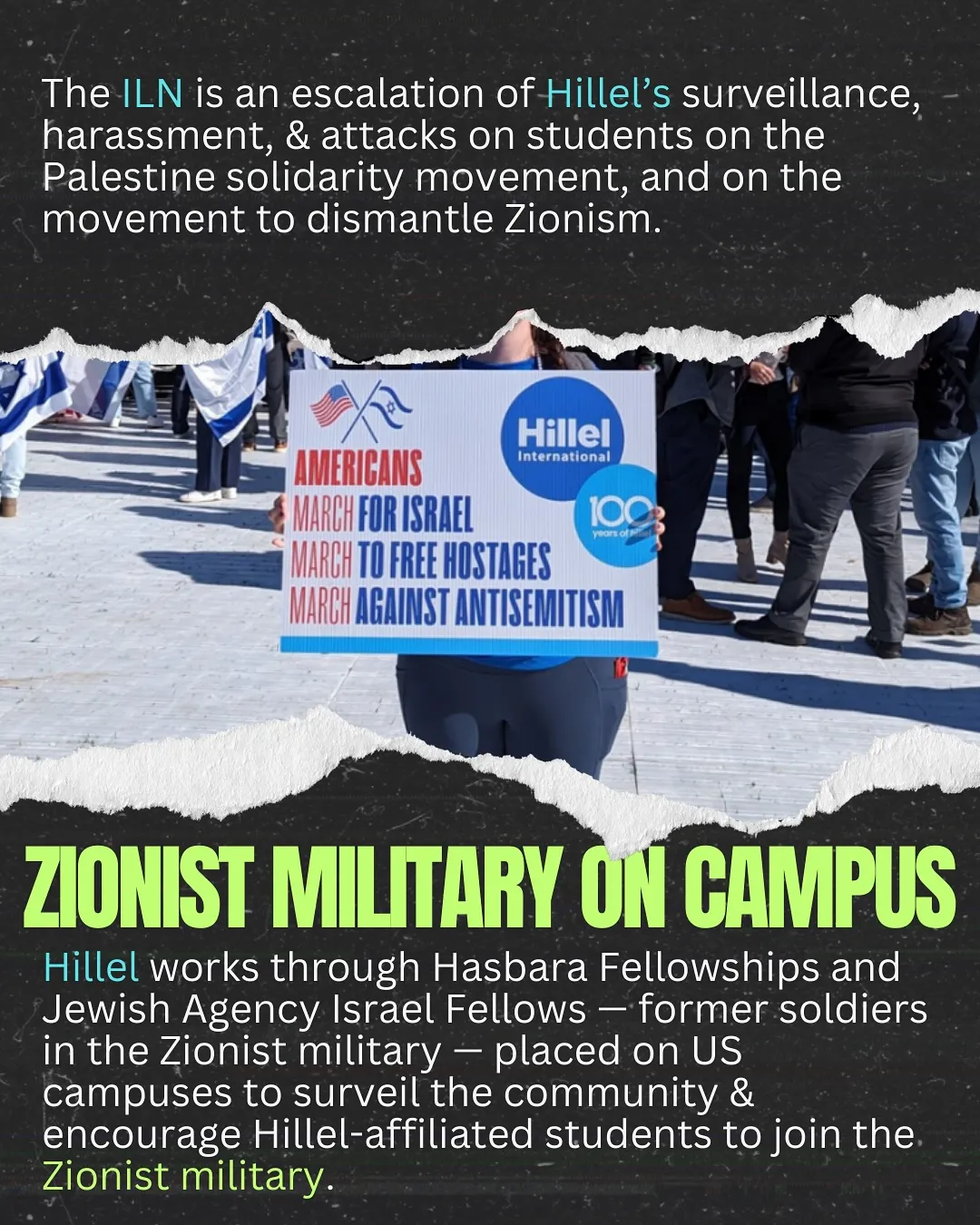
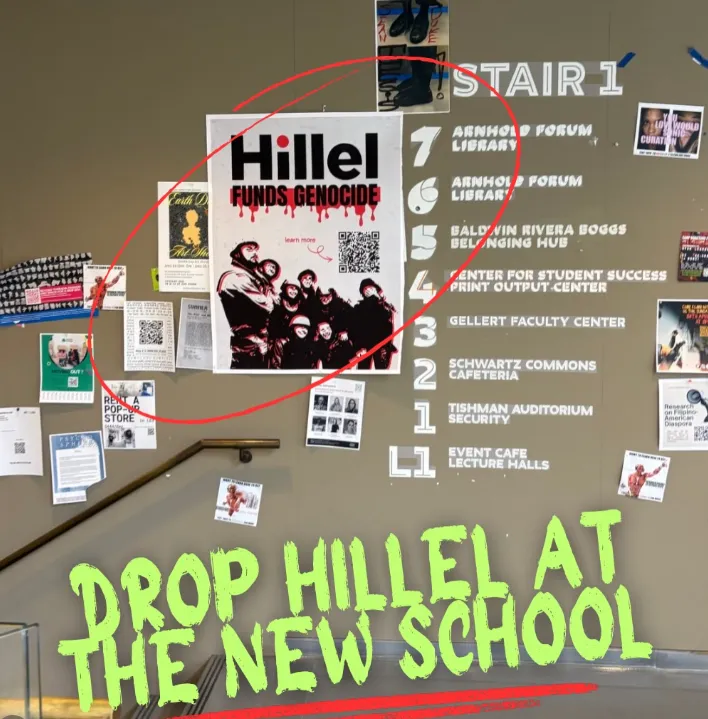
The resolution is part of a larger movement called “Drop Hillel,” a Jewish-led group that began in 2024 and has affiliations with National Students for Justice in Palestine. [See below for how the resolution sparked a similar initiative at New York University (NYU) just days later.]
Drop Hillel is an extension of the Boycott, Divest, Sanctions (BDS) movement, essentially functioning as an institutional and academic boycott of one of the most mainstream Jewish campus organizations.
The administration immediately declared the vote invalid, confirming Hillel remained a campus organization in good standing and would receive funding.
In response, the Student Senate vowed to “continue to sanction Hillel,” claiming that the senate “reserves the funding eligibility” of all student organizations and no student organization is “due” any funds without applying through the senate.
The Student Senate's Action
The 22-member University Student Senate held an anonymous vote on May 1, 2026, in which the majority of senators voted to declare Hillel a student group not in good standing, which served to deny Hillel’s eligibility to receive student activities funding – money derived from mandatory student fees.
The declaration also mandated halting all official collaborations with Hillel.
To return to “good standing,” the senators required that Hillel completely sever its ties with its parent organization, Hillel International, and pull out of travel or volunteer programs in Israel.
The Allegations Against Hillel
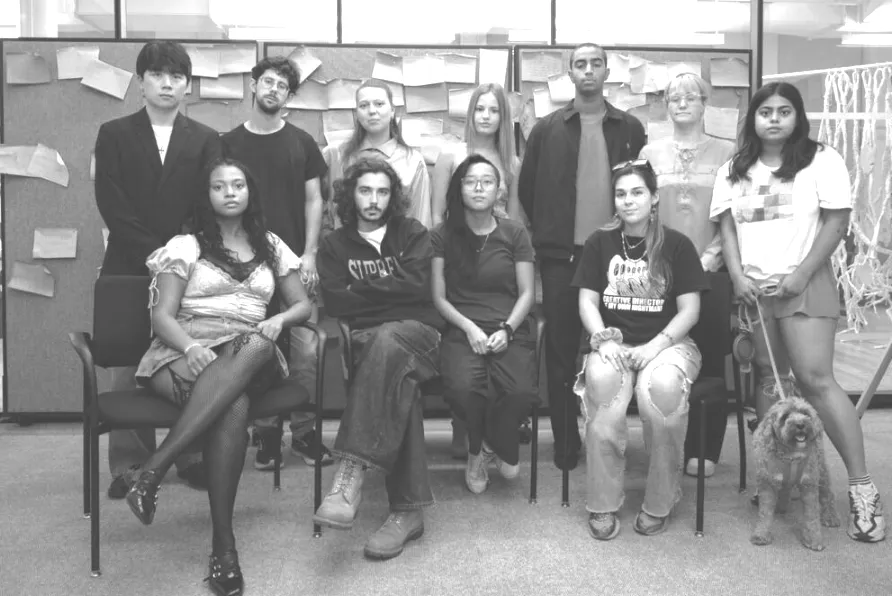
The Student Senate based its vote on a 38-page report, whose lead author was Ryder Glickman, a third-year economics student and current chair of The New School’s Student Senate. Glickman’s first act as chair was to call a vote on the resolution to sanction Hillel.
The report alleged that Hillel has "direct and material ties" to violations of international law through:
- Programs that allowed students to visit or volunteer on Israel Defense Forces (IDF) bases, including packing food or hosting barbecues for troops
- Ties to specific Israeli military units operating in Gaza and the West Bank
- Sponsorship of student travel through the Birthright Israel and Onward Israel programs (the report explicitly mentioned trips into “disputed” areas like the Golan Heights)
The report also cited newly elected New York City Mayor Zohran Mamdani’s declaration that the city “stands up for international law,” stating that the senate was “delivering on that commitment.” (Mamdani made the statement while vowing to arrest Israeli Prime Minister Benjamin Netanyahu due to an International Criminal Court warrant against him, despite the fact that Mamdani lacked any legal authority to make such an arrest and the United States does not hold by international law).
The committee’s report relied on a number of spurious anti-Israel sources. For example, it claimed that 680,000 Palestinians were killed in Gaza, citing speculative online essays and a medical journal that vastly inflated Hamas’ own exaggerated figures.
In an interview with Truthout, Glickman said, “The goal of this is to produce a blueprint which other schools can follow, and those talks and conversations are already happening … “This is just the beginning. The first step is to show that this is possible.”
Anti-Israel organizations – including Council on American-Islamic Relations (CAIR-NY), Jewish Voice for Peace and Students for Justice in Palestine – welcomed the vote.


‘Totally Made Up’
Speaking to The Times of Israel, Eugene Kontorovich, an international law expert and professor at George Mason University’s law school, called the report's arguments baseless, as no international court has convicted Israelis of war crimes.
Moreover, he said, “There is no international law prohibition on volunteering at IDF bases or any army bases. This is totally made up.”
Administration Rejects Vote
The day after the senate’s vote, top university leadership—including President Joel Towers, Provost Richard Kessler and Vice Provost Robert Mack—issued a statement completely overturning the student senate's decision. The administration said that the student senate did not have the power to recognize, defund or change the official status of registered campus organizations.
It further called the senate's action "misguided" and deemed it an unacceptable attempt to target fellow students. The administrators unequivocally stated that Hillel's funding would remain.
The university administration’s quick override relied heavily on established legal precedent, most notably the landmark Supreme Court ruling Board of Regents of the University of Wisconsin System v. Southworth (2000).
This case established that public and major private institutions that collect mandatory student fees must allocate them in a viewpoint-neutral manner. Student governments cannot cut funding to an authorized student chapter simply because they disagree with the group's political, religious, or ideological alignment. Doing so exposes the university to massive breach-of-contract and civil rights lawsuits.
The New School’s Hypocrisy
While the administration at The New School took the right steps against the Student Senate in the Hillel case, its retention of a faculty member who was a ringleader of CUNY’s violent anti-Israel campus protests paints a different story.
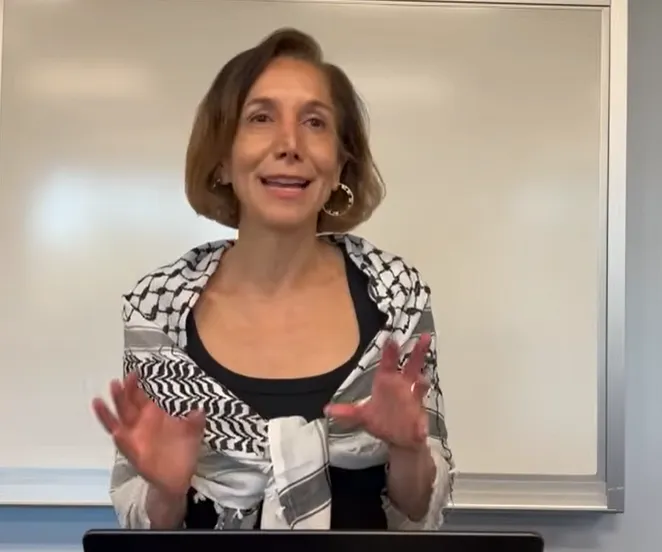
Corinna Mullin, who taught a course called “Middle East in the World” in Fall 2025, is scheduled to teach “Decolonizing International Law” in September. Mullin is a virulent anti-Israel political science professor and was among the leaders of an April 2024 encampment at the City College of New York’s campus in Harlem.
Mullin was arrested for her role in the protest that led to the science building catching fire, causing $3 million in damage. She was one of four who alleged they were terminated in the summer of 2025 for their roles in the illegal protests. However, CUNY reinstated Mullin and two others in January 2026.
Laying the Vote’s Groundwork
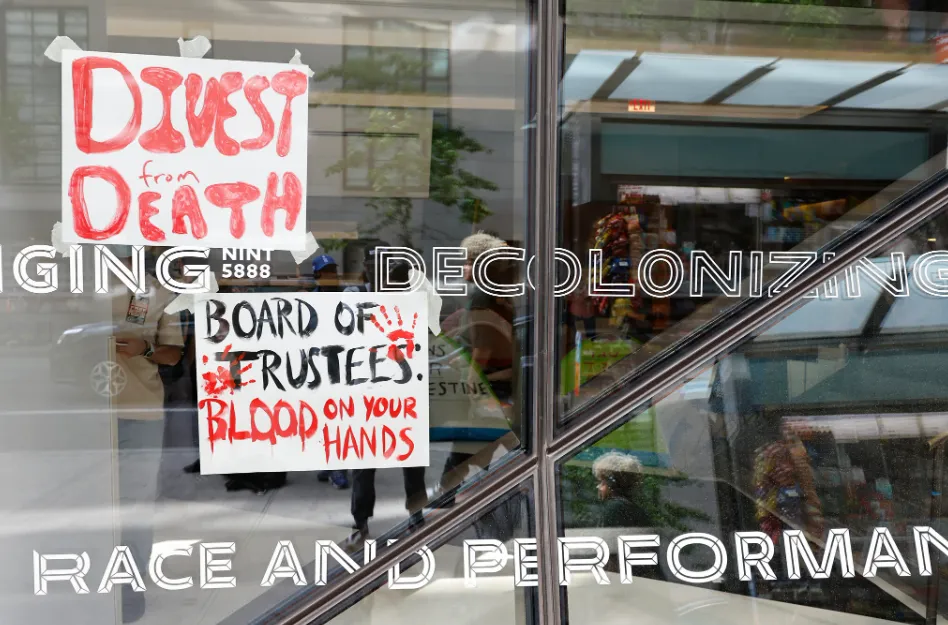
The attempt to defund Hillel at The New School is not an isolated incident. Rather, it was built on strategies developed during the 2024 campus anti-Israel encampments and protests.
In August 2024, The New School's Student Senate voted to freeze all student club funding. The move was viewed as a way to force the university's board to divest from companies linked to Israel. Like with the current resolution, administrations stepped in and restored funding to the student groups.
Recognizing that university boards were largely unresponsive to divestment resolutions, student organizers shifted tactics. In early 2026, the Student Senate issued a “Declaration of Principles,” requiring all registered student organizations to comply with “international humanitarian law.” This policy allowed the senate to target Hillel under the guise of "policy compliance."
The Precedent
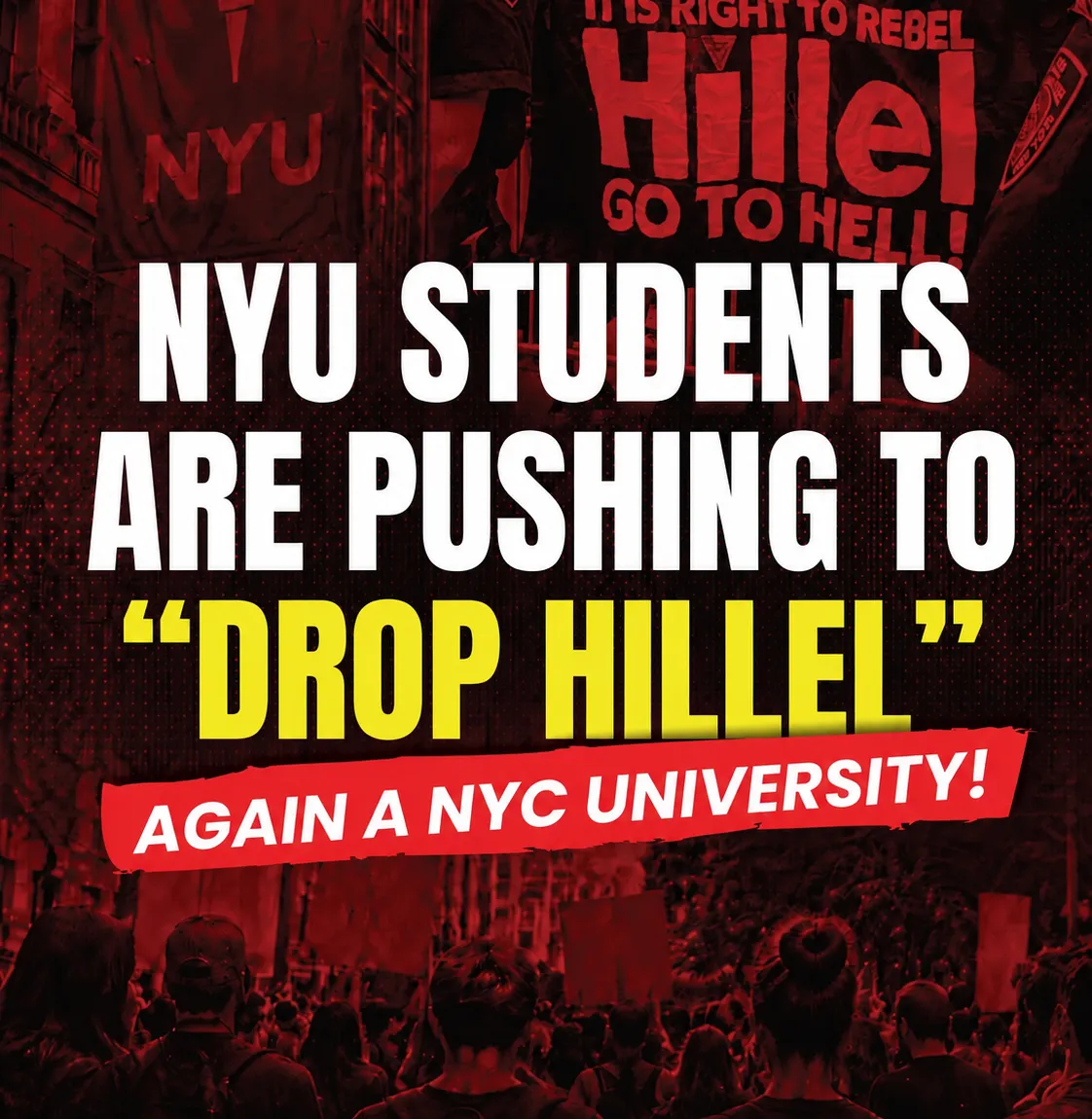
Four days after The New School vote, the anti-Israel group Jews Against Zionism at NYU launched a campaign at NYU calling for an immediate student boycott of the Bronfman Center for Jewish Student Life (NYU’s Hillel). Following the lead of the Student Senate at The New School, the group demanded that NYU cut ties with Hillel International, citing its "critical role in maintaining Israel’s apartheid state."
Impact of Title VI Civil Rights Investigations
NYC campuses, along with other elite institutions nationwide, are already facing intense scrutiny by the federal government for Title VI violations of the Civil Rights Act of 1964, which prohibits discrimination based on race, color or national origin in federally funded programs.
The U.S. Department of Education's Office for Civil Rights (OCR) opened a formal Title VI investigation into The New School following the 2024 campus encampments. The investigation examines whether the university failed to maintain a safe, non-discriminatory environment for Jewish students.
If the administration had acquiesced to the student government's ban on Hillel to stand, it would have severely compromised the university's federal standing, potentially risking millions in federal funding.
Similar legal pressures are unfolding at NYU. On April 6, 2026, NYU’s Title VI Office launched a discrimination investigation after student and faculty groups—including Jews Against Zionism—circulated a flyer promoting an "Anti-Zionist Passover Seder" that explicitly displayed the phrase "Drop Hillel."
NYU Vice Provost Kristen Day formally warned organizers that targeting a vital venue for Jewish campus life violated the university’s non-discrimination and anti-harassment policies.
In addition, in August 2025, legislation was passed in NY and signed into law by Governor Kathy Hochul mandating every college and university in the state to employ a designated Title VI coordinator to collaborate directly with state human rights officials to ensure swift accountability.
Hillel Mobilizes Legal Defense
Hillel International is using a combined framework of civil rights law, institutional policy and constitutional precedent to legally defend its chapters against student-led defunding efforts. Following the vote at The New School, the organization mobilized its legal team and network of partners to establish a rigid defense template for its 850 chapters worldwide.
The primary components of Hillel International's legal defense strategy include the following arguments:
1. Title VI Proxy Discrimination
- Hillel’s legal teams will argue that applying an "international law compliance test" exclusively to a Jewish campus hub is a form of proxy discrimination based on national origin and religion
- Under Title VI, universities receiving federal funding must protect students from a hostile environment based on shared ancestry. Hillel will argue that any attempt by a student senate to isolate or "blacklist" the primary Jewish student organization is an automatic Title VI violation
- Hillel’s lawyers will advise university boards that failing to immediately veto student senate actions exposes the institution to federal funding loss and direct civil lawsuits from the Department of Education
2. Breach of Contract and Institutional Policy Compliance
- Hillel’s first line of defense will likely be a procedural shutdown. Its legal teams will review university charters to prove that student governments do not possess the constitutional authority to unilaterally derecognize or pull funding from a registered student organization
- Because mandatory student activities fees are collected from all students via tuition agreements, Hillel will argue that depriving Jewish students of their share of those fees—while they are still forced to pay them—is a breach of the university's fiduciary and enrollment contracts
3. Protection of Religious Identity and Associational Rights
- Activists often demand that local chapters sever ties with Hillel International to regain funding. Hillel's legal defense will show that forcing a local religious group to cut ties with its global parent organization is a direct infringement on students' rights to freely associate and practice their faith.
- Hillel will also argue that connection to Israel is an intrinsic component of religious and ethnic identity for many Jewish students. Therefore, punishing a club for offering standard programs like Birthright or Israel travel is treated legally as discrimination against a protected religious practice.
4. Viewpoint Neutrality Precedents
- The Southworth Standard: For public universities (and private schools that formally adopt public constitutional standards in their bylaws), Hillel will cite the landmark Supreme Court ruling Board of Regents of the University of Wisconsin System v. Southworth (2000). This case dictates that when a university collects mandatory student fees to create a forum for expression, it cannot distribute or deny those funds based on the viewpoint of the group. Denying Hillel funding over its political or geographic ties is a direct violation of viewpoint neutrality.
Letter Supporting The New School’s Student Senate’s Move Against Hillel
A letter supporting the resolution against Hillel passed by The New School’s Student Senate was signed by 336 academics nationwide. Striking in the letter is the upholding of the 38-page research document presented to the Senate, which was based on faulty sources.
The letter claimed that Hillel at The New School and its members aided Israel in a “genocide” in its war against Hamas. Instead of referring to the Israel Defense Forces (IDF) by its name, it used the term “Israel Occupation Forces (IOF)” an expression used to illegitimize the state of Israel.
The letter further urges The New School’s administration and president, Joel Towers, to uphold the senate’s decision.
The following section shows the profiles of all the signatories.
Profiles

























































_203x172_yKJwgG.jpg)