George Saliba
Overview
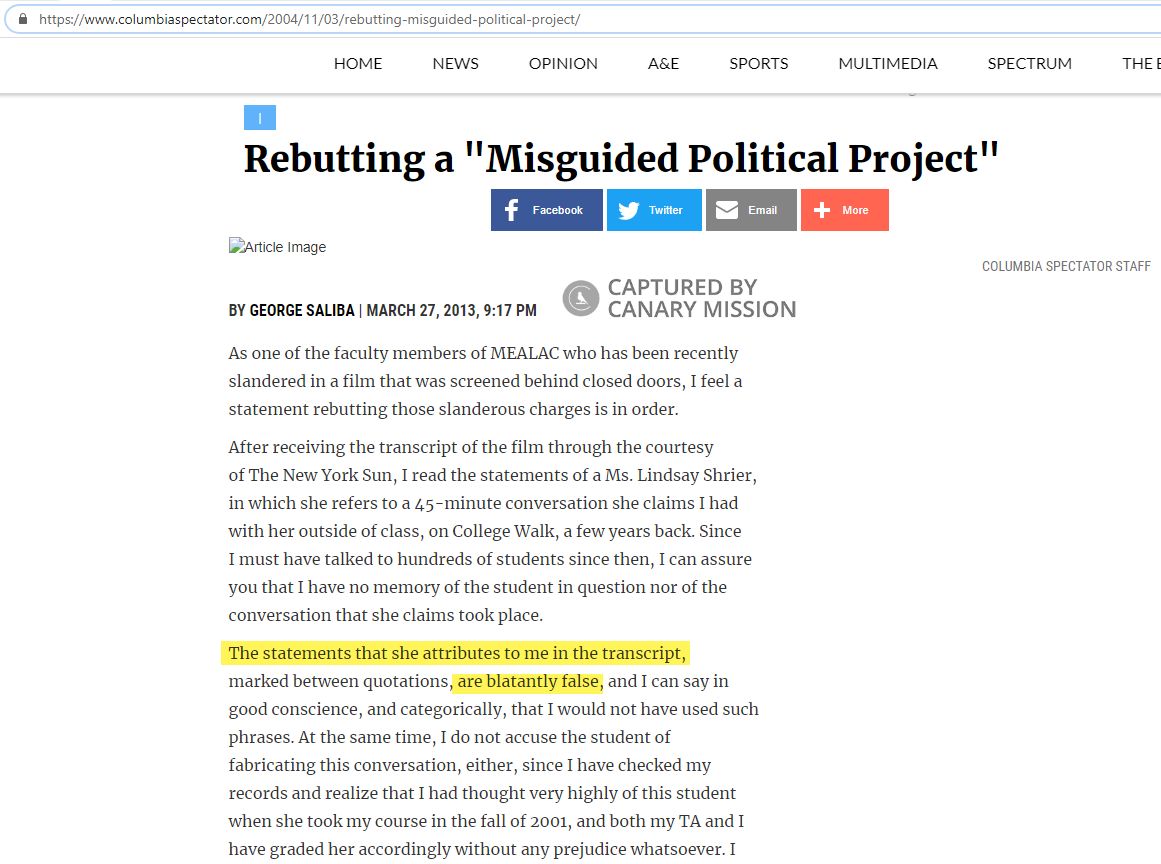
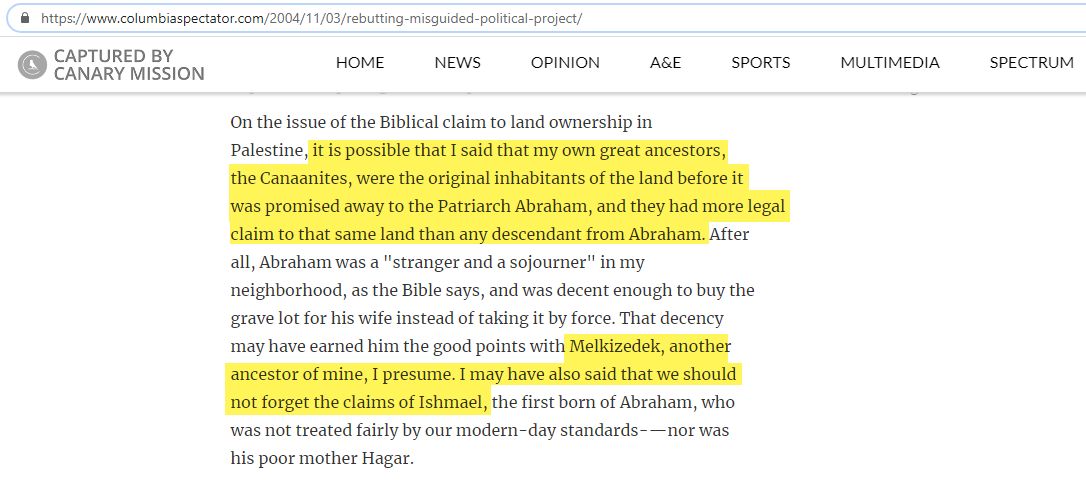
George Saliba was the investigated for accusations of anti-Semitism at Columbia University (Columbia) in 2004-2005. Saliba also encouraged students to attend an anti-Israel rally and is a supporter of the Boycott, Divestment, Sanctions (BDS) movement.Investigated for Anti-Semitism
The film transcript also documented another student recalling Saliba’s April 2002 canceling of class in favor of an anti-Israel demonstration.
Encouraging Students to Attend an Anti-Israel Rally
The second intifada (2000-2005) was characterized by more than 120 suicide bombings targeting Israeli civilians on buses and in cafes.
A March 31, 2005 article reported that during the April 2002 rally, Massad proclaimed that Israel is "a Jewish supremacist and racist state" and that "every racist state should be threatened."
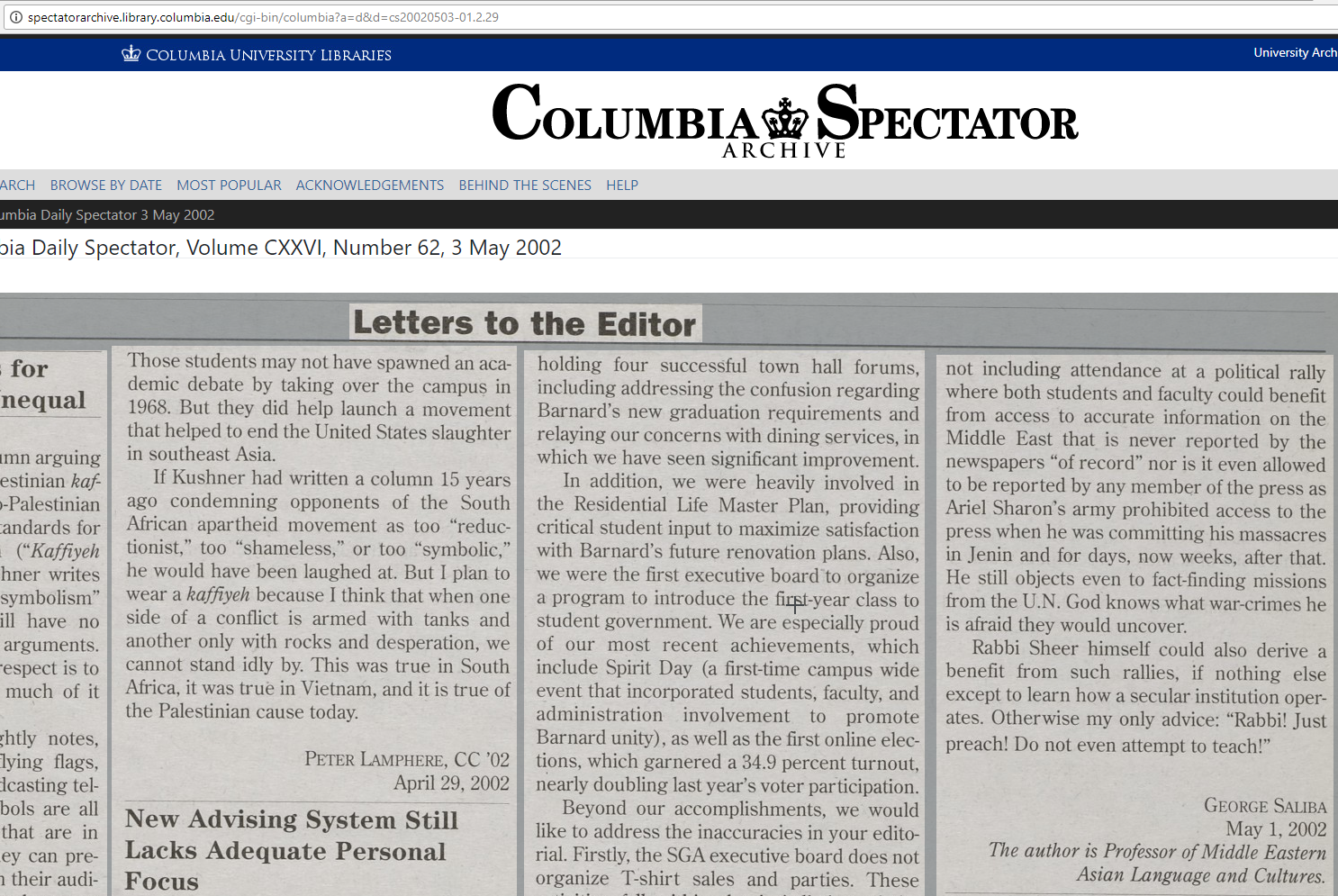
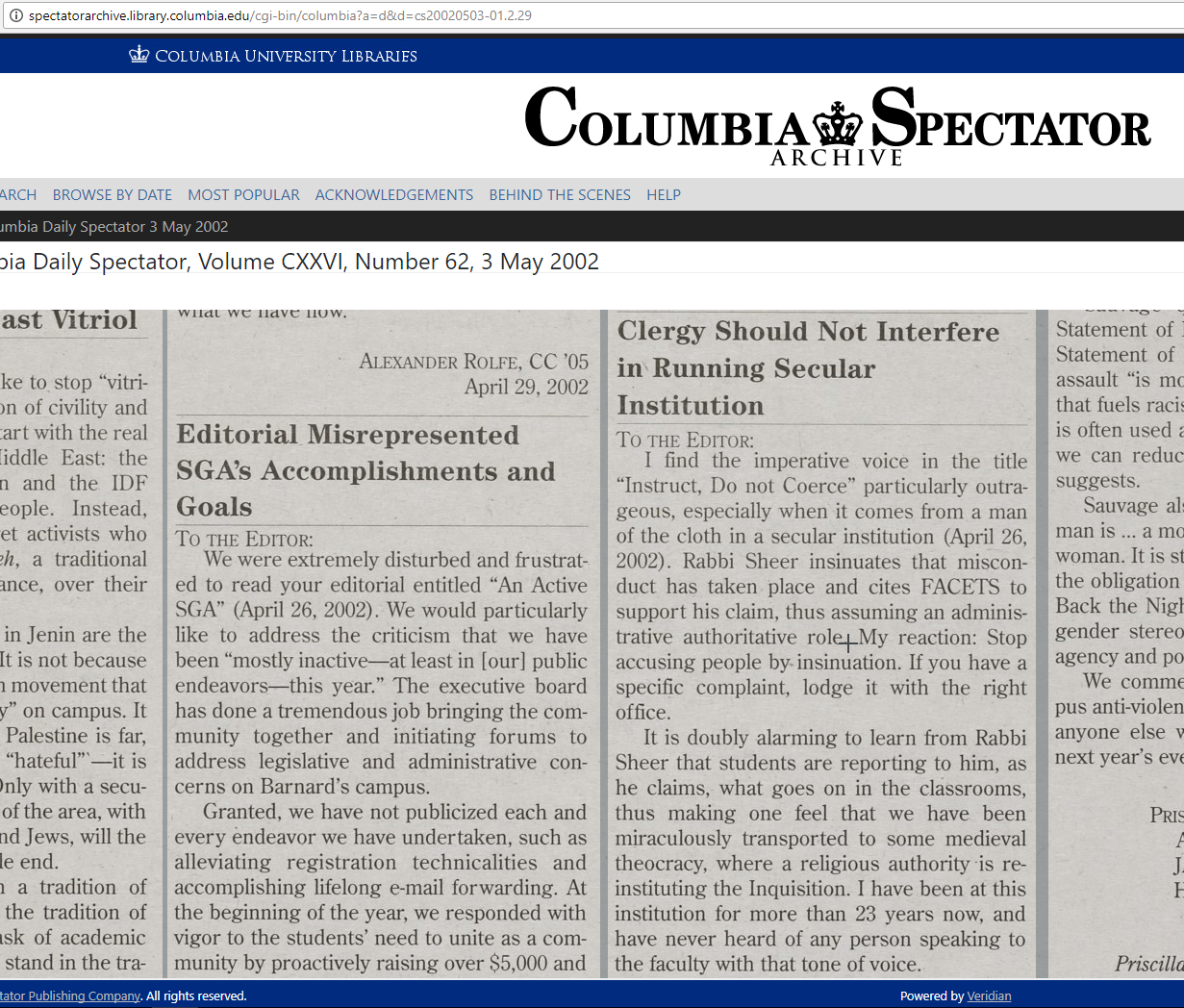
On May 1, 2002, Saliba authored a Letter to the Editor in Columbia’s student newspaper The Spectator, attacking then-Columbia Hillel Rabbi Charles Sheer for questioning the decision of Saliba and Dabashi to cancel their classes in favor of the anti-Israel rally.
Saliba then stated in the letter, referring to the Battle of Jenin, that "[a]nother Sabra and Shatila is happening in Jenin. The withholding of information from the masses is the method Israel uses to maintain power."
Supporting BDS
As of October 27, 2020, Saliba endorsed the US Campaign for the Academic and Cultural Boycott of Israel (USACBI).Saliba signed an August 6, 2014 letter that called on scholars and librarians within Middle East studies to boycott Israeli academic institutions, during Operation Protective Edge (OPE). The letter labelled OPE “massacres in Gaza.”
Israel commenced Operation Protective Edge (OPE) in July 2014, to stop rocket fire targeting Israeli civilians and to destroy Hamas attack tunnels.
On October 25, 2002, Saliba and a group of faculty at Columbia and Barnard College (Barnard) launched a divestment effort and petition titled: “Columbia University Divestment Campaign.”
The divestment campaign’s website stated: “The anti-Apartheid campaigns of boycott and divestment played a critical role in dismantling the former South African regime. We believe that a similar, if more targeted, strategy of divestment vis-à-vis the Israeli state is called for…”
The petition encouraged the United States government to suspend its military aid to Israel, and divest from all companies that manufacture military hardware sold to Israel.
The petition added: “We, the undersigned, are appalled by the human rights abuses against Palestinians at the hands of the Israeli government, the continual military occupation and colonization of Palestinian territory by Israeli armed forces…”
On November 8, 2002, Colombia's President, Lee Bollinger reportedly rejected the divestment petition, stating: “I want to state clearly that I will not lend any support to this proposal. The petition alleges human rights abuses and compares Israel to South Africa at the time of apartheid, an analogy I believe is both grotesque and offensive.”
BDS
The Boycott, Divestment, Sanctions (BDS) movement was founded by Omar Barghouti in 2005 to challenge “international support for Israeli apartheid and settler-colonialism.” BDS is an allegedly “Palestinian-led movement,” although leading BDS activists have admitted [00:01:01] this is not true.
One of the demands of BDS includes [point 3] what is generally known as the “right of return,” a demand discredited as a way to eliminate Israel. Barghouti said the “right of return” is a means to “end Israel’s existence as a Jewish state.”
Barghouti has said that BDS “aims to turn Israel into a pariah state, as South Africa once was.”
In his activism, Barghouti has also said [00:05:55] regarding Israel: “Definitely, most definitely, we oppose a Jewish state in any part of Palestine. No…rational Palestinian, not a sellout Palestinian, will ever accept a Jewish state in Palestine.”
The movement has been linked to numerous terrorist organizations and received a public endorsement from Hamas in 2017.
BDS initiatives include calling on institutions and individuals to divest from Israeli-affiliated companies, promoting academic and cultural boycotts of Israel, and organizing anti-Israel rallies, protests and campaigns.
The movement’s most notable achievement has been the infiltration of university campuses through lobbying for “BDS resolutions.” In these cases, student governments and student groups, backed by their own anti-Israel members and affiliates, have proposed resolutions on some form of boycott of, or divestment from, Israel and Israeli-affiliated entities.
Boycott resolutions, although non-binding, have been passed by student governments on numerous North American campuses.
BDS activity is often aggressive and disruptive. It has been noted that universities that pass BDS resolutions see a marked increase in anti-Semitic incidents on campus. On one campus, when the student government debated a BDS resolution, reports emerged of violent threats against those opposing it.
Social Media and Weblinks
- Status:
- Professor
- University:
- Columbia
- Organizations:
- BDS
- Related Profiles:
- Marianne Hirsch,
- Last Modified:
- 05/04/2026
Photos & Screenshots