J. Lorand Matory
Overview
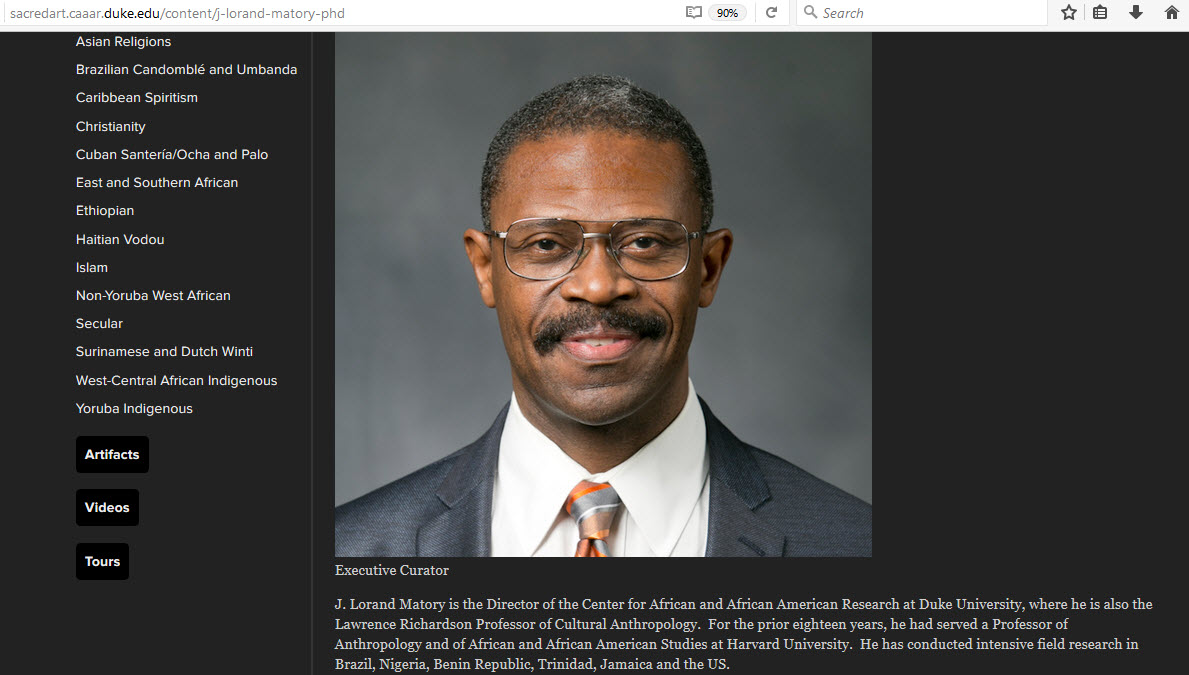
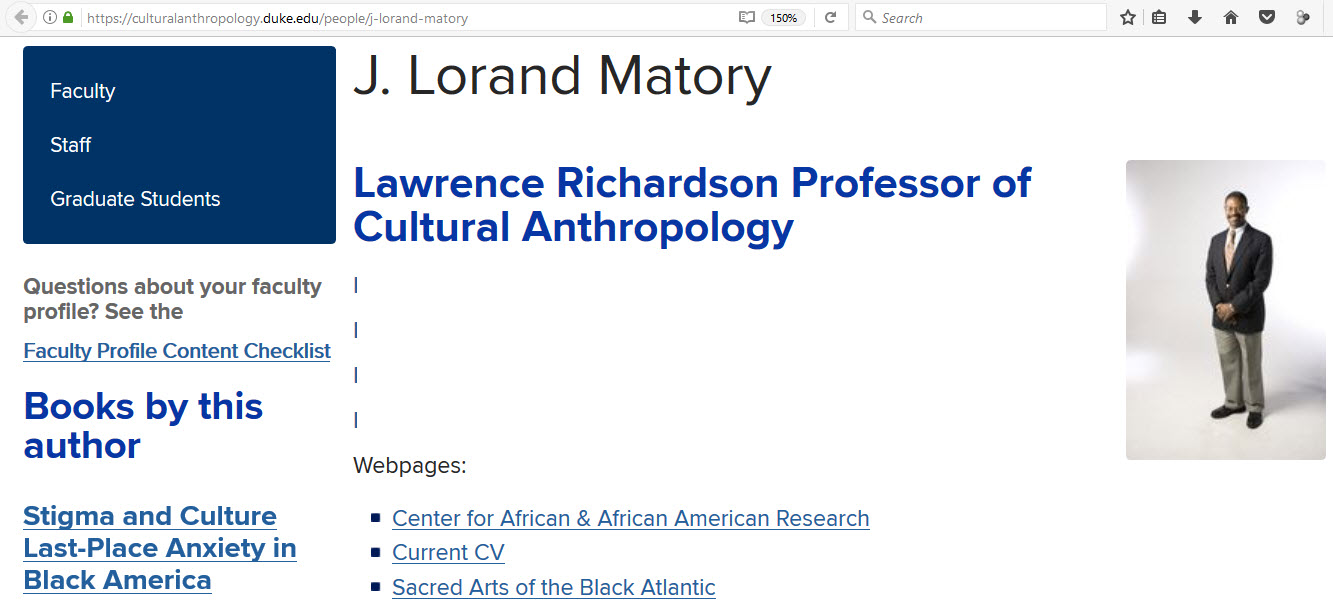
J. Lorand Matory is a supporter of the Boycott, Divestment, Sanctions (BDS) movement and has published a personal statement outlining his support for the movement.Matory is the Lawrence Richardson Professor of Cultural Anthropology and African and African American Studies at Duke University (Duke).
Prior to teaching at Duke, Matory was a professor at Harvard University (Harvard) “known for his strong criticisms of Israel.”
Matory has published a number of opinion pieces in The Harvard Crimson alleging a pro-Israel bias at Harvard.
In a September 2007 op-ed, Matory criticized former President of Harvard, Lawrence Summers, for calling BDS anti-Semitic. Instead, Matory argued that Summer’s pronouncement on BDS was itself anti-Semitic.
Demonizing Israelis
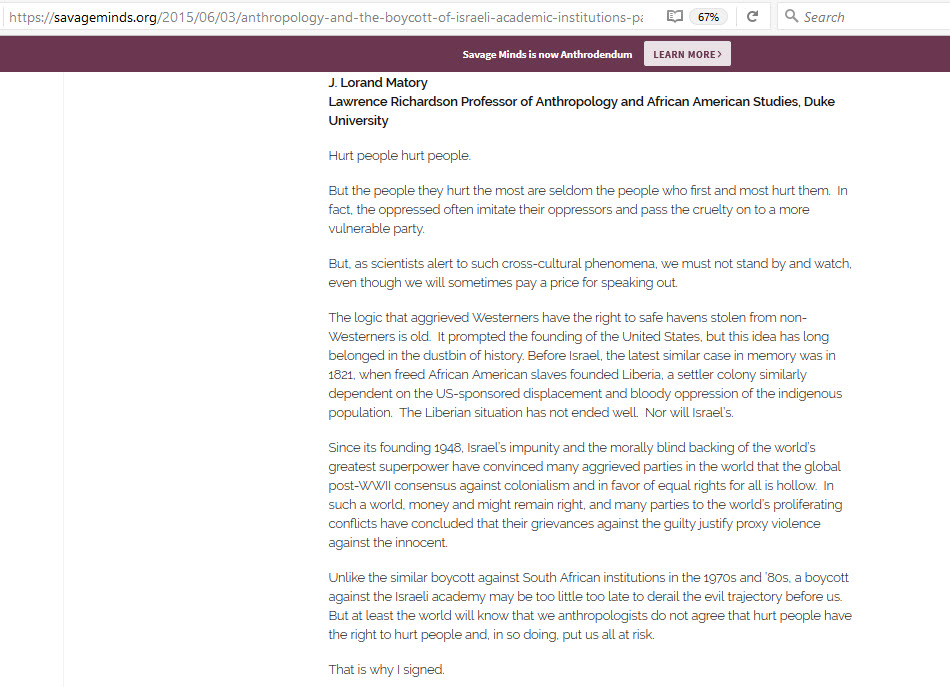
In a 2015 statement outlining his support for the BDS movement, Matory claimed that the founding of Israel was based on “logic that aggrieved Westerners have the right to safe havens stolen from non-Westerners.”He accused Israel of following an “evil trajectory” and described Israelis as “hurt people who hurt people” because “the oppressed often imitate their oppressors and pass the cruelty on to a more vulnerable party.”
Matory also predicted that Israel’s “situation” will not “end well.”
Matory went on to identify Israel and U.S. support for Israel as the reason for why “aggrieved parties” in the world feel that the claim of “equal rights for all is hollow.”
Matory concluded his essay by calling on fellow anthropologists to support BDS, because “at least the world will know that we anthropologists do not agree that hurt people have the right to hurt people and, in so doing, put us all at risk.”
Anti-Israel Bias at Harvard
In November 2007, Matory proposed a one-sentence motion at a Harvard faculty meeting affirming “civil dialogue.” A Harvard Crimson staff editorial critical of Matory claimed that his motion, which was tabled, was actually intended to “push an agenda”.According to the editorial, “Matory has previously stated that the proposed motion was a response to his perception of the current state of dialogue” on Israel at Harvard.
In a June 2008 op-ed — titled “What Do Critics of Israel Have to Fear?” — Matory admitted that his proposed resolution did concern Israel, which he accused of "massive and ongoing theft of the Palestinians’ native land since the mid-20th century."
Matory also accused Alan Dershowitz, a Zionist and former Harvard Law professor, of censoring anti-Israel speakers by preventing them from speaking on campus. In addition to blaming Dershowitz, Matory blamed “imbalances in access to money, media, and society’s administrative apparatuses” for constituting the “censorship of dissent.”
Matory also slandered Hillel Stavis, the former owner of a local bookstore, by alleging that Stavis played “a prominent role in a highly damaging donor boycott of public radio station WBUR, on the grounds that it allegedly broadcast pro-Palestinian points of view too freely.”
In a September 2007 op-ed, Matory claimed there is conspiracy of Israel supporters who engage in “threatening, defaming, or censoring scholars who dare to criticize Israel.” Matory claimed that “people tremble in the fear of losing their friends, jobs, advertising revenues, campaign contributions, and alumni donations if they question Zionism or Israeli policy.”
Matory also analogized Jewish property stolen by Nazis to Palestinian property affected by Israel’s War of Independence, and claimed that Palestinians’ “lands, houses, and goods” were “stolen as a condition of Israel’s founding in the late 1940s”.
Pushing BDS on Academic Associations
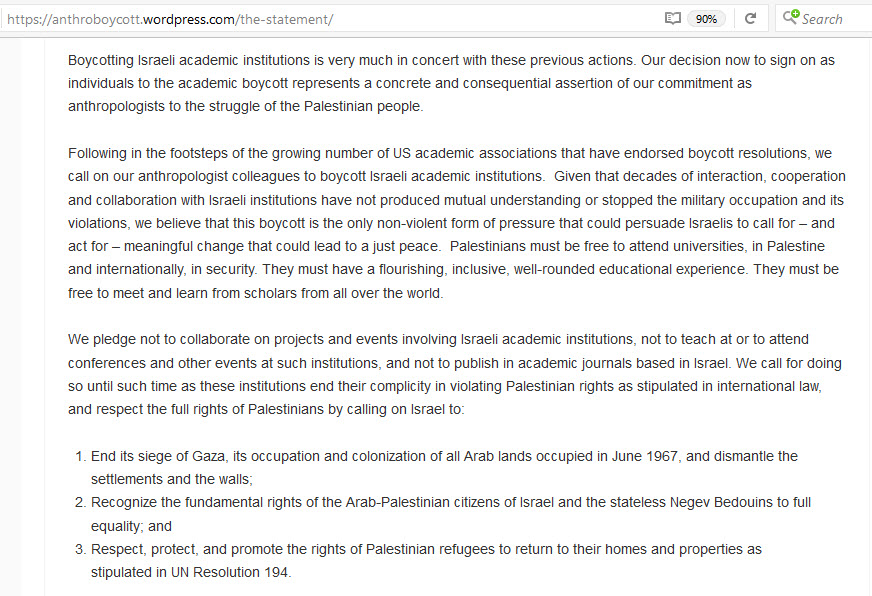
In 2015, Matory signed a petition encouraging the American Anthropological Association (AAA) to pass a resolution that would boycott Israeli academic institutions.In June 2016, the AAA announced that the resolution was defeated but that there are “other actions planned.”
The AAA vote on the anti-Israel resolution took place from April 15 to May 31, 2016, with approximately half of the AAA membership voting on the resolution. Of the half that voted concerning the resolution, 50.4% voted against it, meaning that only one quarter of AAA’s membership — at most — voted in favor of the resolution.
BDS
The Boycott, Divestment, Sanctions (BDS) movement was founded by Omar Barghouti in 2005 to challenge “international support for Israeli apartheid and settler-colonialism.” BDS is an allegedly “Palestinian-led movement,” although leading BDS activists have admitted [00:01:01] this is not true.
One of the demands of BDS includes [point 3] what is generally known as the “right of return,” a demand discredited as a way to eliminate Israel. Barghouti said the “right of return” is a means to “end Israel’s existence as a Jewish state.”
Barghouti has said that BDS “aims to turn Israel into a pariah state, as South Africa once was.”
In his activism, Barghouti has also said [00:05:55] regarding Israel: “Definitely, most definitely, we oppose a Jewish state in any part of Palestine. No…rational Palestinian, not a sellout Palestinian, will ever accept a Jewish state in Palestine.”
The movement has been linked to numerous terrorist organizations and received a public endorsement from Hamas in 2017.
BDS initiatives include calling on institutions and individuals to divest from Israeli-affiliated companies, promoting academic and cultural boycotts of Israel, and organizing anti-Israel rallies, protests and campaigns.
The movement’s most notable achievement has been the infiltration of university campuses through lobbying for “BDS resolutions.” In these cases, student governments and student groups, backed by their own anti-Israel members and affiliates, have proposed resolutions on some form of boycott of, or divestment from, Israel and Israeli-affiliated entities.
Boycott resolutions, although non-binding, have been passed by student governments on numerous North American campuses.
BDS activity is often aggressive and disruptive. It has been noted that universities that pass BDS resolutions see a marked increase in anti-Semitic incidents on campus. On one campus, when the student government debated a BDS resolution, reports emerged of violent threats against those opposing it.
Social Media and Weblinks
University Website: https://scholars.duke.edu/person/jm217
- Status:
- Professor
- University:
- Duke,
- more...
- Organizations:
- BDS
- Related Profiles:
- Miriam Cooke,
- Kenneth Surin,
- Omid Safi,
- Engseng Ho,
- Steven Caton,
- Duncan Kennedy,
- Randa Wahbe,
- Mohammad Hamad,
- Stephen Walt,
- Ajantha Subramanian,
- Collin Poirot,
- Diana Buttu,
- Last Modified:
- 05/04/2026
Photos & Screenshots