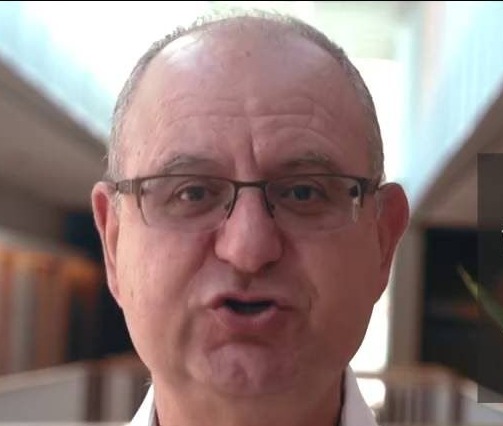
Beshara Doumani
Overview
Beshara Doumani has accused Israel of intentionally weakening Palestinian society in order to turn “Arab Palestine” into “a Jewish only space.”Doumani is a staunch supporter of the Boycott, Divestment, Sanction (BDS) movement.
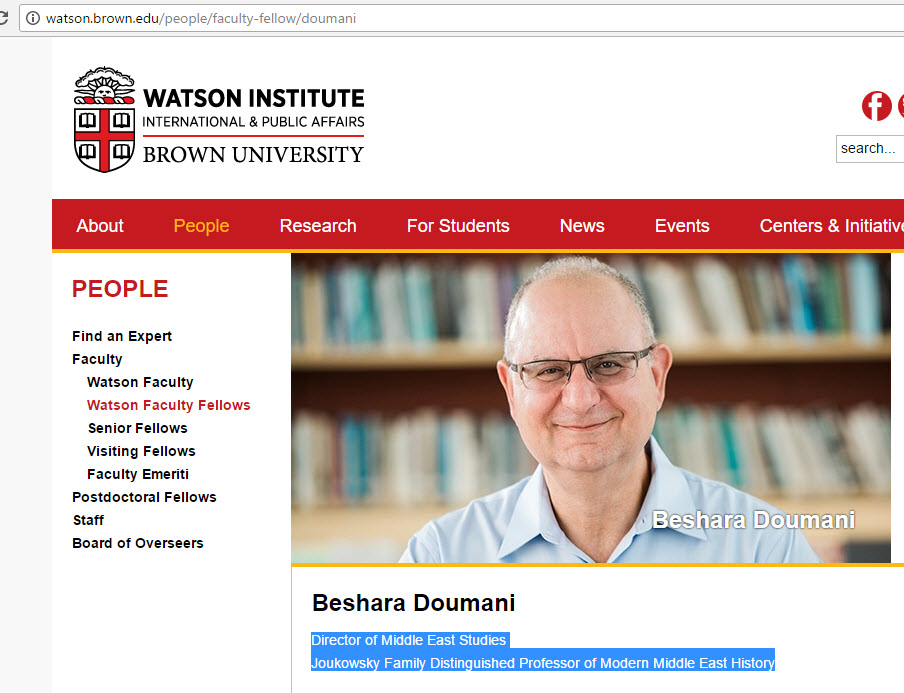
Doumani is the Joukowsky Family Distinguished Professor of Modern Middle East History and Director of Middle East Studies at Brown University (Brown).
Blaming Israel for Palestinian “Paralysis”
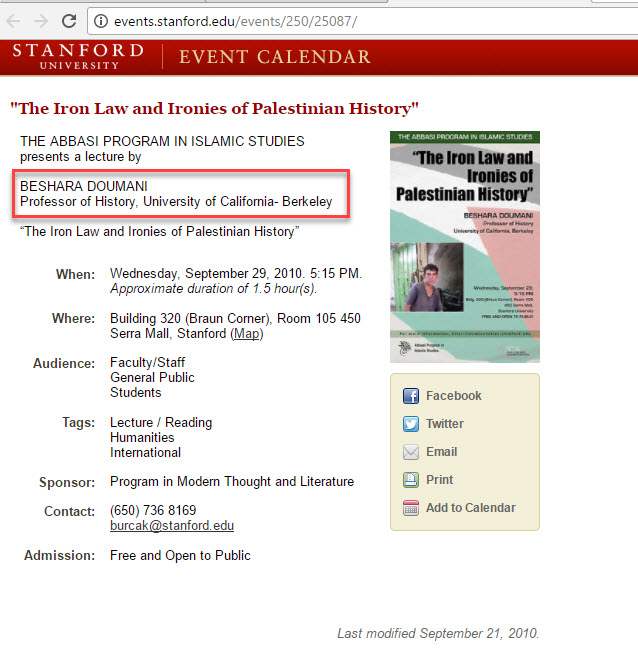
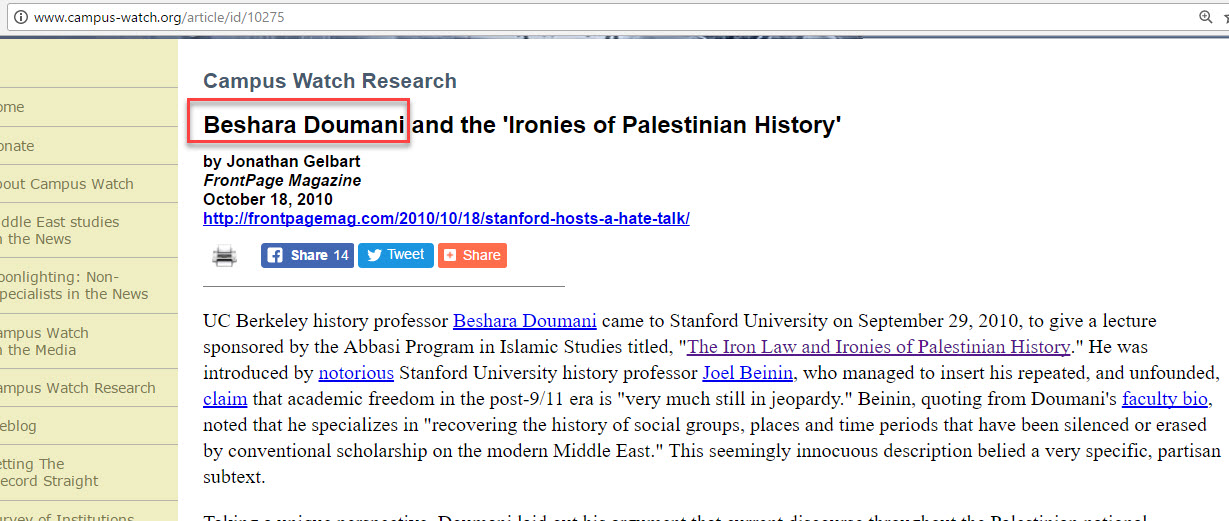
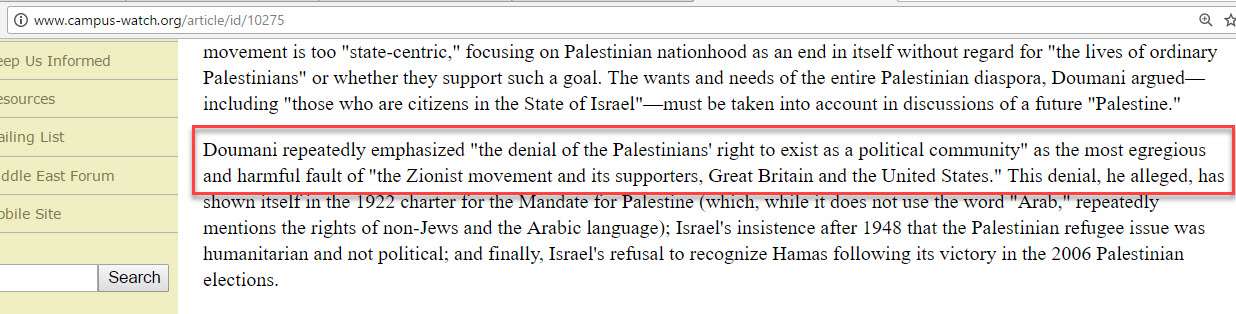
On September 29, 2010, Doumani gave a lecture at Stanford University (Stanford) called “The Iron Law and Ironies of Palestinian History.”In his lecture, Doumani reportedly blamed "the Zionist movement and its supporters, Great Britain and the United States" for the "denial of the Palestinians' right to exist as a political community."
Doumani reiterated these accusations in a 2012 interview for Palestine Studies TV, in which he blamed israel for the “paralysis” of Palestinian communities.
In the interview, Doumani claimed that Israel creates “bubbles” to isolate Palestinian cities from one another, in order to prevent them from developing.
Doumani went on to charge that “Settlers, from the West Bank, are reconquering Israel. They’re going into Arab communities… they’re beating peoples up, they’re burning mosques. They’re trying to re-consolidate or reconquer this area, make it more of a Jewish space.”
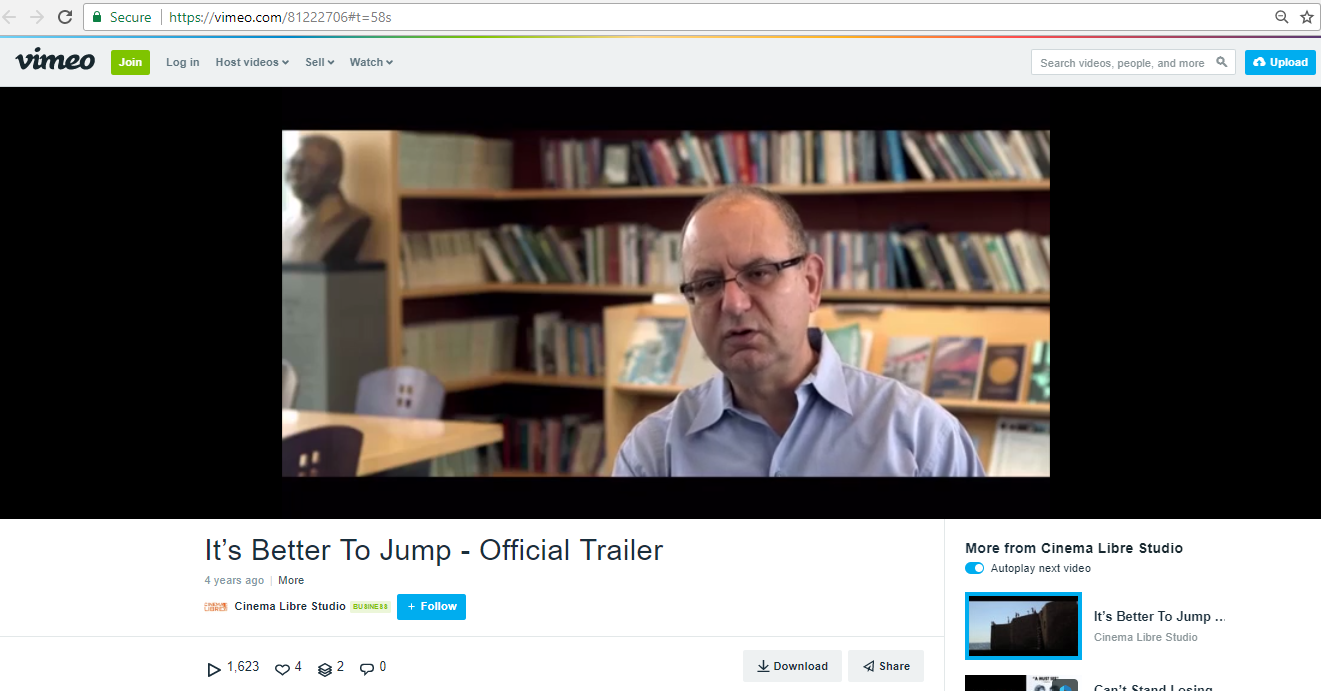
Doumani was also featured in a 2013 film called “It’s Better to Jump,” which accused Israel of ethnically cleansing and gentrifying the ancient city of Akko.
In the film, Doumani stated that “the overall objective of the Zionist movement has not changed in a hundred years. And that is to turn an Arab Palestine into an ethnocracy, really. A Jewish only space, if possible.”
Hosting Anti-Israel Teach-In
On September 10, 2014, Doumani hosted a teach-in event at Brown titled “Why Gaza Matters: The War and its Consequences.”Members of the audience criticized Doumani and the event for its apparent anti-Israel bias, alleging that the panel was one-sided and “a stacked deck.”
Supporting BDS
On March 31, 2009, Doumani signed a petition, opposing a plan for the University of California school system to reopen the Education Abroad Program (EAP) in Israel.The petition alleged that American students “suspect of being Arab or Muslim” would “encounter disabling forms of discrimination and a generally hostile… environment in Israel.”
Reaffirming Support for BDS
In April of 2015, Doumani came under fire from the Palestinian Campaign for Academic and Cultural Boycott of Israel (PACBI) and Electronic Intifada (EI) for allegedly violating BDS by collaborating with Tel Aviv University’s Minerva Center for the Humanities.The accusations came in response to an event hosted by Doumani and a visiting professor from Tel Aviv University.
In response to the allegations, Doumani reaffirmed his commitment to the BDS movement and insisted that no collaboration between his department and Israel had taken place.
In a letter to EI, Doumani wrote “The organizers are well aware of my support for BDS and I have discussed the implications of that position with them several times in the past.”
Doumani went on to add that he accepted the invitation only “after making sure there was no institutional connection” with Israel.
After PACBI rejected Doumani’s claims, insisting that the collaboration did violate BDS, Doumani withdrew his participation from the event.
The controversy echoed a similar accusation, waged against Doumani in 2014, when his department co-hosted an Israeli speaker at Brown.
After the department's logo appeared on the event flier, PACBI and EI condemned Doumani for violating the terms of BDS by collaborating with an Israeli.
In response to these allegations, Doumani identified himself “as a person who supports BDS and who has signed on to BDS statements” and distanced himself from the event, insisting that it was not an event that he “in any way initiated, organized or attended.”
BDS
The Boycott, Divestment, Sanctions (BDS) movement was founded by Omar Barghouti in 2005 to challenge “international support for Israeli apartheid and settler-colonialism.” BDS is an allegedly “Palestinian-led movement,” although leading BDS activists have admitted [00:01:01] this is not true.
One of the demands of BDS includes [point 3] what is generally known as the “right of return,” a demand discredited as a way to eliminate Israel. Barghouti said the “right of return” is a means to “end Israel’s existence as a Jewish state.”
Barghouti has said that BDS “aims to turn Israel into a pariah state, as South Africa once was.”
In his activism, Barghouti has also said [00:05:55] regarding Israel: “Definitely, most definitely, we oppose a Jewish state in any part of Palestine. No…rational Palestinian, not a sellout Palestinian, will ever accept a Jewish state in Palestine.”
The movement has been linked to numerous terrorist organizations and received a public endorsement from Hamas in 2017.
BDS initiatives include calling on institutions and individuals to divest from Israeli-affiliated companies, promoting academic and cultural boycotts of Israel, and organizing anti-Israel rallies, protests and campaigns.
The movement’s most notable achievement has been the infiltration of university campuses through lobbying for “BDS resolutions.” In these cases, student governments and student groups, backed by their own anti-Israel members and affiliates, have proposed resolutions on some form of boycott of, or divestment from, Israel and Israeli-affiliated entities.
Boycott resolutions, although non-binding, have been passed by student governments on numerous North American campuses.
BDS activity is often aggressive and disruptive. It has been noted that universities that pass BDS resolutions see a marked increase in anti-Semitic incidents on campus. On one campus, when the student government debated a BDS resolution, reports emerged of violent threats against those opposing it.
- Status:
- Professor
- University:
- Brown
- Organizations:
- BDS
- Related Profiles:
- Nina Tannenwald,
- Last Modified:
- 05/04/2026
Photos & Screenshots