Carole Browner
Overview
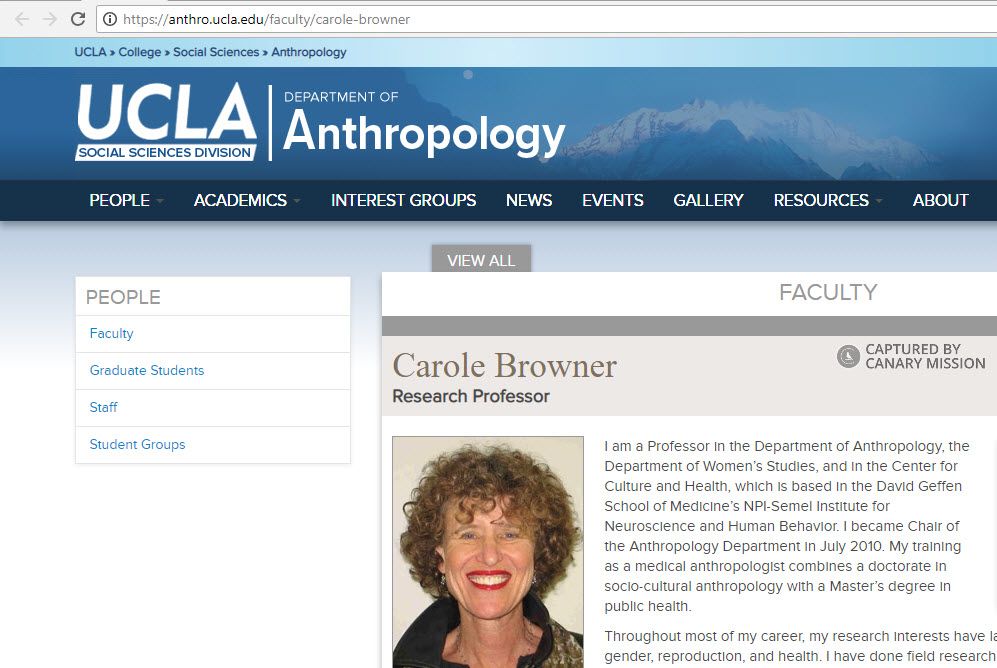
Carole H. Browner has defended anti-Zionism on campus and shown support for the Boycott, Divestment, Sanctions (BDS) movement.As of 2018, Browner was a professor in the Department of Anthropology at the University of California, Los Angeles (UCLA).
Defending Anti-Zionism on Campus
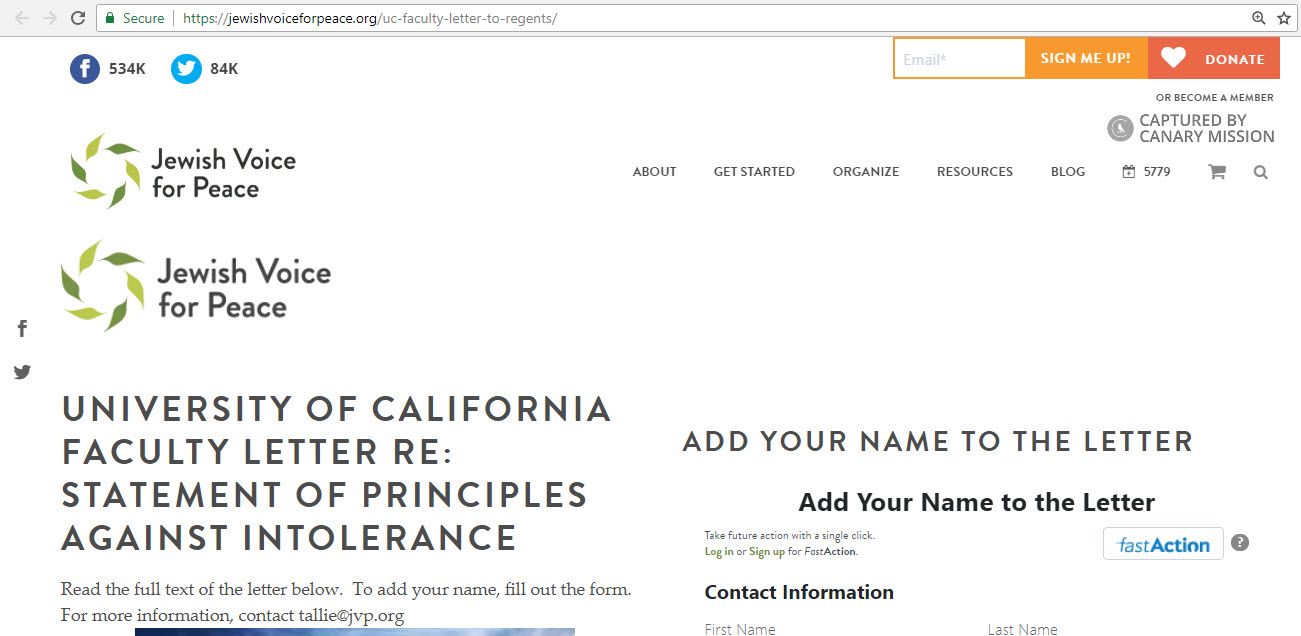
Browner signed a letter opposing an initiative to protect students at the University of California (UC) from anti-zionism on campus.The letter, published by the anti-Israel Jewish Voice for Peace (JVP) organization, opposed the inclusion of anti-Zionism as an “intolerant position” in the University of California (UC)’s proposed “Statement of Principles Against Intolerance.”
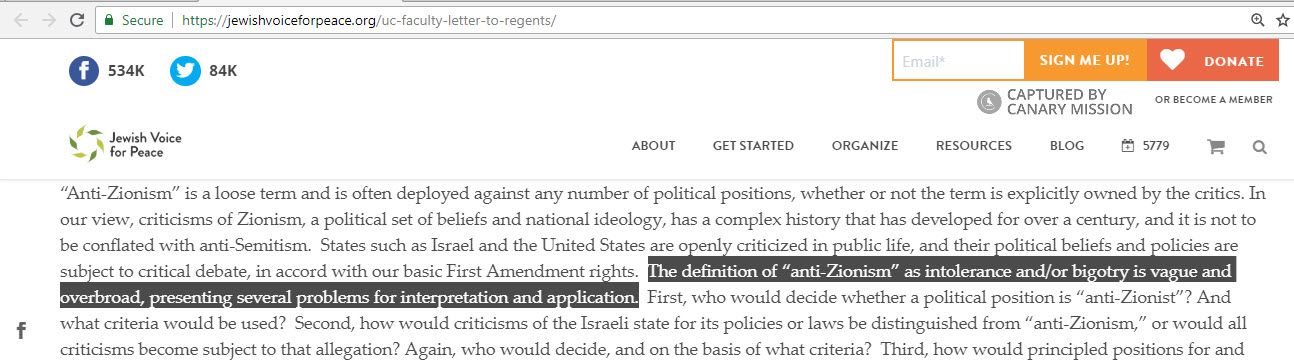
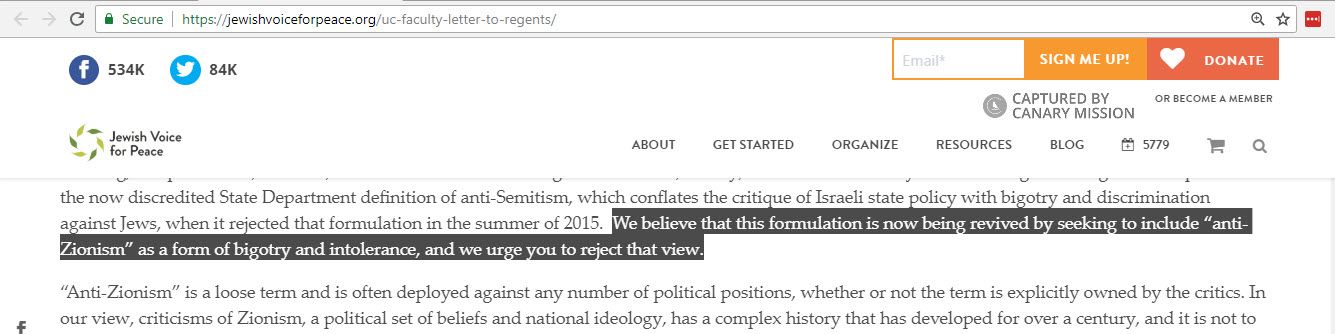
Signatories of the letter argued that “The definition of ‘anti-Zionism’ as intolerance and/or bigotry is vague and overbroad” and urged the Chair of the UC Committee on Academic Freedom to reject the inclusion of anti-Zionism “as a form of bigotry and intolerance.”
Browner signed another letter defending San Francisco State University (SFSU) professors, such as Rabab Abdulhadi, who “previously met with Palestinians from a wide range of backgrounds and perspectives, including members... PLO (Fatah, PFLP, DFLP, Fida, PPP, and Arab Liberation Front) and outside the PLO (Hamas).”
The letter went on to condemn efforts to investigate such activity and stated that “The conflation of criticism of Israel with anti-Semitism has become a standard tactic by… those who seek to censor criticism of Israel. That tactic itself is fundamentally anti-Semitic because it associates with Jewishness an unending list of well-documented racist policies and crimes against humanity committed by the state of Israel.”
Browner also signed a letter, authored by JVP and published on January 25, 2017, condemning Fordham University’s decision to block the establishment of a Students for Justice in Palestine (SJP) chapter at Fordham.
In 2016, Fordham reportedly blocked the formation of a Fordham SJP chapter “based on the reported behavior of other [SJP] chapters on other campuses,” indicating that “the establishment of a local branch could be ‘polarizing’ and pose a safety concern to students and faculty.”
Signatories demanded that Fordham “immediately rescind the rejection of SJP as a student group on campus, apologize to the students affected by this harmful decision, and reaffirm Fordham’s commitment to free speech and academic freedom.”
The petitioners also highlighted SJP’s BDS activity, characterizing SJP’s efforts to promote anti-Israel boycott as part of “a time-honored non-violent mode of political expression.” The petition accused Fordham’s administration of a “fundamental misunderstanding of what boycotts are, the purpose of a university, and the goals of SJP.”
The Center for Constitutional Rights (CCR) in cooperation with Palestine Legal (PL), and civil rights attorney Alan Levine sued Fordham on behalf of four students in April 2017. A New York court annulled Fordham’s decision in August 2019, mandating that the university recognize SJP as an official club.
Fordham appealed the ruling to the NY State Supreme Court Appellate Division in January 2020. On July 24, 2020, Fordham SJP students filed a brief asking the appellate court to deny Fordham’s appeal of the lower court’s decision.
As of October 2020, a variety of groups, not directly involved in the case, filed amicus briefs with the Appellate Division for the court's consideration including JVP.
Supporting BDS
Browner signed an open letter published on May 20, 2016, to the Chancellor of UCLA, slamming her for expressing disapproval for a piece of BDS legislation proposed to the American Anthropological Association (AAA).The letter defended professors who chose to vote in favor of the AAA’s resolution to adopt an academic boycott of Israel, stating: “The faculty has a fundamental right to guide academic policy and standards, including our right to determine freely our association with other scholars and institution.”
Browner reportedly signed a petition to the New York Times condemning anti-BDS activism. Signatories defended BDS activists, characterizing the movement as an expression of “Free speech and thought.”
The petition, published by Change.Org and the Electronic Intifada (EI) on April 30, 2012, attacked a strongly worded advertisement by The David Horowitz Freedom Center, published in the New York Times on April 24, 2012, that decried the accusations BDS levels against Israel as reminiscent of those used to justify the Nazi boycotts against the Jews in the 1930’s.

The signatories responded by claiming: “The Horowitz Center’s advertisement seeks to shut down informed debate. Free speech and thought was a crucial right at stake in 1930s Germany and it remains so today.”
The signatories went on to say they were “alarmed at [the New York Times] carrying an advertisement that misinforms and names individuals who do not have the money that Horowtiz [sic] has to defend themselves through his chosen medium.”
The petition was reportedly started by Snehal Shingavi, an assistant professor of English at the University of Texas (UT) who co-founded Students for Justice in Palestine (SJP) with Hatem Bazian in 2001.
Browner had also signed another open letter opposing a study abroad program to Israel.
The letter, published on March 31, 2009, opposed the reinstitution of the University of California Education Abroad Program (EAP) at Hebrew University in Jerusalem, Israel (HUJI).
Signatories of the letter claimed "Israel has deprived hundreds of thousands of Palestinians of their right to education” and that “The designated site of UC’s EAP, Hebrew University (HU), has a longstanding and documented record of discriminating against Palestinian students.”
In 2002, Browner signed a petition demanding “Israeli evacuation of all settlements in the occupied territories except those within the agreed swapped areas.”
The letter declared that the “international community” must impose a “workable peace” on Israelis and Palestinians who are “unwilling or unable to negotiate a workable peace.”
The letter also claimed that the “U.S. bears a special responsibility for the current tragic impasse, by virtue of our massive economic and military support for the Israeli government...Our country has an extraordinary leverage on Israeli policy.”
The letter concluded: “As American Jews... we call on our government to make continued aid conditional on Israeli acceptance of an internationally agreed two-state settlement.”
BDS
The Boycott, Divestment, Sanctions (BDS) movement was founded by Omar Barghouti in 2005 to challenge “international support for Israeli apartheid and settler-colonialism.” BDS is an allegedly “Palestinian-led movement,” although leading BDS activists have admitted [00:01:01] this is not true.
One of the demands of BDS includes [point 3] what is generally known as the “right of return,” a demand discredited as a way to eliminate Israel. Barghouti said the “right of return” is a means to “end Israel’s existence as a Jewish state.”
Barghouti has said that BDS “aims to turn Israel into a pariah state, as South Africa once was.”
In his activism, Barghouti has also said [00:05:55] regarding Israel: “Definitely, most definitely, we oppose a Jewish state in any part of Palestine. No…rational Palestinian, not a sellout Palestinian, will ever accept a Jewish state in Palestine.”
The movement has been linked to numerous terrorist organizations and received a public endorsement from Hamas in 2017.
BDS initiatives include calling on institutions and individuals to divest from Israeli-affiliated companies, promoting academic and cultural boycotts of Israel, and organizing anti-Israel rallies, protests and campaigns.
The movement’s most notable achievement has been the infiltration of university campuses through lobbying for “BDS resolutions.” In these cases, student governments and student groups, backed by their own anti-Israel members and affiliates, have proposed resolutions on some form of boycott of, or divestment from, Israel and Israeli-affiliated entities.
Boycott resolutions, although non-binding, have been passed by student governments on numerous North American campuses.
BDS activity is often aggressive and disruptive. It has been noted that universities that pass BDS resolutions see a marked increase in anti-Semitic incidents on campus. On one campus, when the student government debated a BDS resolution, reports emerged of violent threats against those opposing it.
Social Media and Weblinks
University Website:https://anthro.ucla.edu/faculty/carole-browner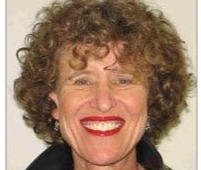
- Status:
- Professor
- University:
- California-Los-Angeles
- Organizations:
- BDS
- Related Profiles:
- Last Modified:
- 05/04/2026
Photos & Screenshots