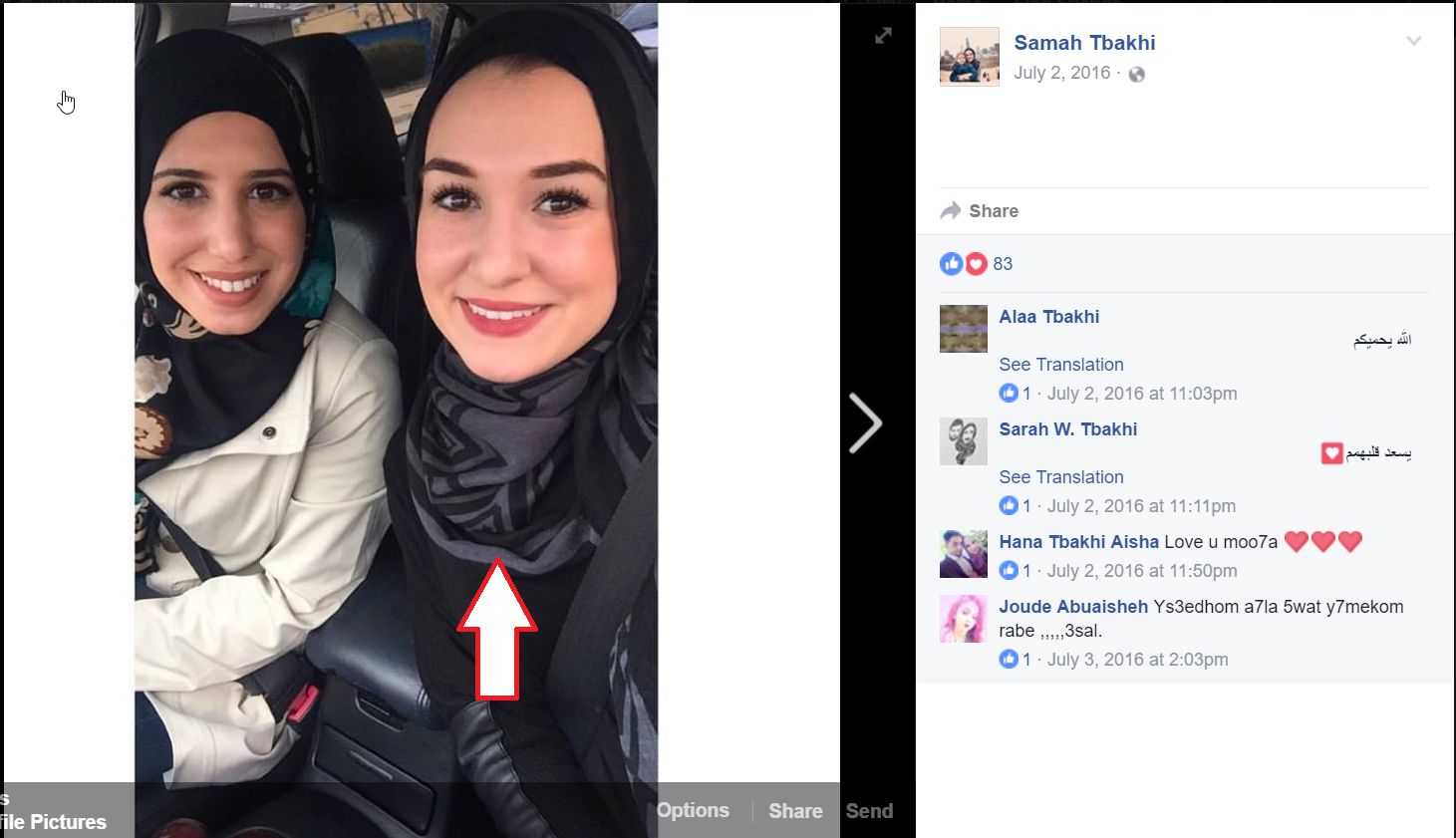
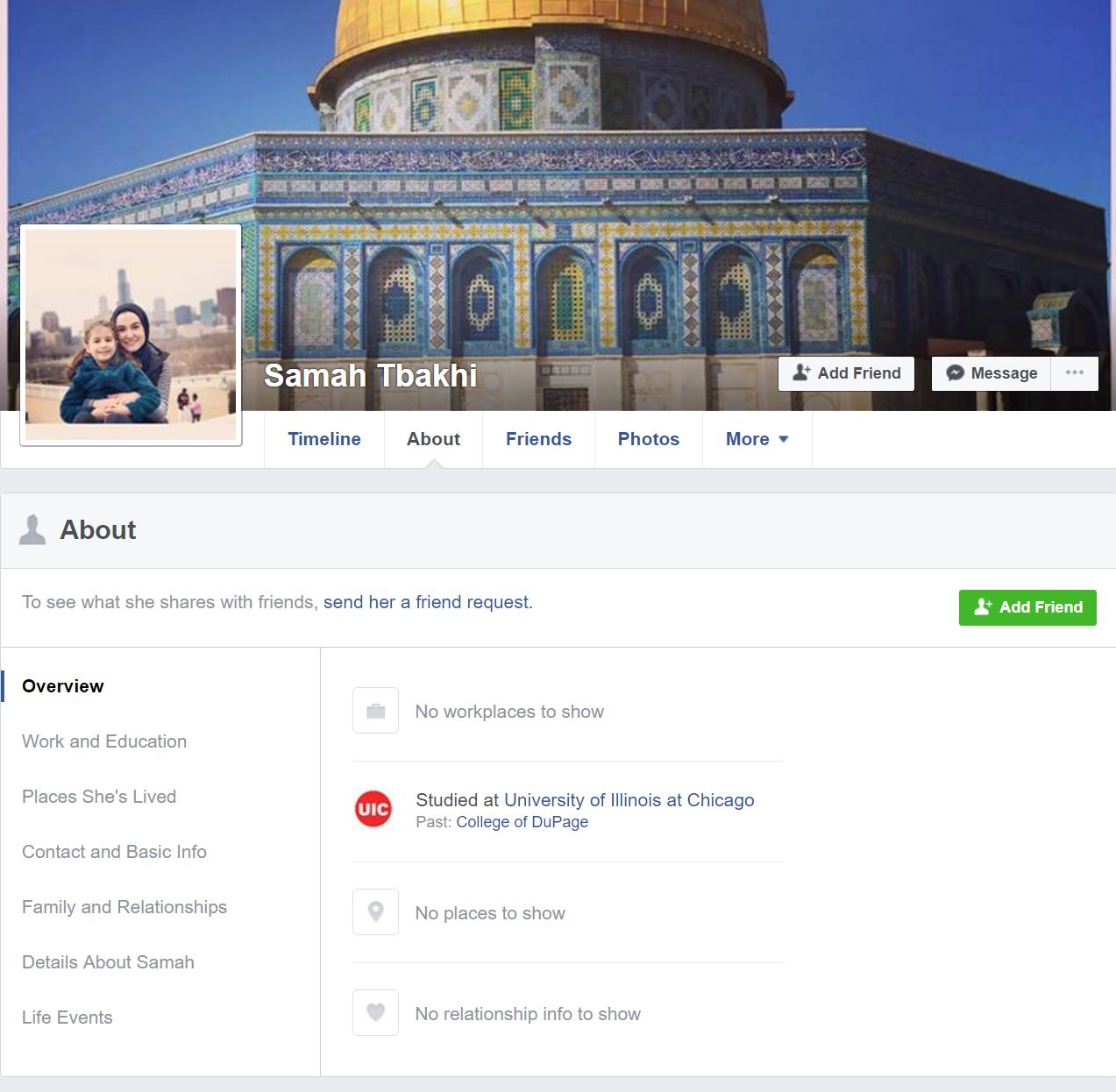
Samah Tbakhi
Overview
Tbakhi is a member of the Muslim Students Association (MSA) at the University of Illinois, Chicago (UIC) Facebook group.
Tbakhi was an activist with American Muslims for Palestine (AMP). In July 2014, Tbakhi attended and led as well as tweeted support for various anti-Israel demonstrations — co-organized by AMP and Students for Justice in Palestine (SJP)-Chicago.
Tbakhi is also a supporter of the Boycott, Divestment and Sanctions (BDS) movement.
In January 2019, Tbakhi was listed as the Outreach Coordinator at UIC’s Arab American Cultural Center as well as an undergraduate student at UIC majoring in “Psychology Criminology, Law and Justice.”
As of January 9, 2018, Tbakhi used the name “Samah Tb” on Facebook.
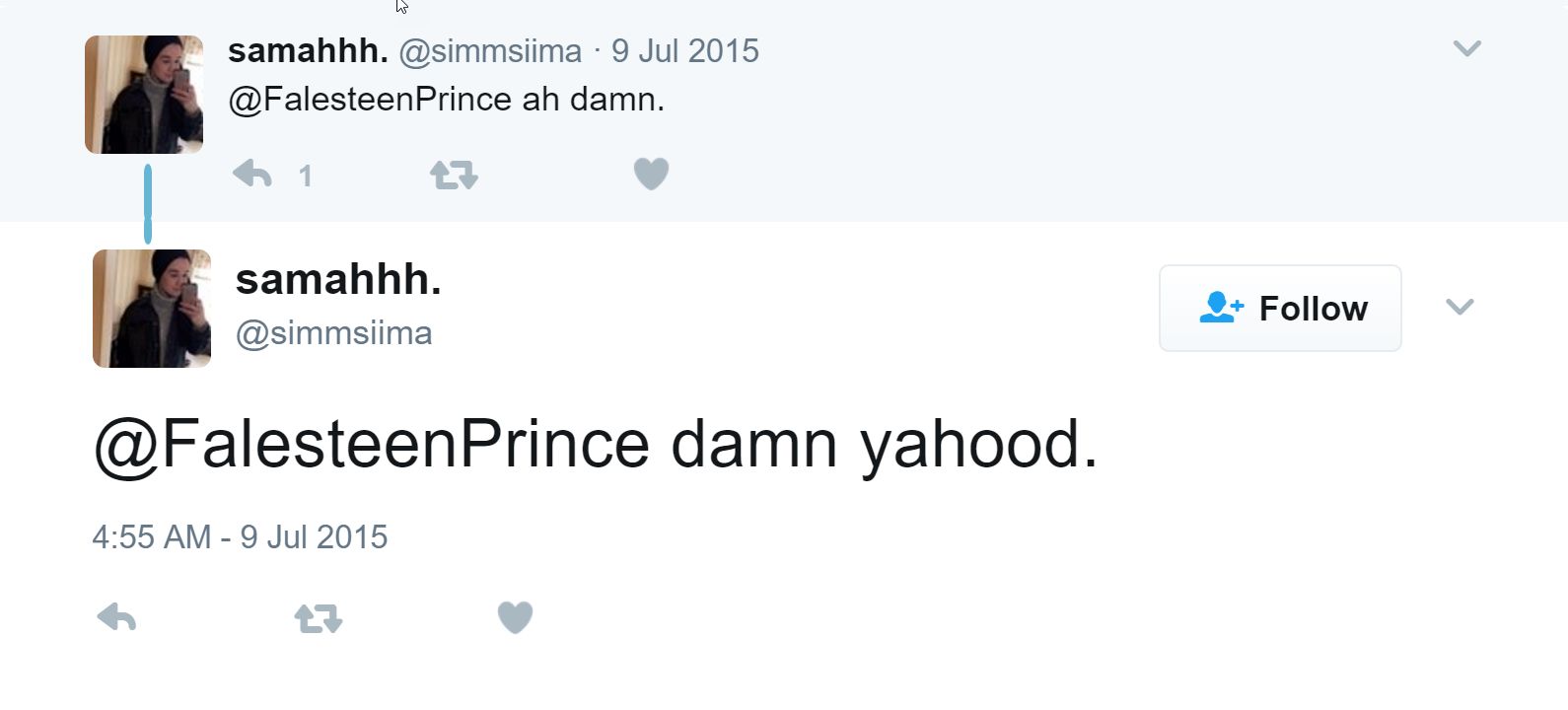
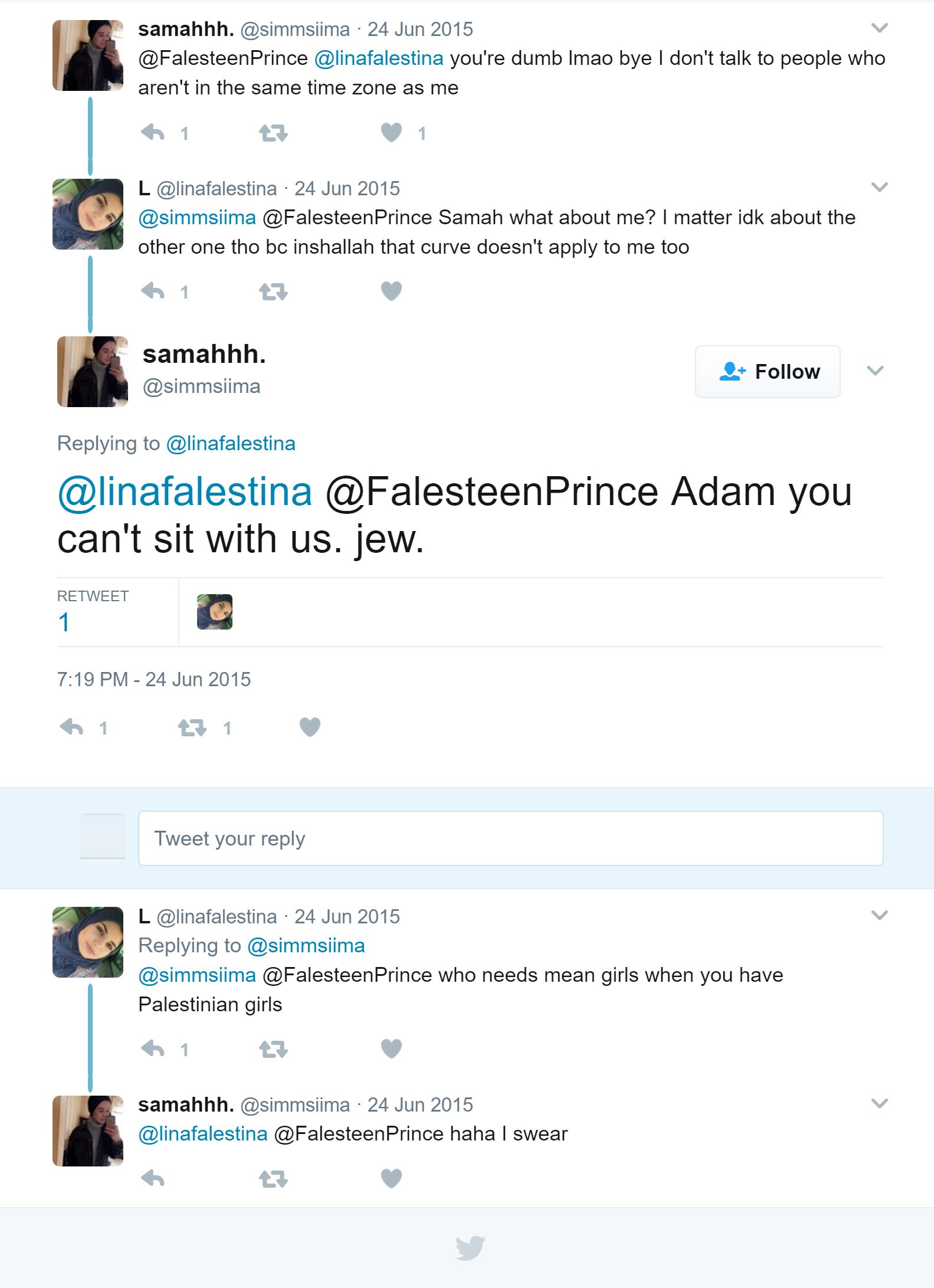
Anti-Jewish Media Posts
Anti-Semitic Conspiracy Theories
Hatred of Israel
MSA
The MSA was established by members of the Muslim Brotherhood in January 1963 at the University of Illinois, Urbana-Champaign, with the goal of "spreading Islam as students in North America." A 2004 FBI investigation uncovered an internal Muslim Brotherhood document in which a brotherhood leader identified the MSA as "one of our organizations."
The MSA reportedly has “nearly 600 chapters” located in the United States and Canada, and is “the most visible and influential Islamic student organization in North America,” boasting conferences, special events, publications, websites and other activities.
The organization includes a number of previous chapter presidents with explicit links to terrorist groups. Included are al-Qaeda cleric Anwar al-Awlaki (Colorado State University), Somali al-Shabaab militant leader Omar Shafik Hammami (University of South Alabama) and Pakistani Taliban recruiter Ramy Zamzam of the MSA's Washington, D.C. council.
AMP
American Muslims for Palestine (AMP) was founded by UC Berkeley Professor Hatem Bazian as a vehicle to generate mainstream support in the United States for the Palestinian national cause.
On its website, the organization lists Bazian as the chairman of its national board and describes itself as “a national education and grassroots-based organization, dedicated to educating the American public about Palestine and its rich cultural, historical and religious heritage.”
The Anti-Defamation League (ADL) has accused AMP of promoting “extreme anti-Israel views and has at times provided a platform for anti-Semitism under the guise of educating Americans” about Palestinians. The ADL further stated that AMP is directly involved in campus-based anti-Israel activity through Students for Justice in Palestine (SJP).
Prior to founding the AMP in 2006, Dr. Bazian created SJP together with fellow UC Berkeley Professor Snehal Shingavi in 2001. The close working relationship between AMP and SJP has been documented several times over the years by several organizations, including NGO Monitor and StandWithUs.
In addition to providing financial, public relations and legal assistance to SJP, AMP has also been accused of having connections to Hamas. The AMP national board includes former members of both the Islamic Association of Palestine (IAP) and Holy Land Foundation (HLF), both of which were found liable for aiding and abetting Hamas. The IAP was founded by Mousa Mohammed Abu Marzook, a senior member of Hamas.
SJP
SJP is a student organization engaged in anti-Israel activity on North American college and university campuses.
The first chapter of SJP was founded in 2001 at the University of California at Berkeley by Professor Hatem Bazian. Bazian has spread classic anti-Semitism, reportedly promoted religious anti-Semitism and defended the Hamas terror group. In 2004, Bazian called for “intifada” in America.
SJP organizes anti-Israel campaigns, including running annual Israel Apartheid Weeks, often in collaboration with Jewish Voice for Peace (JVP) and Muslim Students Association (MSA) campus chapters.
SJP has been a major force in pushing the anti-Semitic Boycott, Divestment, Sanctions (BDS) movement on campuses. Chapters have initiated dozens of BDS resolutions in student governments, which have been proposed on or around Jewish holidays, a time when many Jewish students are off-campus.
SJP activists have reportedly physically assaulted, intimidated and harassed Jewish students, disrupted pro-Israel campus events and demonized pro-Israel campus organizations.
Chapters have often endorsed and campaigned for numerous terrorists and whitewashed terrorism.
BDS
The Boycott, Divestment, Sanctions (BDS) movement was founded by Omar Barghouti in 2005 to challenge “international support for Israeli apartheid and settler-colonialism.” BDS is an allegedly “Palestinian-led movement,” although leading BDS activists have admitted [00:01:01] this is not true.
One of the demands of BDS includes [point 3] what is generally known as the “right of return,” a demand discredited as a way to eliminate Israel. Barghouti said the “right of return” is a means to “end Israel’s existence as a Jewish state.”
Barghouti has said that BDS “aims to turn Israel into a pariah state, as South Africa once was.”
In his activism, Barghouti has also said [00:05:55] regarding Israel: “Definitely, most definitely, we oppose a Jewish state in any part of Palestine. No…rational Palestinian, not a sellout Palestinian, will ever accept a Jewish state in Palestine.”
The movement has been linked to numerous terrorist organizations and received a public endorsement from Hamas in 2017.
BDS initiatives include calling on institutions and individuals to divest from Israeli-affiliated companies, promoting academic and cultural boycotts of Israel, and organizing anti-Israel rallies, protests and campaigns.
The movement’s most notable achievement has been the infiltration of university campuses through lobbying for “BDS resolutions.” In these cases, student governments and student groups, backed by their own anti-Israel members and affiliates, have proposed resolutions on some form of boycott of, or divestment from, Israel and Israeli-affiliated entities.
Boycott resolutions, although non-binding, have been passed by student governments on numerous North American campuses.
BDS activity is often aggressive and disruptive. It has been noted that universities that pass BDS resolutions see a marked increase in anti-Semitic incidents on campus. On one campus, when the student government debated a BDS resolution, reports emerged of violent threats against those opposing it.
Social Media and Weblinks

Photos & Screenshots