University of South Florida Failed Encampments
The university put an immediate end to two encampments, but not to its antisemitism problem
University of South Florida Failed Encampments
The university put an immediate end to two encampments, but not to its antisemitism problem
Share:

University of South Florida's Failed Encampments
Between April 29, 2024, and April 30, 2024, students, staff and outside agitators at the University of South Florida (USF) in Tampa joined pro-Hamas protests across the country attempting to establish encampments to force universities to cut ties with Israel and its military suppliers.
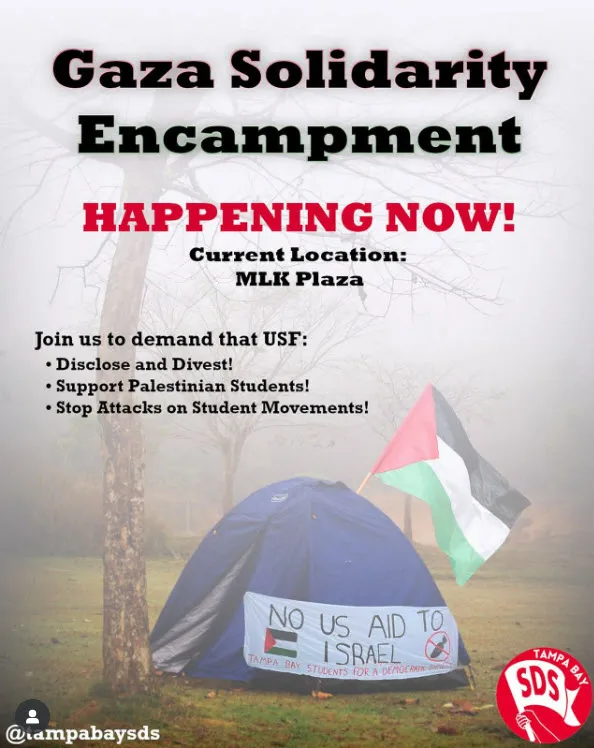
The protests at USF were organized by Tampa Bay SDS, despite the group being under interim suspension by the university for previous protest violations. The group is the USF chapter of Students for a Democratic Society (SDS), a rebooted version of the far left organization that spearheaded the student movement of the 1960s. SDS also included the Weather Underground, a domestic terrorist group responsible for bombing government buildings, among other violent activities.
Before the protest, USF warned the group that tents were prohibited on campus as well as demonstrations near academic buildings, especially during the week of final exams (which is when the encampment protests occurred). The university stated that violations could result in immediate interim suspension and additional sanctions.
The university also warned the group several times, including on the morning of April 29, that suspended student organizations were not permitted to host events and activities.
First Encampment Attempt
On April 29, 2024, close to 80 protesters gathered near the university’s library around noon. After a “tense exchange” with administration representatives, the group moved to the Dr. Martin Luther King Jr. Plaza lawn.
When protesters began to erect tents, university police, supported by Florida Highway Patrol troopers, intervened.
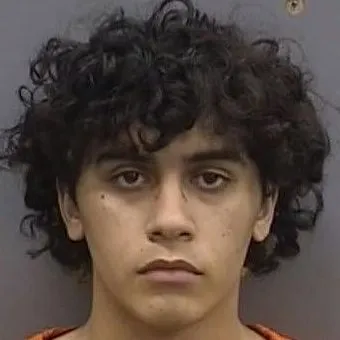
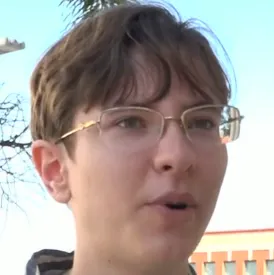
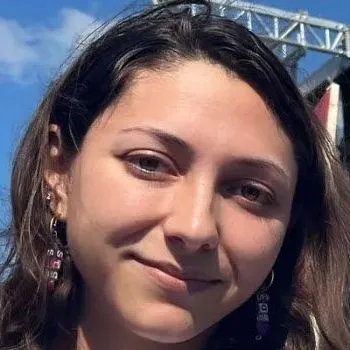
Police initially arrested one protester, after which two others were arrested for lying atop the tents. The arrested protesters included:
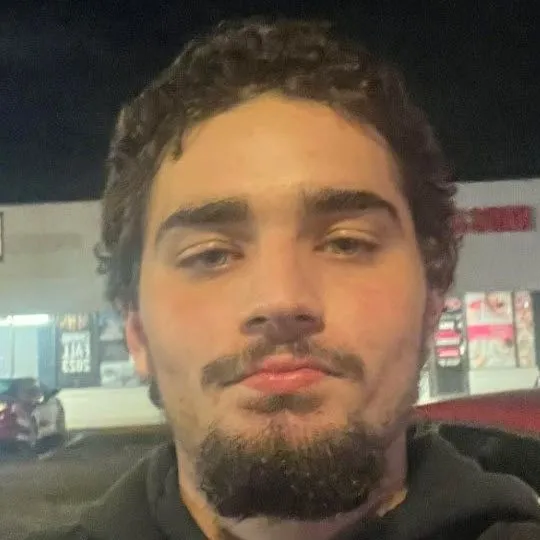
- Maria Hollenback, 29, a WUSF (USF’s public radio station) staff assistant, who was charged with felony battery on a law enforcement officer, resisting an officer with violence and trespassing. She pleaded not guilty.
- Sebastian Martinez, 18, a USF student, who was originally charged with resisting an officer without violence and trespassing. He was later charged with felonies. All the charges against Martinez were subsequently dropped.
- Simon Roe, 23, who was not affiliated with USF and who was charged with trespassing. Rowe was accepted into the Misdemeanor Intervention Program, which means the charges against Rowe will most likely be dismissed.
Law enforcement ordered the remaining protesters to disperse, warning that those who did not would face trespassing charges. Protesters sat on blankets before finally leaving the area shortly before 6 p.m.
Second Encampment Attempt
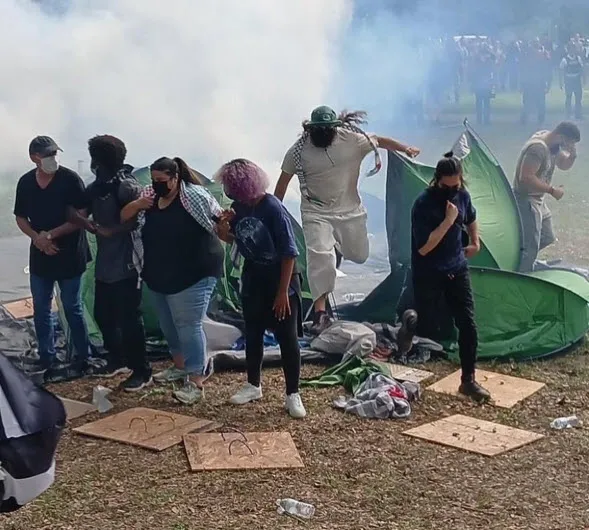
The next day, April 30, 2024, beginning in the morning, about 75-100 protesters, many carrying wooden shields, umbrellas and tents, congregated near the Martin Luther King Jr. Plaza. The university reported that as the day progressed, USF police monitored social media posts and, in conjunction with their observations, concluded that the protesters planned to use these items as weapons to resist university staff and law enforcement.
As a result, police deemed the protest no longer peaceful and, beginning at 4:45 p.m., informed protesters they would need to disperse. Protesters were warned that failure to comply would result in further actions, including arrest.
By 5:20 p.m., after protesters refused to comply with multiple warnings, police used tear gas to disperse the crowd. With support from the Florida Highway Patrol, Hillsborough County Sheriff’s Office and Tampa Police Department, officers arrested 10 protesters.
It was later revealed that one of the arrestees was carrying a concealed firearm.
Of those arrested, four were current students, two were former students who didn't graduate and four were not affiliated with USF. All were charged with unlawful assembly; two were charged with battery on a law enforcement officer, one with aggravated assault with intent to commit a felony with a weapon and one with felony possession of a firearm on school property.
The arrestees included:
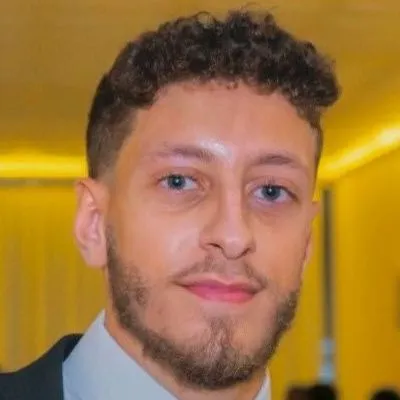
- Adnan Elyaman, a former USF student, who was charged with unlawful assembly, trespassing on property other than a structure or conveyance and resisting an officer without violence.
- Anas Khalid Juma, a 2024 graduate of USF, who was charged with resisting an officer without violence, unlawful assembly and trespass on property other than a structure or conveyance.
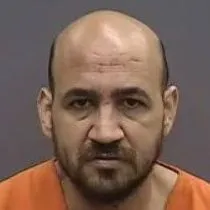
- Atah Othman, who was not affiliated with USF and who was charged with trespassing on property other than a structure or conveyance, unlawful assembly, possession of a firearm on school property and resisting an officer without violence. According to Hillsborough County affidavits, Othman had a gun on campus. He was originally charged with felonies, but those charges were later dropped. Othman was adjudged guilty of trespassing, resisting an officer and unlawful assembly.
- Bailey Wagner who was charged with unlawful assembly, trespassing on property other than a structure or conveyance and resisting an officer without violence. Wagner was accepted into the Misdemeanor Intervention Program.
- Cameron Pressey, a graduate of the University of Massachusetts Amherst, who was charged with unlawful assembly, trespassing on property other than a structure or conveyance and resisting an officer without violence. Pressey was accepted into the Misdemeanor Intervention Program.
- Daniel Powell, a freelance instructional designer at Genesco and graduate of Western Governors University, who was charged with unlawful assembly, trespassing on property other than a structure or conveyance and resisting an officer without violence.
- Jake Geffon, who was not affiliated with USF and who was charged with battery on a law enforcement officer, resisting an officer with violence and trespassing on property other than a structure or conveyance. According to Hillsborough County affidavits, Geffon threw his wooden shield at deputies and was originally charged with felonies. Those charges were later dropped, and Geffon only faced misdemeanors.
- Leonardo Tilelli, a former community volunteer at USF, who was charged with trespassing on property other than a structure or conveyance, unlawful assembly, resisting an officer without violence, felony battery on a law enforcement officer and felony resisting an officer with violence. Leonardo Tilelli, a communications major, had his misdemeanor charges dropped. However, he is still facing felony battery on a law enforcement officer and resisting an officer with violence. According to a Hillsborough County arrest affidavit, Tilelli “physically and intentionally attempt[ed] to strike” an officer. Tilelli entered a “guilty best interest” plea in September, which registers a “formal admission of guilt” while maintaining his innocence.
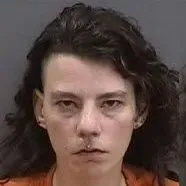
- Sarah Fayiz, who was charged with trespassing on property other than a structure or conveyance, unlawful assembly and resisting an officer without violence. Fayiz was accepted into the Misdemeanor Intervention Program.
- Emmanuel Atmosfera, a student at USF, who was charged with resisting an officer with violence, disrupting school or a lawful assembly, resisting an officer without violence, trespassing upon school grounds after notice and aggravated assault with intent to commit a felony with a weapon.
According to a Hillsborough County affidavit, Atmosfera “willfully and intentionally threw” a tear gas canister back at officers. He was initially charged with felonies and misdemeanors, but the felony charges were later dropped. He will most likely be admitted into the Misdemeanor Intervention Program, according to his lawyer.
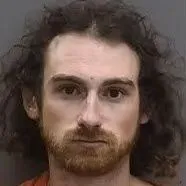
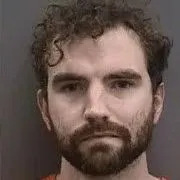
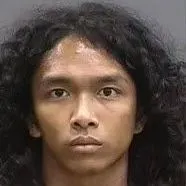
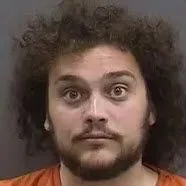
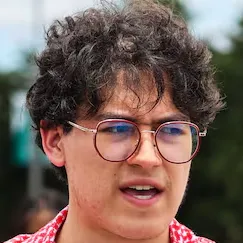
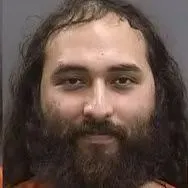
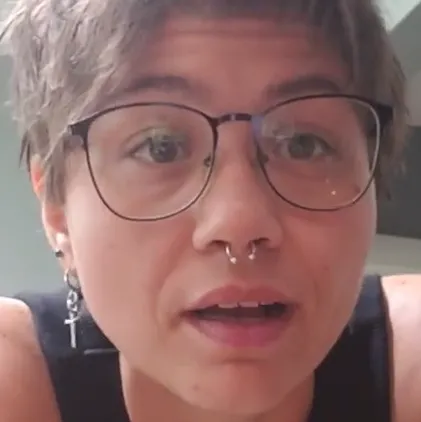
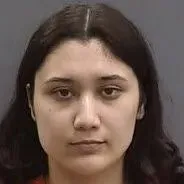
See profiles of arrestees below
Disciplinary Action
Following the protests, USF took disciplinary actions against the arrested students and two organizers who were not arrested.
The organizers were identified as:
- Victoria Hinckley, a USF senior majoring in sociology and women's studies and president of Tampa Bay SDS
- Joseph Charry, an incoming junior and sociology major, who served as the liaison between Tampa Bay SDS and the administration
Hinckley and Charry were not arrested but were charged by USF with violating the university’s code of conduct, including encouraging others to violate university standards, disruptive conduct, failing to comply with law enforcement or administration, failing to comply with university policies related to health and safety, failing to follow local, state or federal law and illegal possession of a firearm, weapon or explosives.
Hinckley was expelled just days before graduation, which barred her from graduating and prevented her from obtaining a degree. According to the university’s code of conduct, a student can be expelled when he or she “is considered not in good conduct standing permanently with the university.”
Charry, an international student from Colombia, was suspended until May 2025 with the understanding that his suspension may result in his deportation.
Hinckley and Charry appealed the charges, but the administration upheld them.
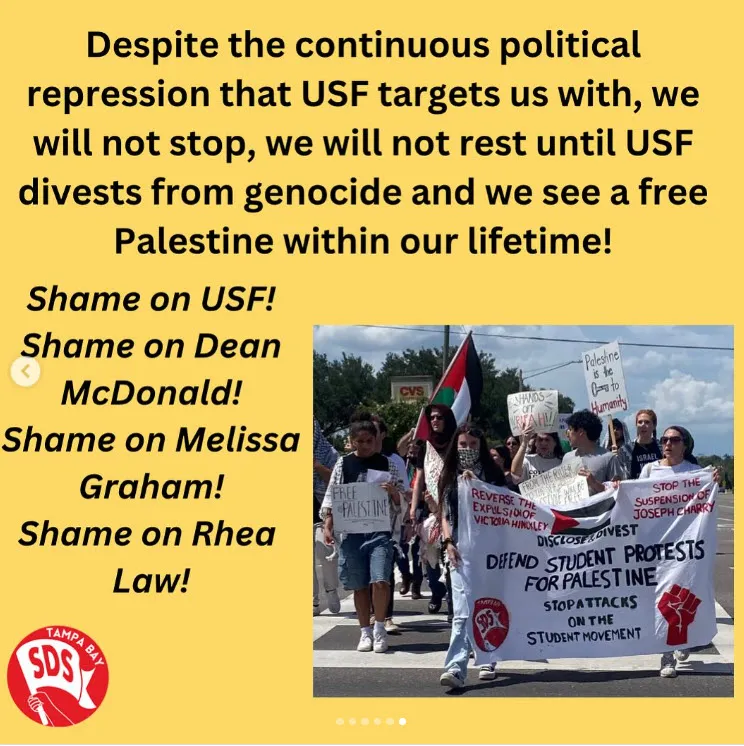
Tampa Bay SDS was charged with the same violations as Hinckley and Charry and permanently banned from all USF campuses after a July 2024 hearing, prompting Charry to declare that the university does not have the right to tell members that SDS is a “banned group.”
The students who were arrested faced criminal charges ranging from misdemeanors, including unlawful assembly and resisting arrest, to felonies, including resisting an officer and aggravated assault with a weapon.
The university also took disciplinary action against the students for violating the student code of conduct; however, the consequences of those violations were not made public due to student privacy laws.
Lead Up to the Encampments: Divestment Resolutions
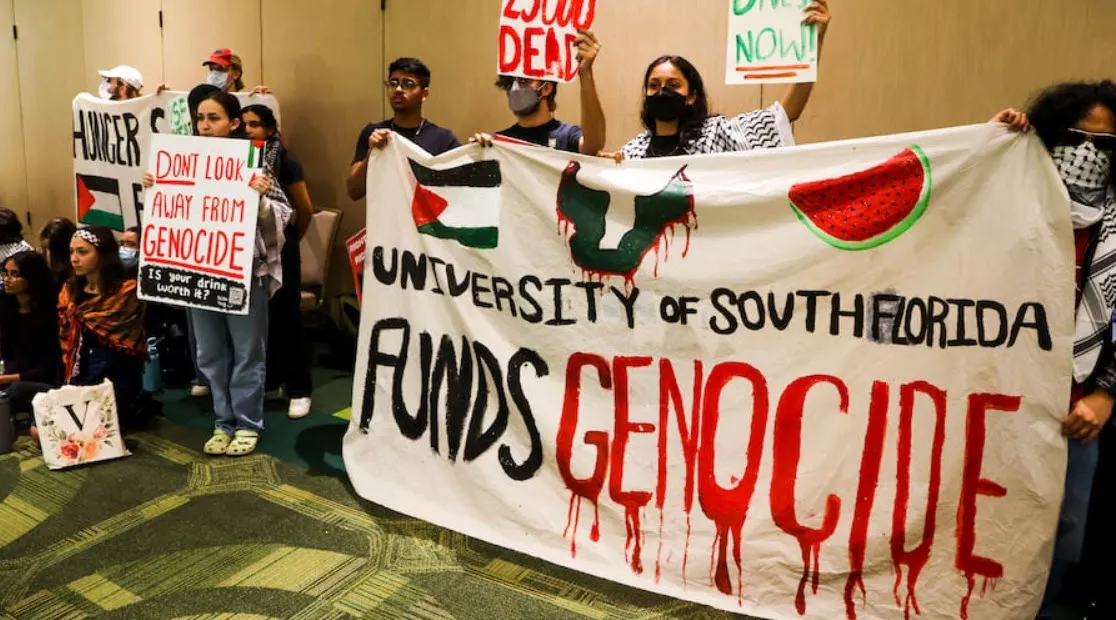
On March 18, 2024, 18 students belonging to a group called USF Divest Coalition began a hunger strike, demanding that USF’s Board of Trustees end financial ties with companies that support Israel’s war effort in Gaza. The students also demanded that USF President Rhea Law call for a ceasefire.
University administrators did not meet with the hunger strikers. Instead, they responded by stating that the university does not directly invest in any company or stock, but contracts with fund managers who invest in a “variety of asset classes, which include companies in most major industries.”
Administrators further noted that Florida law does not allow public universities to make decisions regarding investments based “on social, political or ideological interests” and “prohibits the use of factors other than potential return and risk in making investment decisions.”
After 17 days and with at least two students requiring hospitalization, the students ended their hunger strike, vowing instead to take legal action against USF administrators for “infringing” on their “civil rights” by not making the university’s investments public.
The protesters then turned to USF’s student government to petition the trustees to divest from Israel. On April 9, 2024, USF’s student senate narrowly passed a resolution calling on the school to stop investing in companies that support Israel. The resolution passed by a vote of 16-15, with the Senate president casting a vote to break the tie.
The resolution was amended to remove specific references to the Israel-Hamas conflict, but its core demand remained: divestment from companies – including Boeing, Lockheed Martin, Northrop Grumman, Hewlett-Packard and Caterpillar – that the proponents claimed did business with Israel.
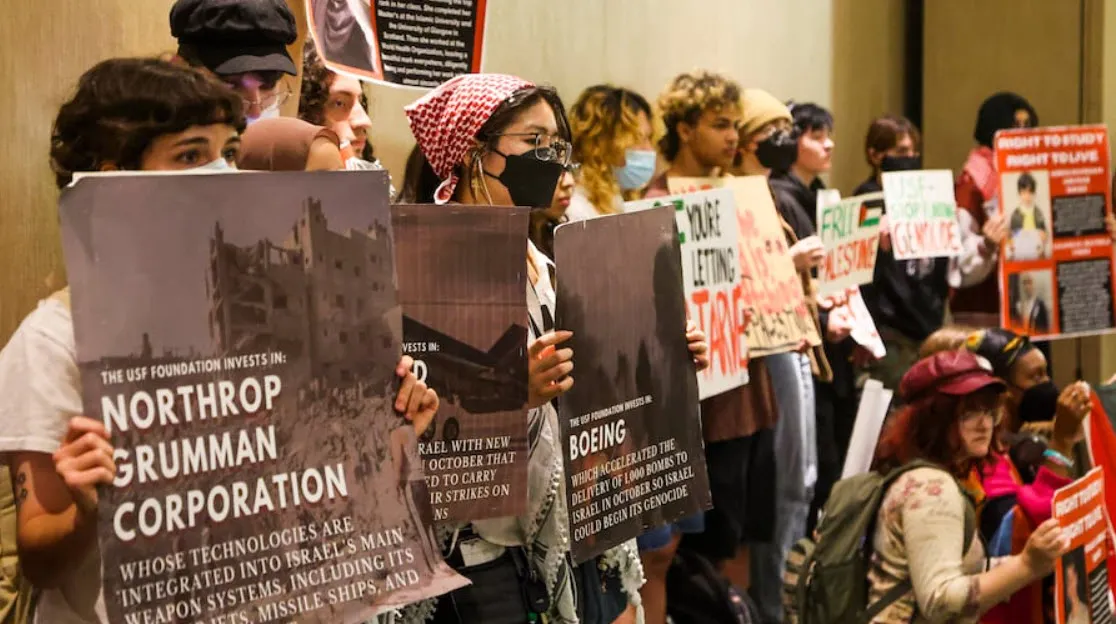
The university’s board of trustees again rejected the resolution, citing the above Florida policy.
USF’s history of student government divestment resolutions dates back to 2013, when a referendum was passed by the student government but immediately nullified by the administration.
The resolution was followed by a divestment petition initiated by Students for Justice in Palestine at USF in 2014, which garnered 10,000 signatures. The petition was subsequently rejected by the USF Foundation Investment Committee.
In 2016, the student government passed yet another divestment resolution, which was vetoed by the student body president and vice president.
The next year, 2017, the student senate passed a divestment resolution by a vote of 32-12 (with five abstentions). A similar resolution was passed again in 2018. With each of these initiatives, the administration remained firm that it would not change its investment policy.
Student initiatives at USF are non-binding, which means that the university is not required to take action.
The divestment resolutions were accompanied by campus protests against Israel.
Administration Ignores Rampant Antisemitism
Although the university has consistently dismissed the divestment demands of USF’s anti-Israel protesters, it has also ignored complaints of antisemitic assaults, harassment and intimidation reported by Jewish students.
Speaking to the Jewish Press in May of 2024, USF junior Ethan Brooks said that about 100 complaints of antisemitic incidents had been filed with USF police with no response. The complaints ranged from physical assaults at protests to having a Nazi SS flag affixed to the door of a Jewish student’s room (identifiable by the mezuzah).
Since the October 7, 2023, massacre of 1,200 Israelis by Hamas terrorists, Jewish students at USF reported that chants, posters and other actions by anti-Israel protesters on campus calling for the annihilation of Israel and the deaths of Jews were frequent, creating an atmosphere of fear and intimidation on campus.
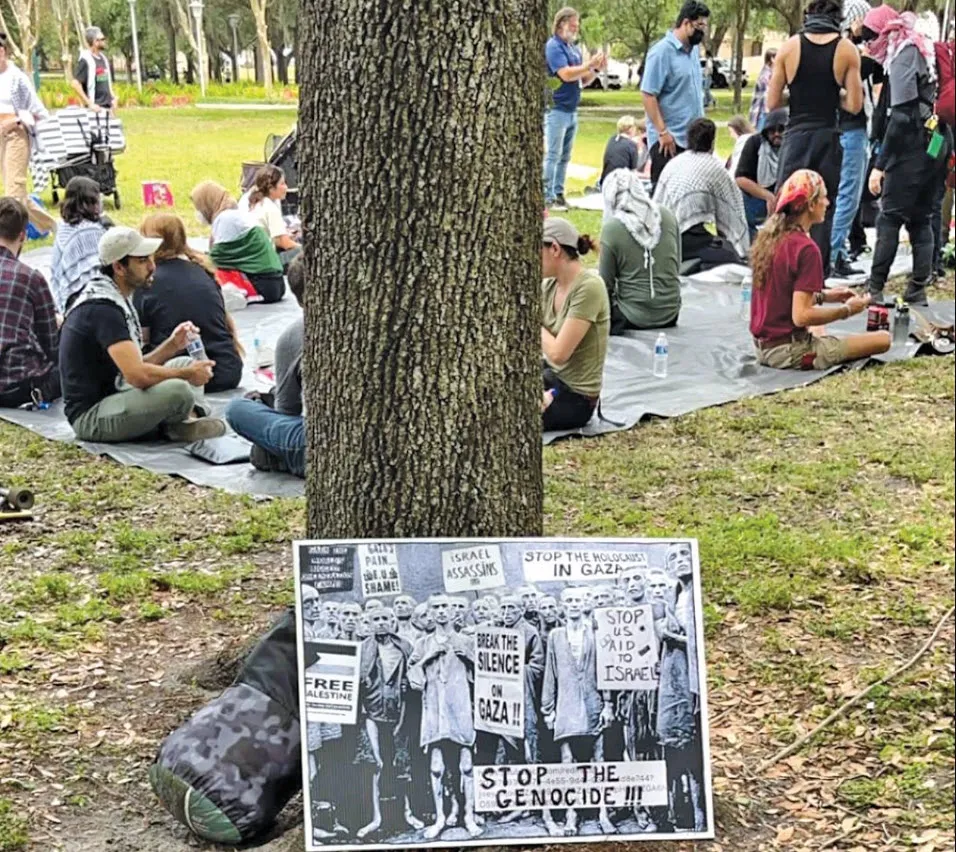
Some Jewish students were afraid to openly identify as Jewish, some wouldn’t go to the library and others avoided the student center altogether.
Three days after the massacre, Jewish students held a vigil at USF’s Hillel center to grieve for those killed. Protesters drove by, honking their horns and blasting Arabic music.
The next day, university police notified Hillel of a bomb threat.
When Hillel heard that a large protest was planned for April 29, 2024 (the first encampment attempt, which coincided with the Jewish holiday of Passover and finals week), the center stayed open until midnight to offer a safe place for students to study or just take a break from the charged antisemitic atmosphere on campus.
Therapists were on hand for counseling, and free homemade kosher for Passover meals were brought in. The center remained open late for the next three nights as protests raged.
“The therapists were not there to advise [the students] on what to do or not regarding the situation on campus, but to give support to face the hatred, gaslighting and overall toxicity of the environment on campus – to help them cope with the effects of antisemitism and poor leadership,” said Sylvie Feinsmith, the executive director of Hillels of the Florida Suncoast.
Shortly after the October 7, 2023, attack, Jewish students requested a meeting with USF President Rhea Law. That request was met with no response until the day after the second encampment attempt (April 30, 2024).
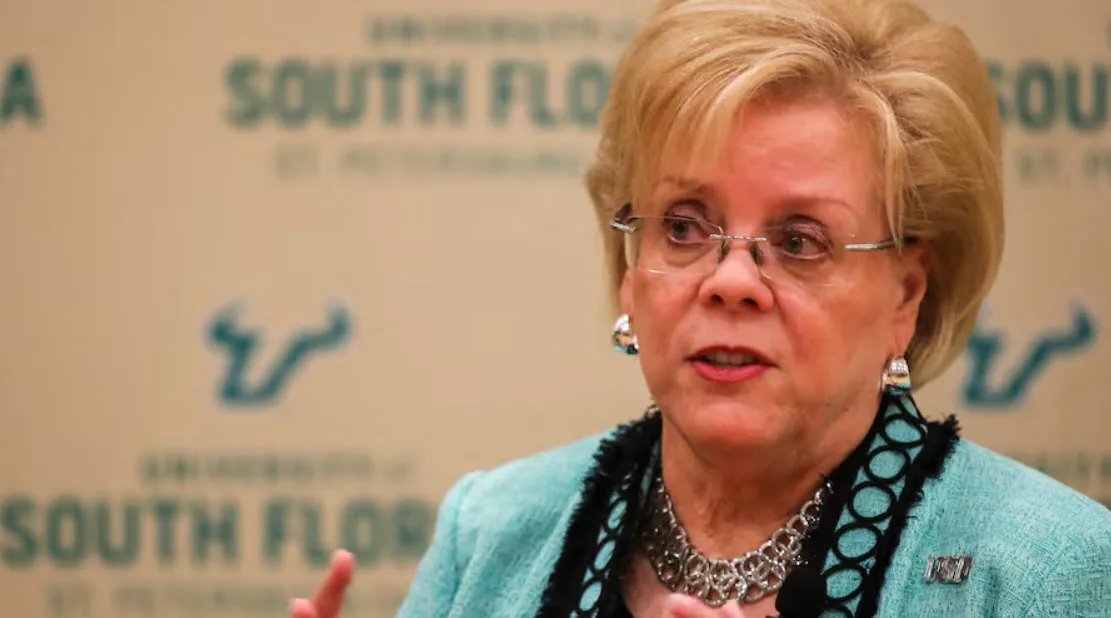
Jake Kamp, a senior at USF in 2024, said that Law had “turned a blind eye to Jewish students” and failed to enforce USF’s own policies. He speculated that the only reason police were called in to break up the protests was not because of Law, but due to Florida Governor Ron DeSantis, who ordered a firm response to campus protests by law enforcement agencies, with a stated policy of no negotiations or concessions to protesters.
DeSantis also directed state university system officials to make it easier for out-of-state Jewish college students to transfer to Florida universities due to “leaders of so-called elite universities enabling antisemitic activities, rather than protecting their students from threats and harassment.”
A Brandeis University survey showed that Florida universities did not have rampant antisemitism like their “elite” counterparts. However, missing from the survey was USF, which most likely did not make it into the Brandeis survey due to the small number of Jewish students at the university.
USF has about 1,200 Jewish undergrads, which constitute 3.3 percent of the student population, and 200 graduate students (1.7 percent).
A December 27, 2023 article by members of Mothers Against College Antisemitism in the Jerusalem Post bore a headline declaring “USF is a safe haven for antisemitism.”
The article detailed how, just days after the October 7 attack, Jewish students at USF were too scared to sleep in their dorm rooms and apartments, fearing violence from the rabid anti-Israel crowd at the university.
It documented how campus groups promote Popular Front for the Liberation of Palestine (PFLP) terrorists, yet are allowed to use university funds to promote their events.
The article noted, among many other examples, a six-hour demonstration by multiple student groups at a USF-owned Starbucks located inside the school’s library, where protesters terrorized and taunted Jewish students studying for finals.
In each case, USF’s administration and police were aware of the situation yet chose to take no action, according to the authors.
In February 2024, the U.S. Department of Education's Office for Civil Rights opened a Title VI investigation into USF for potential violations by the university concerning its treatment of Jewish students. As of March 2025, USF remains among 60 schools under active investigation by the department.