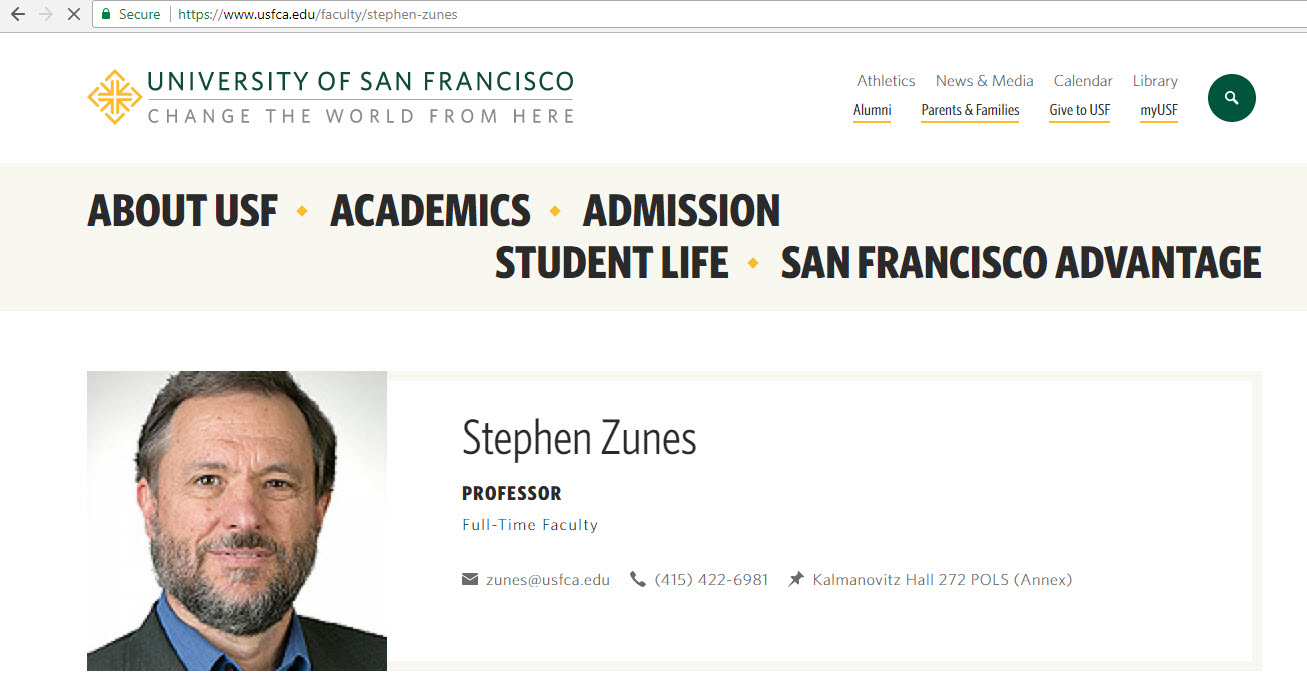
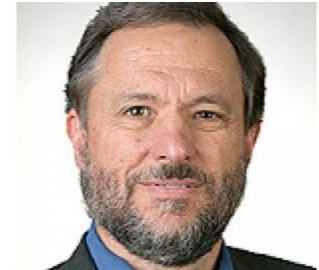
Stephen Zunes
Overview
Stephen Zunes is a vocal advocate of the Boycott, Divestment, Sanctions (BDS) movement and has condemned support for anti-BDS legislation in the United States.Zunes is a professor of Political Science at the University of San Francisco California (USFCA).
Supporting BDS
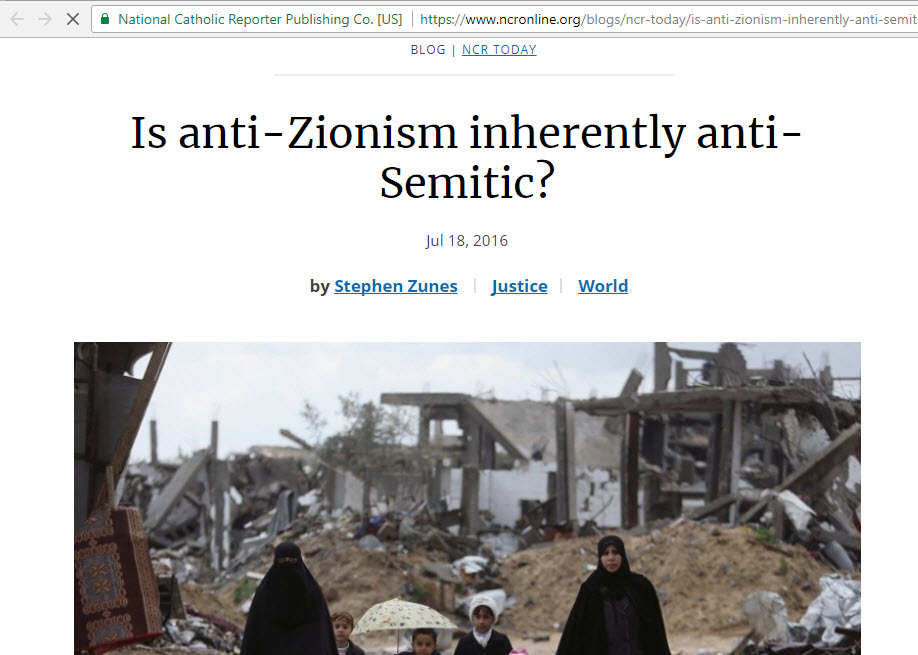
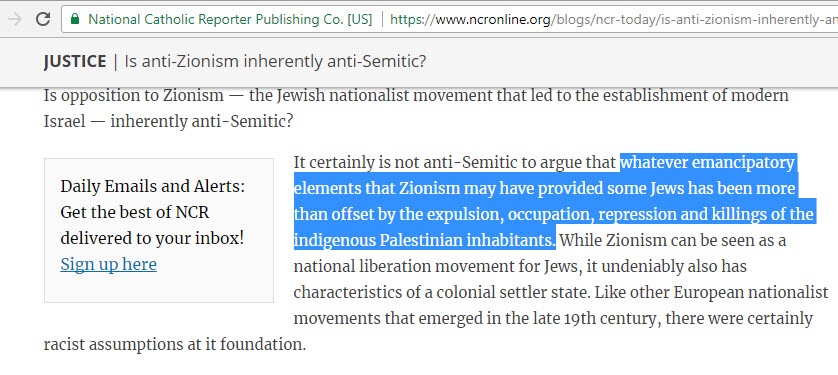
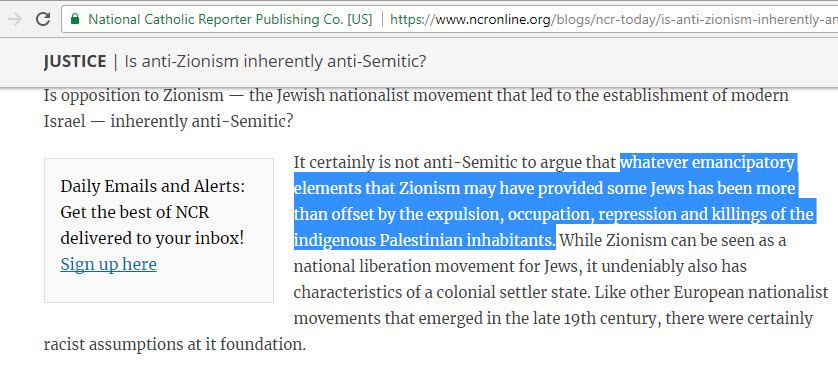
On July 18, 2016, Zunes published an article in which he argued that BDS and other anti-Israel activism does not constitute anti-Semitism.In the article, Zunes wrote that “whatever emancipatory elements that Zionism may have provided some Jews has been more than offset by the expulsion, occupation, repression and killings of the indigenous Palestinian inhabitants.”
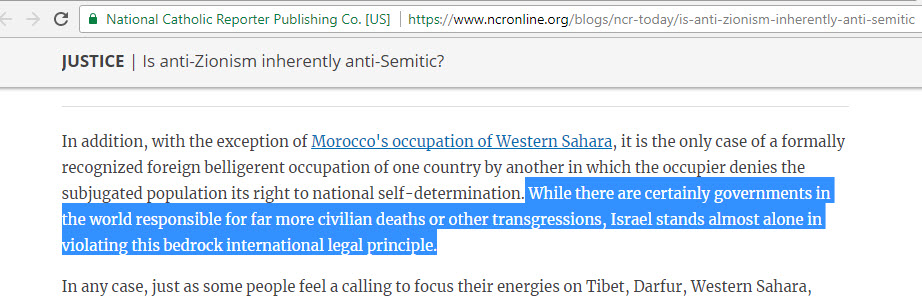
In the same article, Zunes went on to charge that “While there are certainly governments in the world responsible for far more civilian deaths or other transgressions, Israel stands almost alone in violating this bedrock international legal principle.”
On April 6, 2015, Zunes published an article in which he chronicled his activism and support for BDS. In the article, Zunes wrote that “Many of us who have been involved in such campaigns over the years... now support boycotts, divestment, and sanctions against the Israeli occupation.”
On September 15, 2014, Zunes published an article to his website bashing anti-BDS activism and legislation. In the article, Zunes described BDS as an example of “socially-responsible investment policies” and encouraged politicians to support such efforts.
On September 3, 2012, Zunes was interviewed by fellow anti-Israel activist and BDS supporter Mark LeVine about his position on BDS. Throughout the interview, Zunes articulated his support for the movement and gave suggestions on how to expand its efficacy.
In the same interview, Zunes charged that Israel “has illegally moved tens of thousands of settlers into the occupied territory” and claimed that Israel “engages in gross and systematic human rights abuses in the occupied territories.”
Condemning Anti-BDS Legislation
On March 23, 2017 Zunes published an article slamming bipartisan support for anti-BDS legislation in the United States.In the article, Zunes charged that “Given that the U.S. government no longer even pretends to oppose the Israeli occupation and colonization of Palestinian territories, a bipartisan effort has emerged to suppress student activists, churches, socially-conscious companies, and anyone else organizing against it.”
On July 15, 2015, Zunes wrote an article slamming former United States Presidential Candidate Hillary Clinton for her support of Israel and anti-BDS activism.
In the article, Zunes defended BDS, described “Israel’s denial of democratic rights to Palestinians under occupation” and charged that “Israel originally seized much of its fertile lands by force from Palestinian farmers.”
BDS
The Boycott, Divestment, Sanctions (BDS) movement was founded by Omar Barghouti in 2005 to challenge “international support for Israeli apartheid and settler-colonialism.” BDS is an allegedly “Palestinian-led movement,” although leading BDS activists have admitted [00:01:01] this is not true.
One of the demands of BDS includes [point 3] what is generally known as the “right of return,” a demand discredited as a way to eliminate Israel. Barghouti said the “right of return” is a means to “end Israel’s existence as a Jewish state.”
Barghouti has said that BDS “aims to turn Israel into a pariah state, as South Africa once was.”
In his activism, Barghouti has also said [00:05:55] regarding Israel: “Definitely, most definitely, we oppose a Jewish state in any part of Palestine. No…rational Palestinian, not a sellout Palestinian, will ever accept a Jewish state in Palestine.”
The movement has been linked to numerous terrorist organizations and received a public endorsement from Hamas in 2017.
BDS initiatives include calling on institutions and individuals to divest from Israeli-affiliated companies, promoting academic and cultural boycotts of Israel, and organizing anti-Israel rallies, protests and campaigns.
The movement’s most notable achievement has been the infiltration of university campuses through lobbying for “BDS resolutions.” In these cases, student governments and student groups, backed by their own anti-Israel members and affiliates, have proposed resolutions on some form of boycott of, or divestment from, Israel and Israeli-affiliated entities.
Boycott resolutions, although non-binding, have been passed by student governments on numerous North American campuses.
BDS activity is often aggressive and disruptive. It has been noted that universities that pass BDS resolutions see a marked increase in anti-Semitic incidents on campus. On one campus, when the student government debated a BDS resolution, reports emerged of violent threats against those opposing it.
- Status:
- Professor
- University:
- San Francisco
- Organizations:
- BDS
- Related Profiles:
- Last Modified:
- 05/04/2026
Photos & Screenshots