Pablo Piccato
Overview
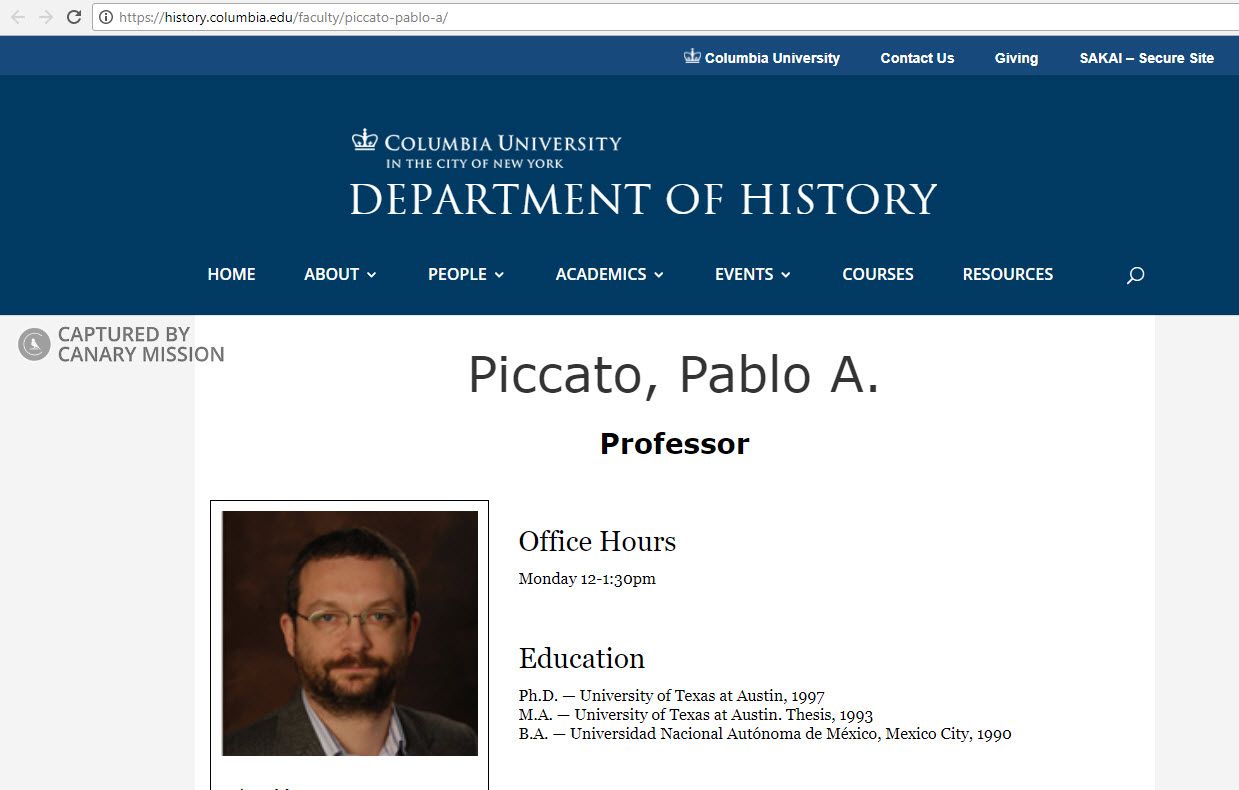
Pablo Piccato petitioned Columbia University (Columbia) President Lee Bollinger to take a position against Israel, demonized Israel and is a supporter of the Boycott, Divestment, Sanctions (BDS) movement.He is a professor in the Department of History at Columbia.
Pressuring Columbia University’s President
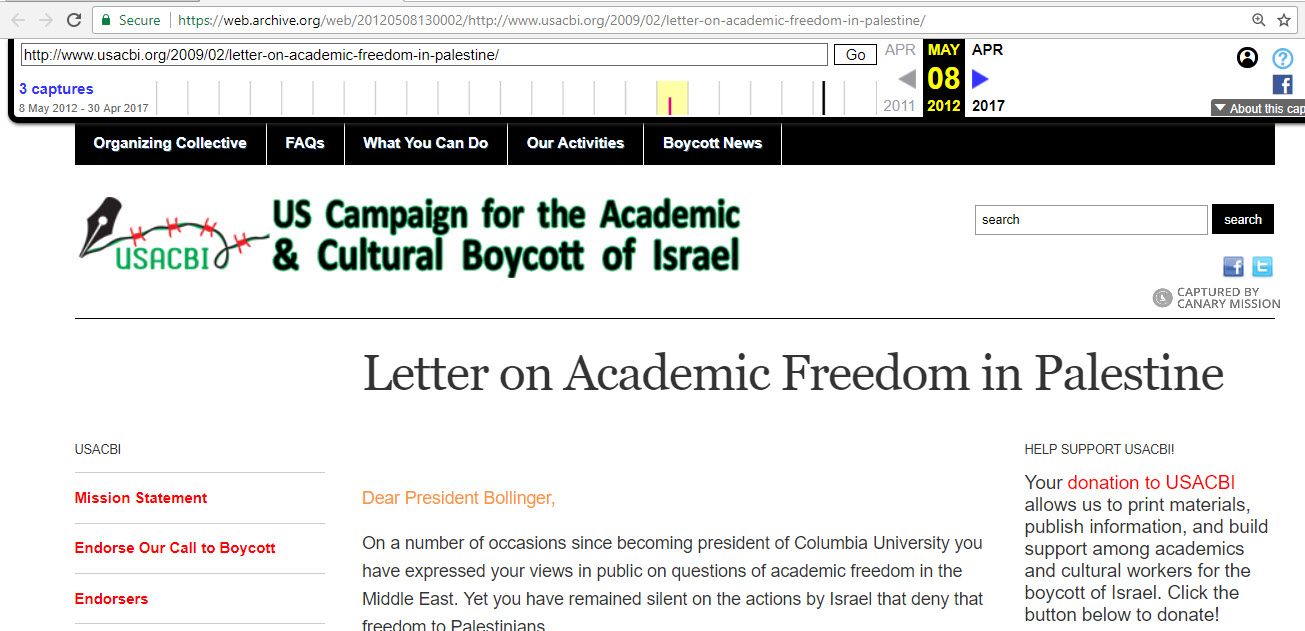
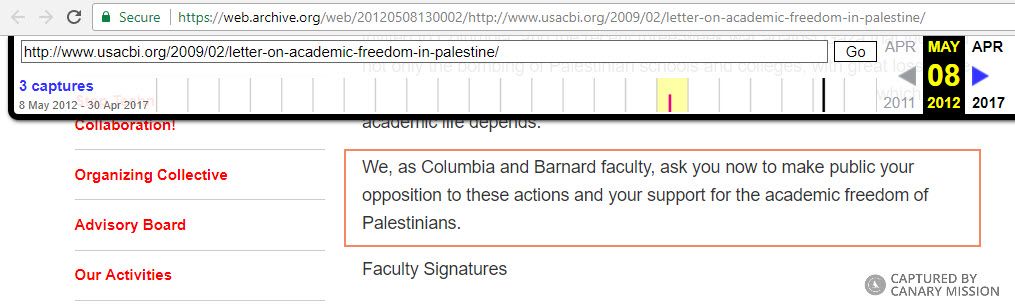
In February 2009, Piccato signed a letter calling on Columbia University President Lee Bollinger to “make public [his] opposition" to Israeli security measures in the West Bank and Gaza.The letter was sent one month after Israel’s Operation Cast Lead (OCL), which was launched to stop Hamas weapons smuggling and rocket fire from the Gaza strip targeting Israeli civilians.
Demonizing Israel
Piccato signed an open letter to United States President Barack Obama and the American Congress, dated July 31, 2014, condemning “the disproportionate harm that the Israeli military, which the United States has armed and supported for decades, is inflicting on the population of Gaza.”The letter exclusively blamed Israel for the Gazan civilian crisis and called upon the administration “to suspend US military aid to Israel, until there is assurance that this aid will no longer be used for the commission of war crimes.”
The letter was in response to Operation Protective Edge (OPE).
Israel commenced Operation Protective Edge (OPE) in July 2014, to stop rocket fire targeting Israeli civilians and to destroy Hamas attack tunnels.
Supporting BDS
Piccato signed a letter to the New York State Assembly, published on February 13, 2014, calling for its members to oppose a piece of anti-BDS legislation.Signatories of the letter affirmed: “we all firmly believe that academics have a right to express their political views through a wide range of protected speech, including boycotts.”
Piccato also signed a Faculty Petition at Columbia, in which signatories expressed that they “take issue with our financial involvements in institutions associated with the State of Israel's military occupation of Palestinian lands, continued violations of Palestinian human rights, systematic destruction of life and property, inhumane segregation and systemic forms of discrimination.”
The petition went on to state that “We now stand with Columbia University Apartheid Divest, Columbia Students for Justice in Palestine as well as with Jewish Voice for Peace in calling upon the University to take a moral stance against Israel's violence in all its forms.”
BDS
The Boycott, Divestment, Sanctions (BDS) movement was founded by Omar Barghouti in 2005 to challenge “international support for Israeli apartheid and settler-colonialism.” BDS is an allegedly “Palestinian-led movement,” although leading BDS activists have admitted [00:01:01] this is not true.
One of the demands of BDS includes [point 3] what is generally known as the “right of return,” a demand discredited as a way to eliminate Israel. Barghouti said the “right of return” is a means to “end Israel’s existence as a Jewish state.”
Barghouti has said that BDS “aims to turn Israel into a pariah state, as South Africa once was.”
In his activism, Barghouti has also said [00:05:55] regarding Israel: “Definitely, most definitely, we oppose a Jewish state in any part of Palestine. No…rational Palestinian, not a sellout Palestinian, will ever accept a Jewish state in Palestine.”
The movement has been linked to numerous terrorist organizations and received a public endorsement from Hamas in 2017.
BDS initiatives include calling on institutions and individuals to divest from Israeli-affiliated companies, promoting academic and cultural boycotts of Israel, and organizing anti-Israel rallies, protests and campaigns.
The movement’s most notable achievement has been the infiltration of university campuses through lobbying for “BDS resolutions.” In these cases, student governments and student groups, backed by their own anti-Israel members and affiliates, have proposed resolutions on some form of boycott of, or divestment from, Israel and Israeli-affiliated entities.
Boycott resolutions, although non-binding, have been passed by student governments on numerous North American campuses.
BDS activity is often aggressive and disruptive. It has been noted that universities that pass BDS resolutions see a marked increase in anti-Semitic incidents on campus. On one campus, when the student government debated a BDS resolution, reports emerged of violent threats against those opposing it.
Social Media and Weblinks
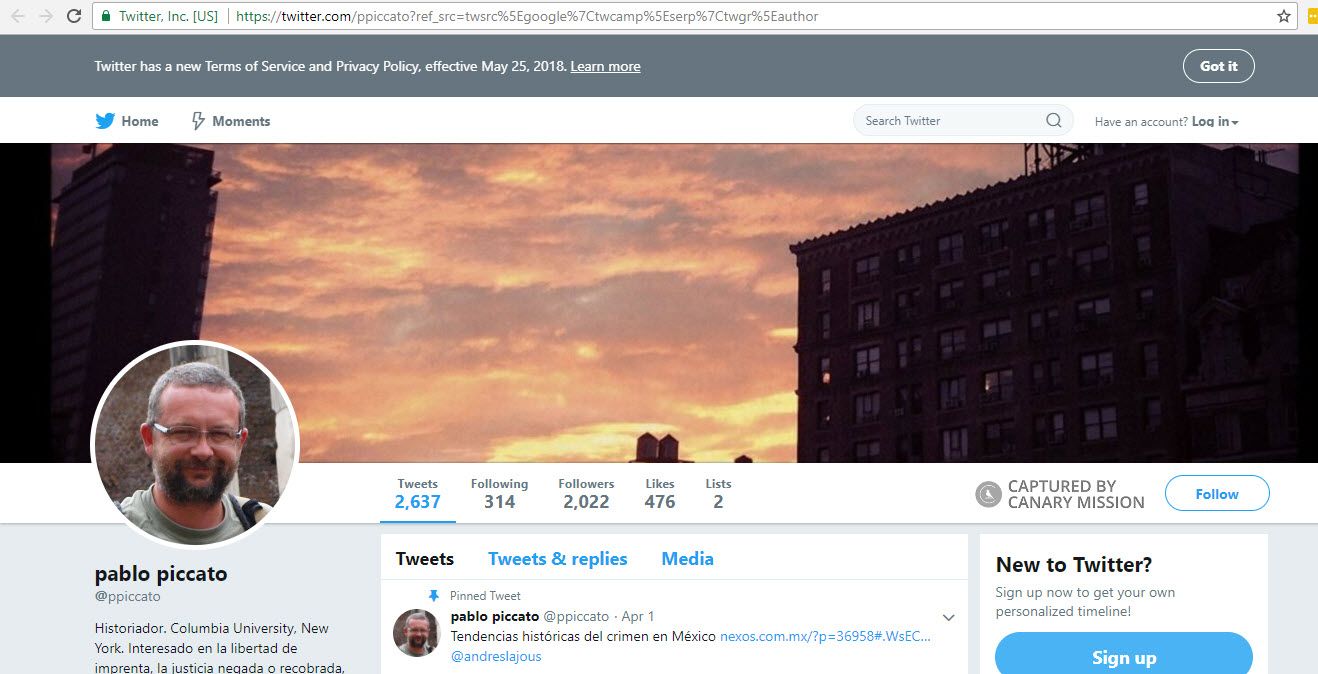
Twitter:https://twitter.com/ppiccato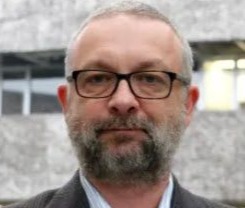
- Status:
- Professor
- University:
- Columbia
- Organizations:
- BDS
- Related Profiles:
- Last Modified:
- 05/04/2026
Photos & Screenshots