University of Minnesota Students Occupy Admin Building
Although the students were let off the hook, they failed to force the university to divest from Israel
University of Minnesota Students Occupy Admin Building
Although the students were let off the hook, they failed to force the university to divest from Israel
- 1. SDS, SJP Behind the Takeover
- 2. Storming the Administration Building
- 3. Building Takeover Paralyzes Campus
- 4. Protesters Released
- 5. UMN’s History of Failing to Take Action Against Illegal Protests
- 6. Consequences Against Students Reversed
- 7. City Council Votes to Support the ‘Peaceful’ Vandals
- 8. Criminal Charges Dropped
- 9. Professors Supporting Violence
- 10. Profiles
Share:

SDS, SJP Behind the Takeover
Protesters led by Students for a Democratic Society, along with Students for Justice in Palestine and Students with Minnesota Divest, stormed the central administration building at the University of Minnesota (UMN) on October 21, 2024.
The action was intended to force the university to divest from Israel, a demand that the UMN Board of Regents rejected in August 2024 at a meeting specifically held before the beginning of the school year. At the same meeting, the trustees decided to adopt a “position of neutrality” regarding the university’s endowment. However, they resolved to consider future divestment requests in rare circumstances where “broad consensus” exists within the university community.
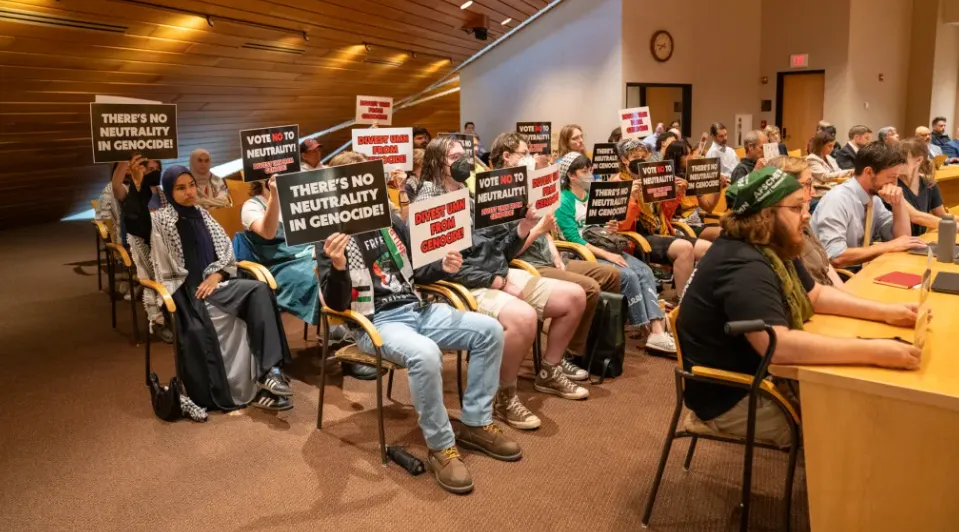
Students for a Democratic Society (SDS) is a rebooted version of the far-left organization that spearheaded the student movement of the 1960s. SDS at the time also included the Weather Underground, a domestic terrorist group responsible for bombing government buildings, among other violent activities.
Students for Justice in Palestine is a virulently anti-Israel group that has driven the bulk of campus antisemitism since its founding in 2001 at the University of California at Berkeley by now Professor Hatem Bazian.
Storming the Administration Building
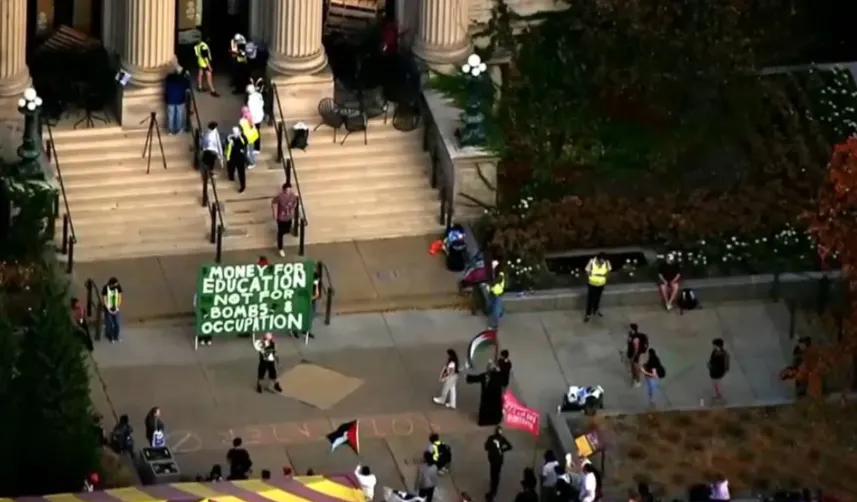
Dissatisfied with the outcome of the trustees' meeting, protesters attempted to compel the university to accede to their demands by occupying Morrill Hall, the administration building. They also demanded that the newly instituted neutrality policy be dropped and that the university essentially comply with the Boycott, Divest, Sanction (BDS) movement against Israel.
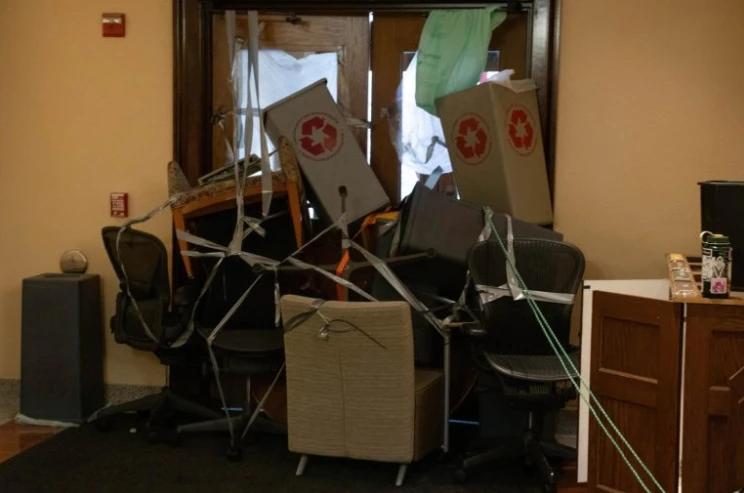
At 3 p.m., protesters began gathering on campus before descending upon the building. Once inside, they used furniture to barricade the exit, trapping staff for an extended period. They proceeded to smash interior windows and doors and spray-paint security cameras, causing tens of thousands of dollars of damage.

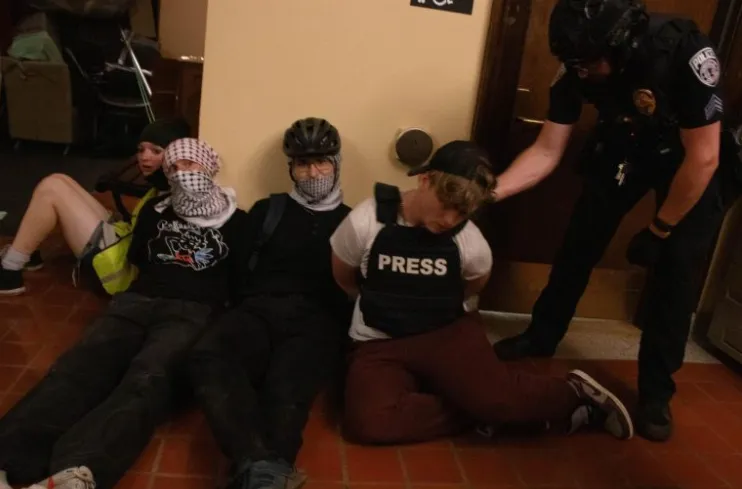
A journalist from UMN’s student newspaper, the Minnesota Daily, who was embedded with the protesters, described the protesters' actions as “swift and calculated.” The protesters arrived with tents and supplies, stating they planned to occupy the building until their demands were met.
Tagore Pathak, a freshman at the university, witnessed the takeover from outside the building and alerted authorities. Speaking to the Washington Free Beacon, he said, "It has been crazy to see so many students blatantly supporting terrorism. People really need to understand how scary it is to be a college student."
Building Takeover Paralyzes Campus
UMN president Rebecca Cunningham characterized the takeover as a “terrifying experience” for those trapped inside. The takeover paralyzed the entire campus after the administration issued a campus-wide alert.
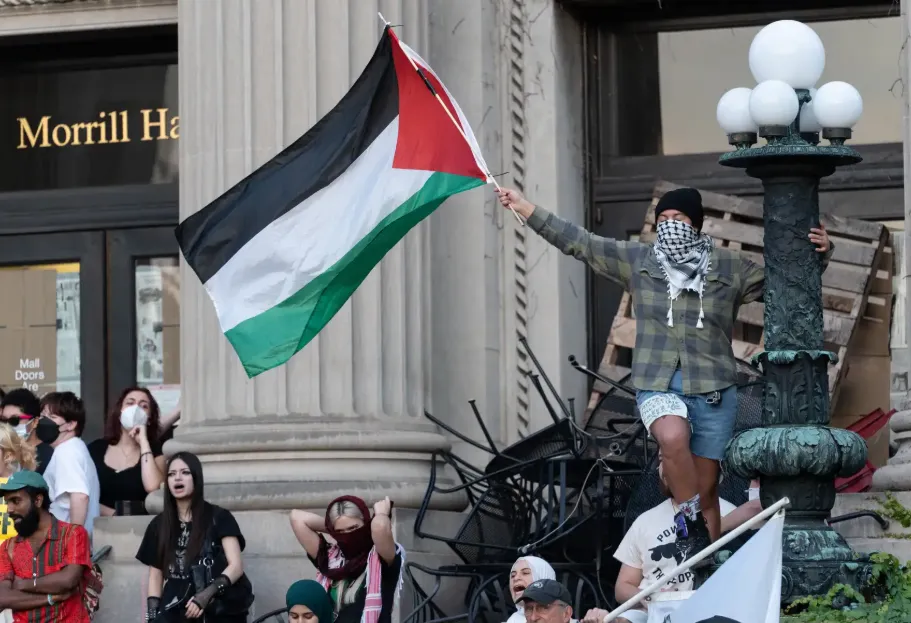
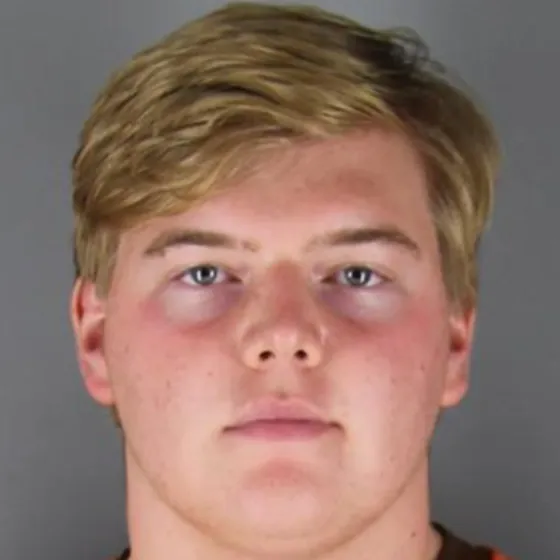
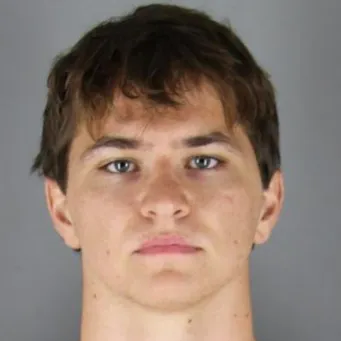
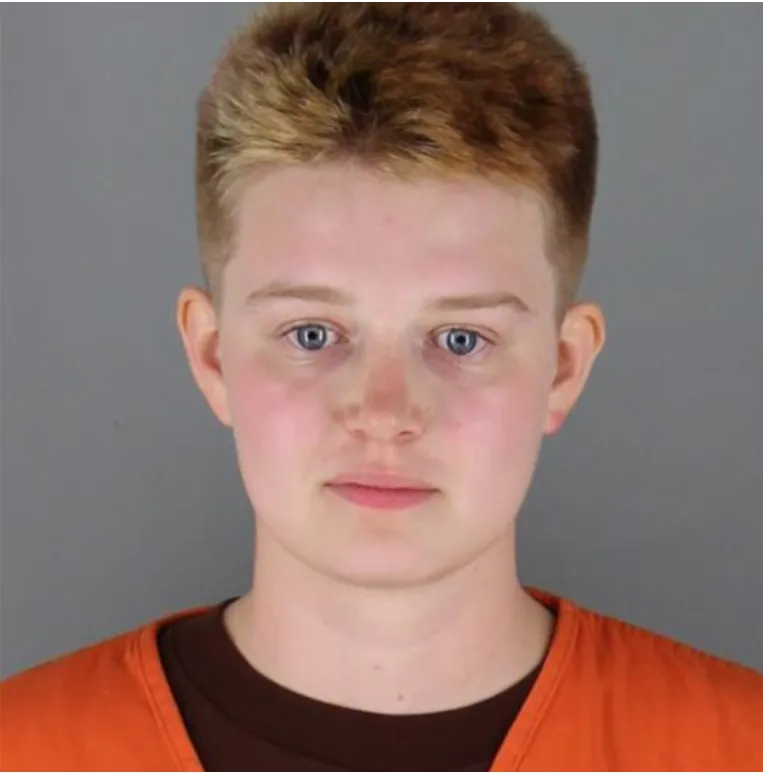
UMN police were called, and with the help of officers from the Hennepin County Sheriff’s Office, entered the building through the university’s underground tunnel network after breaking through the doors barricaded by the protesters. Eleven individuals, including eight students and three recent graduates, were detained.
"These actions crossed the line into illegal activity when they actively threatened the emotional and physical safety of our employees, prevented their free movement, disrupted building operations, and destroyed campus property," Cunningham wrote in an email sent to the university community the next day.
Protesters Released
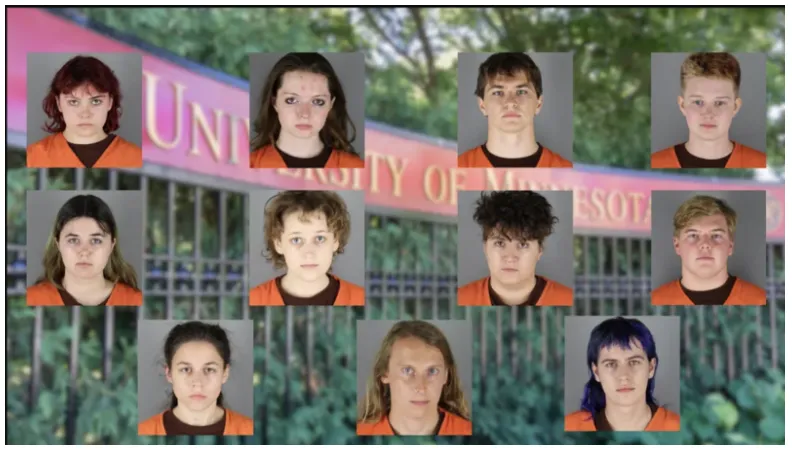
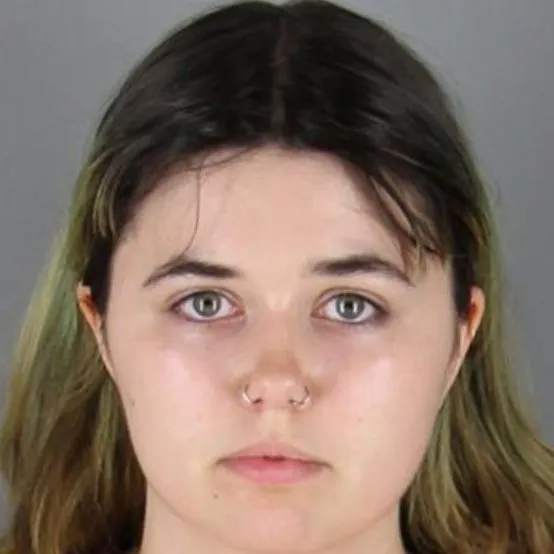
The protesters were booked at the Hennepin County jail for damage to property, trespassing and riot. Isabella America Harbison, a recent graduate, was also booked for fourth-degree assault for spitting at a police officer.
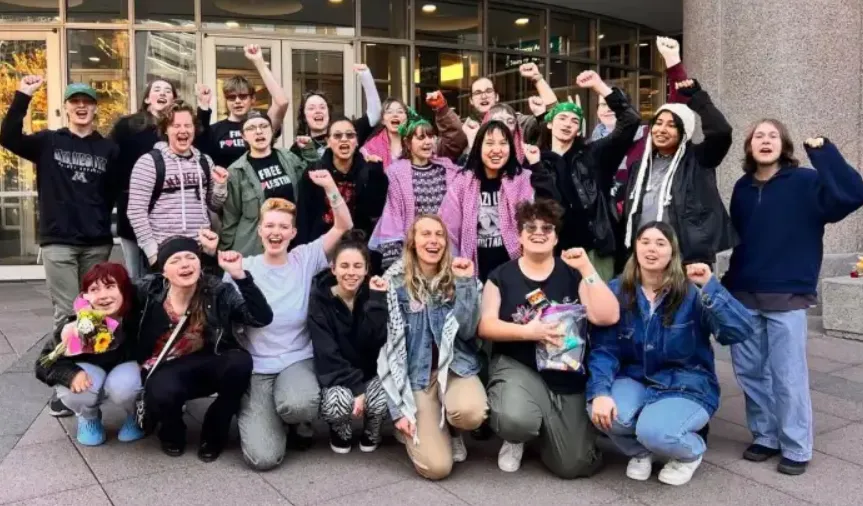
Within 36 hours, all were released. With the exception of Harbison, no charges were filed. Protests in support of the arrestees were held outside the jail until all the protesters were released.
"I just hope that they do end up facing some accountability and, at the very least, get disciplined by the university. They really do need to be prosecuted because what they did is absolutely criminal," Pathak said, adding, "You cannot hold people hostage in a building.”
Rabbi Yitzi Steiner, the co-director of Chabad at the University of Minnesota, told the Free Beacon that dozens of Jewish students took refuge in the Chabad center on campus during the incident.
"A lot of students are shaken up,” Steiner said. “If the university doesn’t take any action, concrete action—I’m not just talking about wagging the finger at them and saying, ‘Oh, what you did was wrong or unacceptable’—that would just continue to perpetuate the situation and not send the message to the Jewish community that the university is looking out for them."
UMN’s History of Failing to Take Action Against Illegal Protests
Just days before the building takeover, students and faculty staged a pro-Hamas walkout and solidarity rally on the first anniversary of the October 7, 2023 massacre of 1,200 Israelis and the kidnapping of 250 more by Hamas terrorists.
Although the protesters violated university regulations by using a speaker system and microphone, the administration took no action, issuing only two verbal warnings to the protesters.
An SJP official said the group specifically designed the protest to violate the regulations and would continue to do so, claiming that, in enacting those policies, the university was limiting their right to free speech.
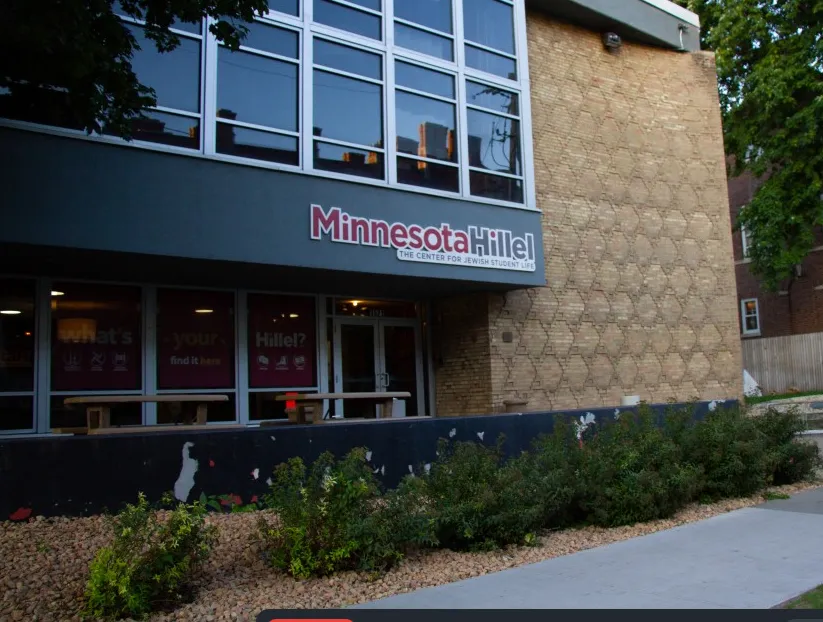
Protesters later demonstrated in front of the Minnesota Hillel house, where Jewish students had held a vigil earlier in the day for family members and friends killed in the October 7 attack.
Months earlier, pro-Hamas students established a campus encampment that also violated university rules. However, instead of enforcing the rules, the administration negotiated with the protesters, offering a compromise with them that included allowing students to address trustees regarding their demand that the university divest from Israel. The administration also agreed to hold biweekly meetings with the protesters.
At one of those meetings on September 27, 2024, the administration agreed to sponsor three students from Gaza for the spring 2025 semester, including full tuition and board.
Less than 10 days earlier, pro-Hamas students disrupted President Cunningham’s inauguration ceremonies just minutes into her speech. Later, protesters waited for Cunningham on Nothrop Mall, a central green space on the Minneapolis campus, and disrupted her address to the public.
Consequences Against Students Reversed
Richard Painter, a UMN law professor, expressed little hope that the perpetrators would be punished, reported the Free Beacon.
"I’m not Jewish, but if I were in the environment right now, I’d be living in fear. These universities are not protecting their students, and they’re letting faculty do whatever they want,” he said.
Students are “getting a message from faculty in the College of Liberal Arts that violence is acceptable," he added.
At first, it seemed Painter would be proven wrong.
Immediately after the building occupation, the administration issued a letter of interim suspension to all the arrested students, barring them from attending classes. Those who lived in student housing were evicted.
The university later suspended seven students for up to two and a half years. It charged each a fine of $5,500 for the damage done to the building and evicted the student protesters from their university housing.
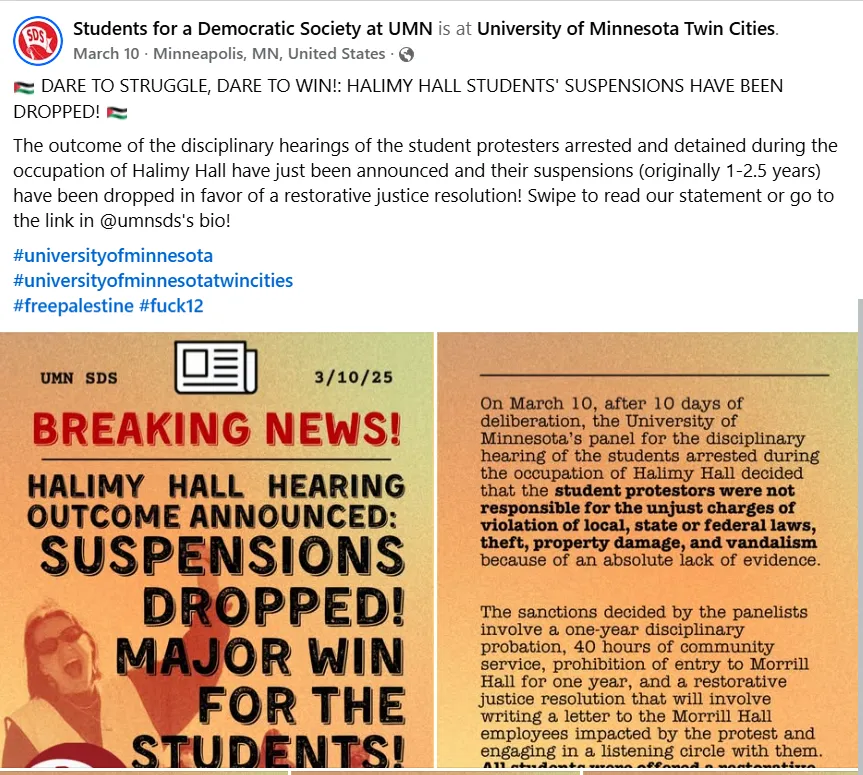
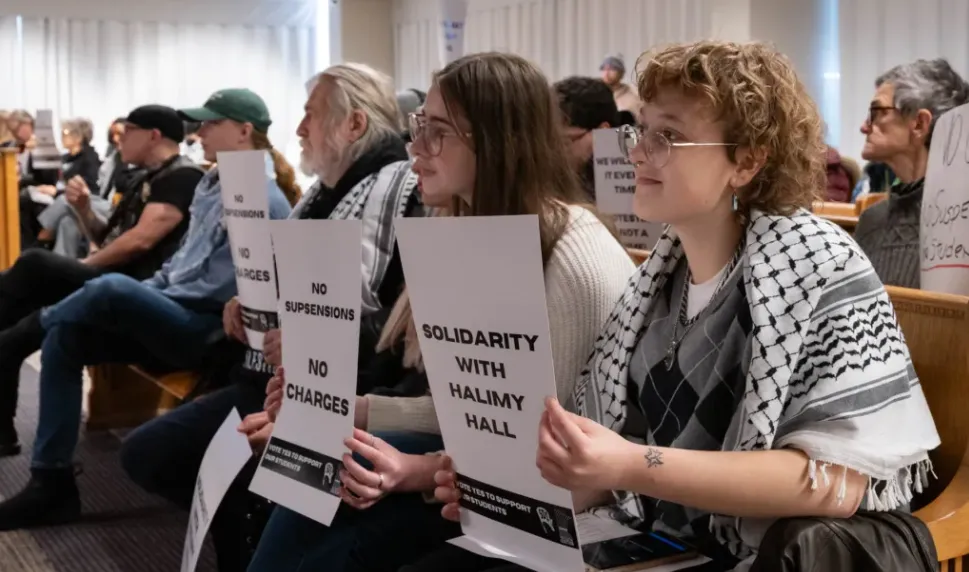
However, at a formal disciplinary hearing in 2025, the university reversed its decision and reinstated the suspended students.
At the time of the protest, President Cunningham wrote, "The safety, security, and wellbeing of our staff, students, and faculty are our highest priority, and we cannot – and will not – allow this type of behavior."
Similarly, Rabbi Steiner commented after the incident, "What the Jewish community is really looking for is that the university is going to take action because in the past that’s not really what happened. I think what makes students feel fearful [is that there] … are no punishments, sending a message that they’ll continue doing what they’re doing ..."
The university’s actions confirmed these fears.
City Council Votes to Support the ‘Peaceful’ Vandals
In December 2024, the Minneapolis city council got involved, passing a resolution 7-5 urging “the University of Minnesota to rescind all academic charges, suspensions, and evictions of student protestors … [and] work with campus advocates to accomplish their goals of divestment from the State of Israel and participation in an academic boycott of Israeli academic institutions.”
In passing the resolution, the city council deemed the protest “nonviolent” and said punishing the students “undermines free speech protections … [and] contradicts our city and University’s stated values [and] undermines democratic norms.”
Despite the vote of the city council, Minneapolis Mayor Jacob Frey vetoed the resolution, stating that while he fully supports non-violent protest as a form of free speech, “... what occurred on Oct. 21, 2024, at Morrill Hall on the University of Minnesota campus was neither peaceful nor protected speech. There is no First Amendment right to damage property, break windows, barricade doors, and endanger people’s safety.
“The total property damages exceeded $67,000 and caused emotional harm to university employees. “Simply put, when people engage in these actions, no matter what they are protesting, they break the law and there are consequences.”
Frey also decried the resolution as setting a “disturbing precedent,“ saying that “consequences must apply to all groups evenly regardless of the cause they are protesting.”
Council subsequently failed to attain the necessary supermajority vote of 9-3 to override the mayor’s veto.
Criminal Charges Dropped
At the time of the protest, Painter predicted the students would face no legal consequences. "The Hennepin County attorney is fairly notorious for letting carjackers off the hook and others, so I’m not hopeful,” he said.
Painter, again, was correct in this prediction. After being held in the county jail for 36 hours, all the protesters were released. Criminal charges were only filed against Isabella America Harbison, who changed her name from Robyn just days before the protest.
Harbinson was charged with fourth-degree assault on a police officer. After police gave her an order to stand up and state her name, she “became very upset and began calling officers Nazis,” according to the complaint. Police then said Harbinson spat at one of the officers, and the fluid landed on the officer’s uniform.
However, after three court appearances between November 2024 and May 25, 2025, Harbinson announced that the charges had been dropped against her and the court had found a “restorative justice solution through diversion,” meaning that the case was “diverted” away from the criminal justice system.
Professors Supporting Violence
While the university pays lip service to the “safety” of its students and staff, claiming they are the administration’s “highest priority,” two recent incidents at UMN challenge this claim.
Sima Shakhsari
In December 2023, the university considered virulent anti-Israel professor Sima Shakhsari, who had been seen on campus chanting “Globalize the Intifada” for a top diversity, equity and inclusion (DEI) position.
Shakhari, a professor of Gender, Women and Sexuality Studies at UMN, was on record denying that Hamas terrorists raped Israeli women during the October 7 attacks. Shakhsari made the remarks as part of a review of her application for the position.
Shakhsari stated, “... I am a rape crisis counselor, I believe the survivors. I am yet to see Israeli rape survivors of Hamas come and speak.”
Shakhsari continued, “We know the history of lynching, of black man, lynching, of indigenous man lynching Latinos in this country… because of accusations and they’re kind of violating the innocence of white women, right? And I think that is also this force that is repeated in the context of Israel and Palestine because Arab men have been demonized and have been marked as monstrous people who are rapists and for violence.”

On October 7, 2023, the day of Hamas’ attack, Shakhsari’s updated Facebook profile included the Palestinian flag.
In September 24, 2020, in response to Zoom’s deplatforming a San Francisco State University “roundtable conversation” with Popular Front for the Liberation of Palestine (PFLP) terrorist Leila Khaled, Shakhsari decried the decision in a Facebook post, writing, “When empty claims of academic freedom, corporate profit, and settler colonialism merge… How often do our students actually get to meet and hear someone like Leila Khaled?
Center for Holocaust and Genocide Studies
Less than a week after the October 7 attacks, when Israel had barely marshalled a response to Hamas’ horrific attack, Raz Segal, then a professor at Stockton University, a public university in New Jersey, wrote an op-ed saying that Israel’s reaction was “a textbook case of genocide unfolding in front of our eyes.”
In January 2024, in another op ed, Segal argued that the creation of the Jewish state "reproduced the racism and white supremacy that had targeted Jews for exclusion."
In a May 2024 interview with NJ Spotlight News, Segal characterized “the accusation that the encampments pose a danger to Jews and that they’re sites of antisemitism” as “absurd.”
Yet, the next month, Minnesota’s interim College of Liberal Arts dean, Ann Waltner, offered Segal the chairmanship of UMN’s Center for Holocaust and Genocide Studies.
The offer of the chair was later withdrawn after members of the center’s advisory board resigned, but the university left open the possibility of a professorship.