


How Anti-Israel Protesters Avoid Consequences for Vandalism
A look at the increasingly successful legal strategies being used in courts today
How Anti-Israel Protesters Avoid Consequences for Vandalism
A look at the increasingly successful legal strategies being used in courts today
Share:

Choice of Evils
Anti-Israel activists arrested for vandalism and trespassing are increasingly using the courts as a public platform to try their cases against Israel – and avoid consequences for their actions, some of which have caused millions of dollars of damage.
Both in the United States and the United Kingdom, a number of high-profile cases have succeeded by utilizing the "choice of evils" or “necessity” defense, essentially arguing that the protesters' actions were necessary to prevent a greater harm, namely, the “genocide” purported to be happening at the hands of the Israel Defense Forces (IDF) against the Gaza population.
Even though U.S. judges tend to limit this defense and the UK recently restricted its application, these defenses – even when severely restricted – have worked in favor of protesters by triggering jury nullification, a process in which jurors disregard the law and issue a ruling based on their moral beliefs. Moreover, if only a single juror is swayed, a mistrial can be declared.
In today’s highly charged and polarized political climate, jurors are increasingly willing to choose this option in cases involving protests against Israel.
Restrictions in U.S. Courts
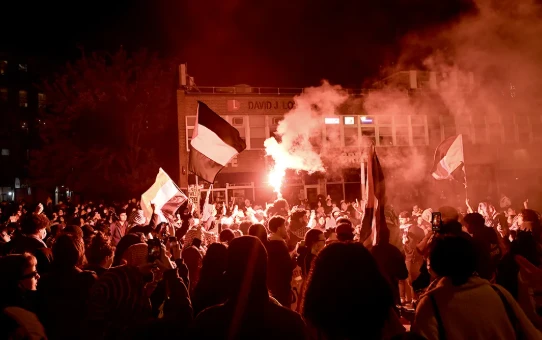
Historically, U.S. courts have rejected the “choice of evils” or “necessity” defense in political protest cases for a number of reasons:
- Legal Alternatives: Judges often rule that protesters had legal ways to voice their dissent (e.g., lobbying, voting, rallies), so breaking the law was not "necessary."
- Imminence: Courts typically require the "greater evil" to be an immediate, physical threat that the defendant's specific act could actually stop. In cases involving Israel, the link between blocking a local facility and stopping a foreign war is too remote.
- Preclusion: In many jurisdictions, this defense is barred if the legislature has already weighed the “evils,” i.e., by passing laws to protect "key infrastructures" or the like.
Stanford
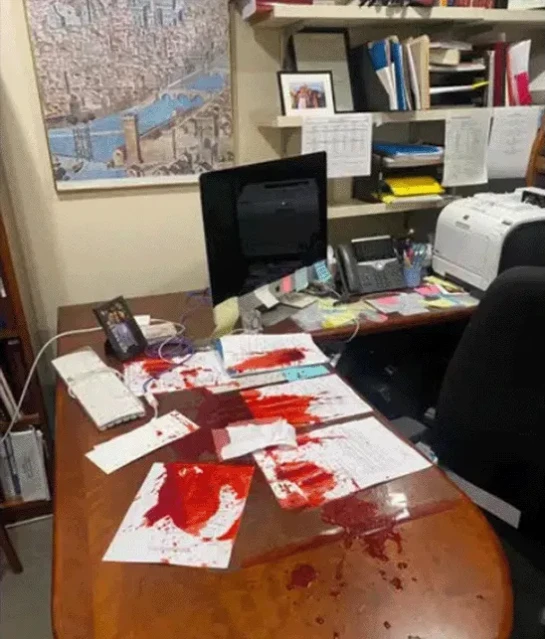
During Stanford’s second encampment, a group of 12 anti-Israel protesters using hammers and crowbars broke into the building housing the office of Stanford University President Richard Saller on June 5, 2024, at 5:30 a.m.
They were charged with conspiracy to trespass and felony vandalism.
The protesters used furniture, ladders and chains to barricade themselves inside the building before disabling security cameras and spraying the office with fake blood.
The group brought supplies and tools, including an electric grinder, chisels, screwdrivers, goggles, straps and cables. They broke windows and damaged furniture. Stanford estimated the amount of damages at $300,000.
See our report, Stanford’s Shame
For a week before the break-in and occupation of the president’s office, the protesters discussed the operation with each other using the encrypted messaging app Signal. The discussions included strategies for barricading doors and covering security cameras.
In a video filmed from the president’s office, the protesters declared they would leave once their three demands were met.
After their arrests, five of the protesters chose to go to trial. (Six of the others accepted plea deals, and another agreed to testify for the defense).
On February 13, 2026, after a four-week trial, the judge was forced to declare a mistrial after the jurors said they were “hopelessly deadlocked.” After five days of deliberations, jurors returned a 9-3 guilty verdict for conspiracy to trespass and an 8-4 guilty verdict for felony vandalism.
While the judge ostensibly “limited” the “necessity defense” (since the threat was not considered imminent and legal alternatives existed), he did allow use of the word “genocide,” which the defense used to their advantage.
The ruling also gave the defense license to repeatedly reference the "humanitarian crisis” in Gaza and argue the students acted out of a "sense of conscience" for a "greater good."
Even though the judge stated to the jurors that the protesters’ political reasons for their actions were not relevant to determining their guilt, the defense used references to “genocide” and the like to plant the idea of jury nullification in the jurors’ minds.
The defense simultaneously used the protesters' motivations to argue that they did not have malicious intent, a requirement under California law for a vandalism conviction.
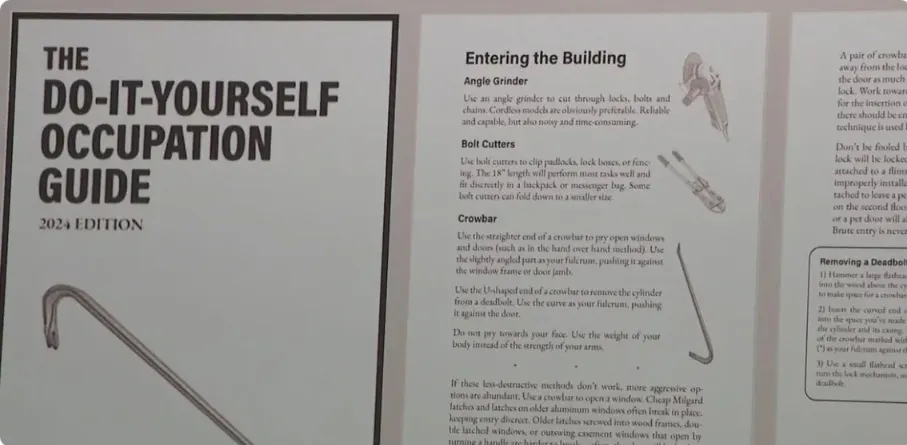
Similarly, even though the protesters had discussed the break-in plans in their Signal chats (a fact that prosecutors used to prove that they engaged in a conspiracy to trespass) and published a manual titled The Do-It-Yourself Occupation Guide, 2024 Edition” (which police found on the protesters’ cellphones), defense attorneys framed these discussions as a free speech issue.
Having planted these ideas, the defense made clear in its closing argument its call for jury nullification. Further, the defense characterized the judge’s limitation of the necessity defense as a delegitimization of the protesters’ dissent and called on the jury to take responsibility and affirm the protesters' right to make their views known.
In the end, by inserting the necessity defense through back-door means and then giving jurors alternate reasons for the protesters’ actions, defense attorneys were able to sway enough jurors to secure a mistrial and avoid a conviction.
A retrial is scheduled to begin on March 23, 2026. However, defense attorneys are trying to cancel the retrial by calling on the prosecutor to recuse himself due to his previous work fighting antisemitism.
L3Harris
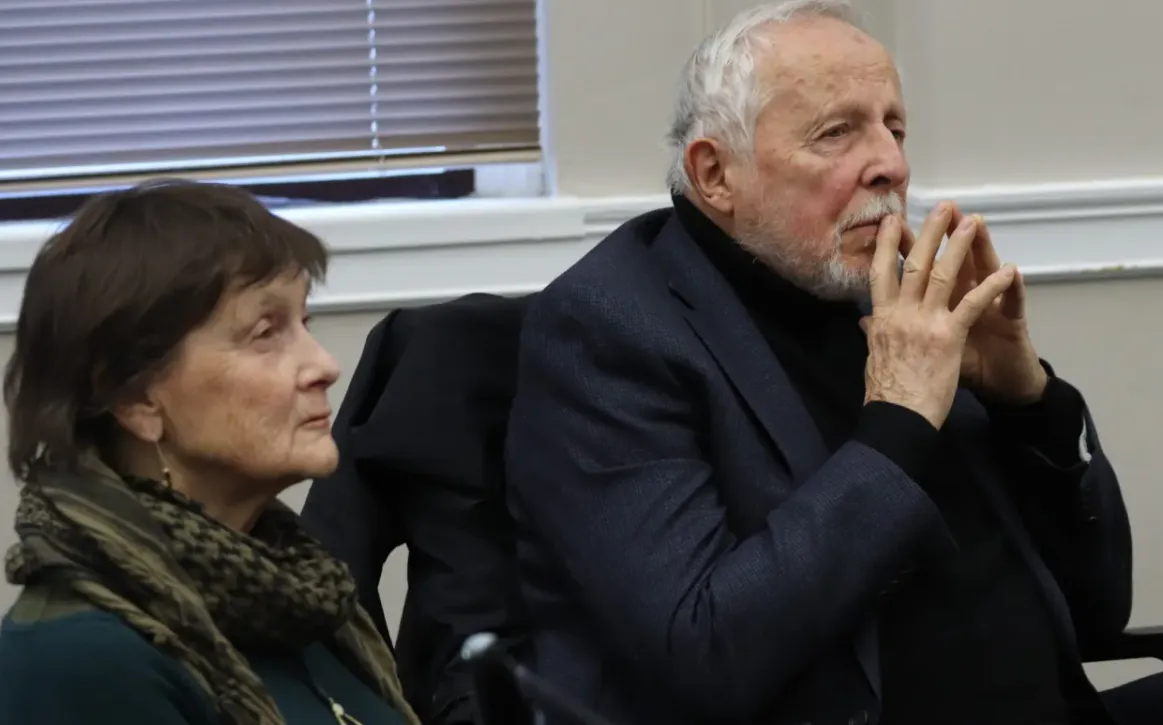
In December 2025, a Massachusetts judge issued a rare yet significant ruling by finding four elderly anti-war protesters "not responsible" (the civil equivalent of “not guilty”) for trespassing and disturbing the peace at the Northampton facility of defense contractor L3Harris Technologies.
The defendants, all members of Demilitarize Western Massachusetts, entered the L3Harris lobby on March 19, 2025, with a citizen’s arrest warrant for the CEO and demanded that the company end their complicity in the Gaza “genocide.” The group condemned L3Harris for manufacturing parts for nuclear weapons and equipment used by Immigration and Customs Enforcement (ICE), the U.S. Border Patrol and the Israeli government.
The protesters threw play money stained with red paint around the lobby. After about 45 minutes, during which time the protesters refused to leave, all four were arrested and charged with criminal trespass and disturbing the peace. The protesters pleaded not guilty and sought a jury trial specifically to publicize their political views.
Prosecutors originally charged the defendants with criminal misdemeanors, but at a final pretrial hearing, the prosecution motioned to convert the matter to a civil case. While a civil trial removes the possibility of jail time, it also eliminates the possibility of jury nullification, since the decision is made solely by the judge.
After originally denying the motion, the judge later agreed.
During the trial, the defense used the “necessity” argument, contending that breaking the law was justified by the protesters to prevent a greater harm. They presented affidavits from high-profile experts to support the claim of "clear and imminent danger" regarding arms transfers.
In the end, the judge agreed, marking a clean victory using the necessity defense – a rarity in the U.S. for protest cases.
Chicago
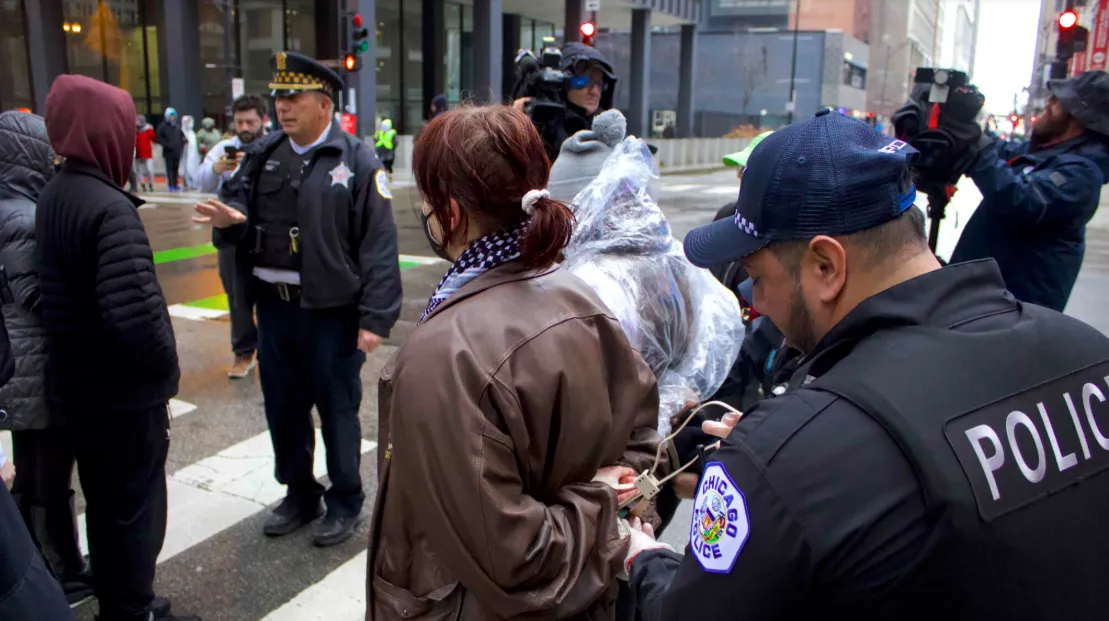
On June 13, 2025, a jury found 21-year-old Nitaawe Banks not guilty of obstructing traffic during an anti-Israel demonstration in Chicago on March 8, 2024. During the trial, attorneys for Banks used the “necessity” defense, arguing that the protest was necessary to prevent the greater harm of unconditional U.S. weapons and political support to Israel to perpetuate the “genocide” in Gaza.
Banks was arrested following a 24-hour vigil at Federal Plaza in Chicago. At the end of the vigil, more than thirty people blocked morning traffic at a busy intersection to bring further attention to their cause.
During the trial, defense lawyers called an “expert” witness who reportedly spoke about the “decades-long occupation of Palestine” (notwithstanding the fact that Israel completely withdrew from Gaza in 2005). Banks testified that the protest was necessary to get the public’s and elected officials’ attention.
Louisville
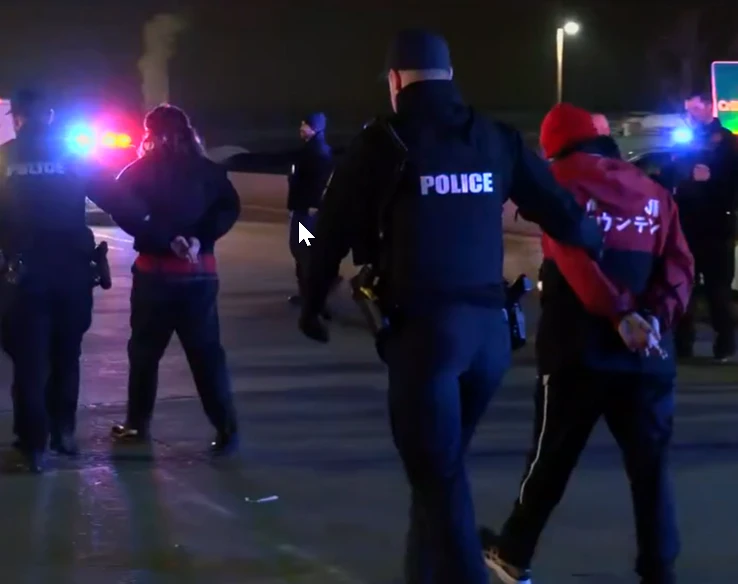
In the early morning hours of February 2, 2024, 15 members of the Louisville Ceasefire Coalition, a grassroots activist group, were arrested for blocking entrances to Raytheon (RTX) and BAE Systems facilities in Louisville, Kentucky. All were charged under a specific "trespassing on key infrastructure" statute.
While 10 of the protesters opted for a plea deal to avoid potential jail time, five chose to fight the charge in court. Their attorneys planned to argue a "choice of evils" defense, claiming that the protesters' actions were necessary to prevent a greater harm, namely, the killing of civilians in Gaza.

However, the judge imposed a gag order prohibiting discussion of any mention of "genocide,” "Palestine” or the broader Israel-Hamas war during the trial. The prosecution argued, and the judge agreed, that these issues were irrelevant to the specific legal charges of trespassing on key infrastructure assets.
This ruling was most likely based on the fact that by passing a law prohibiting trespassing on “key infrastructure,” the legislature had already decided on the greater “evil.”
The defense subsequently chose to argue that the protest was a necessary dissent against weapons manufacturing. This reasoning was ultimately rejected by the jury, which found all five protesters guilty on June 24, 2025. However, instead of jail time, the judge ordered each protester to pay a $125 fine.
Acquittals in the UK for Violent Vandalism
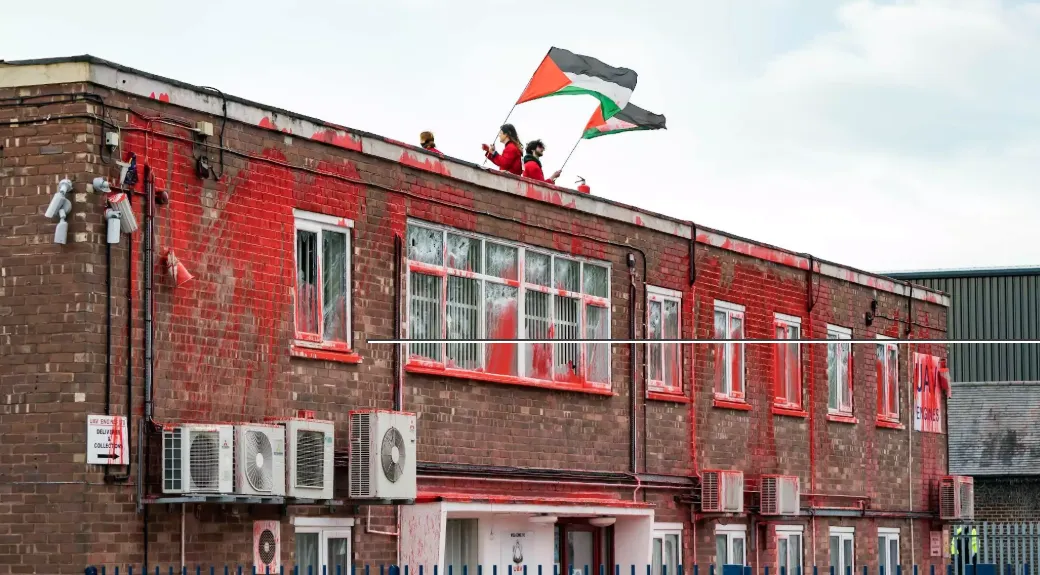
The “necessity” defense has been much more successful in the UK, where it appears that juries are willing to overlook extreme violence and vandalism by anti-Israel protesters who contend they are acting for the greater good.
Defenders of these acts have successfully claimed the moral high ground among a “jury of their peers” who likely hold the same views. In this way, protesters have secured shocking acquittals for the destruction they have wreaked.
Following several high-profile acquittals – from climate activists and statue topplers to anti-Israel protesters – the UK Court of Appeal issued a landmark ruling in March 2024 that significantly limits this defense, as well as two related defenses – “lawful excuse” and “belief in consent.”
First, the court ruled that the damage done by protesters must be linked to an “immediate” danger, noting that political or philosophical beliefs, like climate change or international conflicts, are “too remote” to count as immediate dangers. Second, the court directed judges to exclude evidence of a defendant's motivations if those motivations are based on "remote" political beliefs.
The Elbit Eight
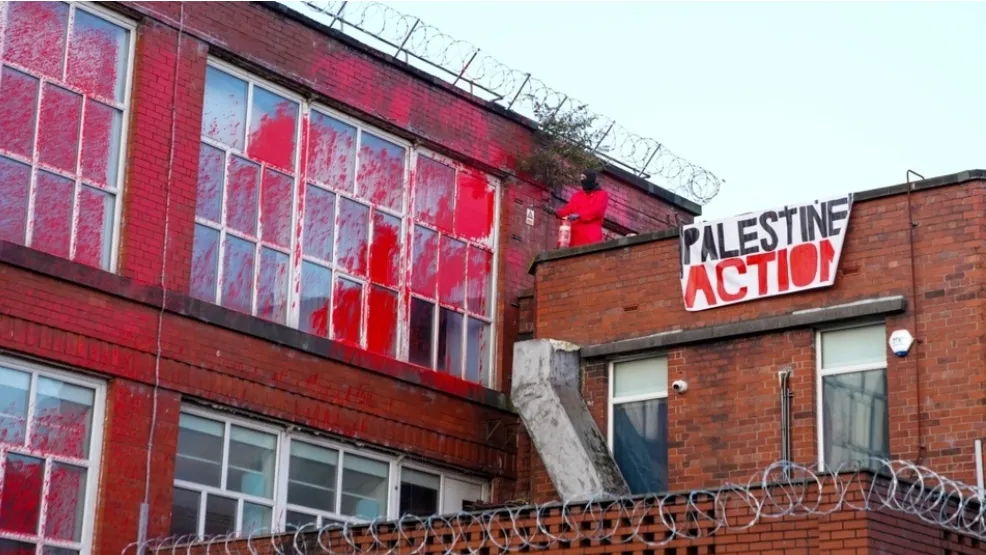
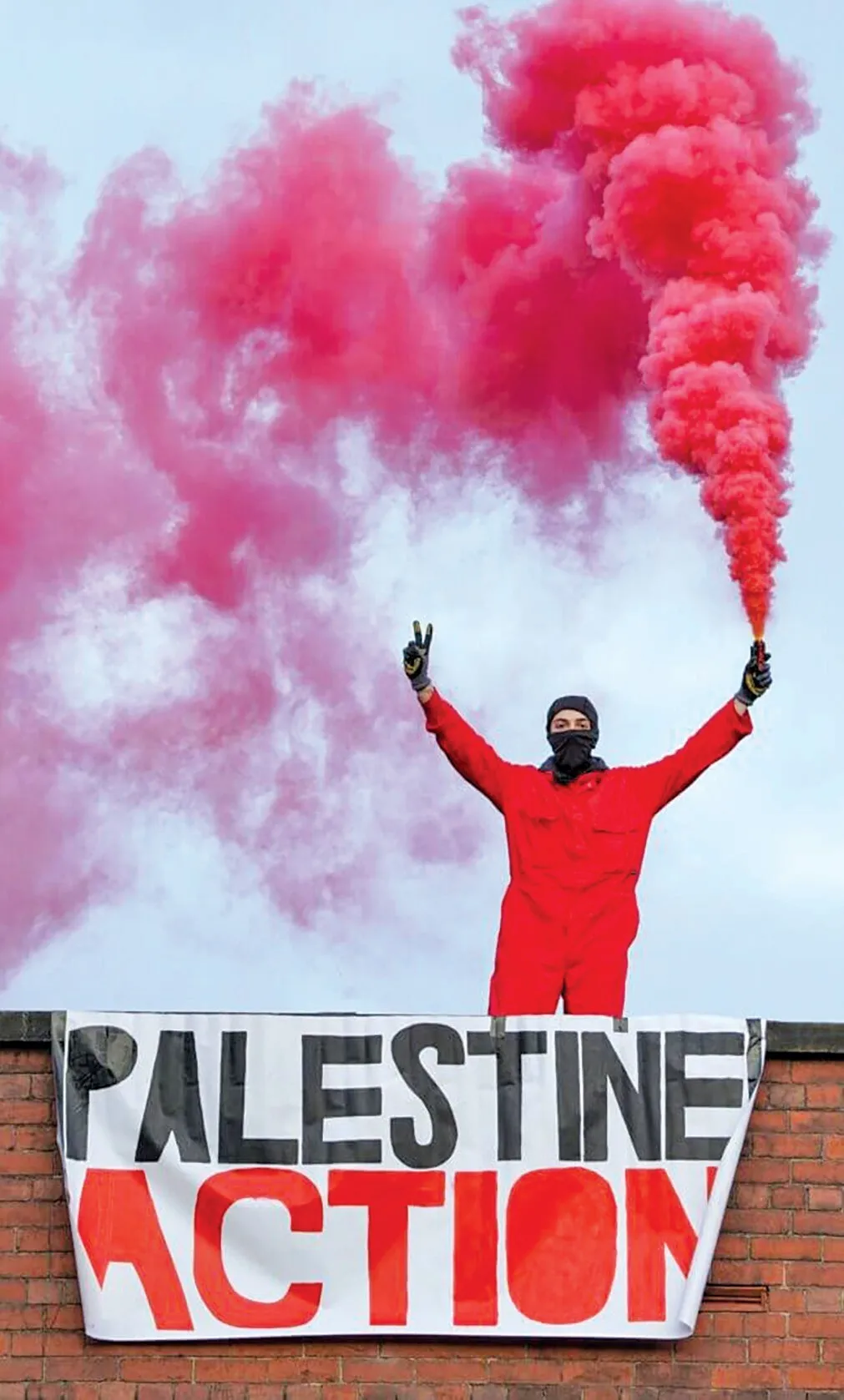
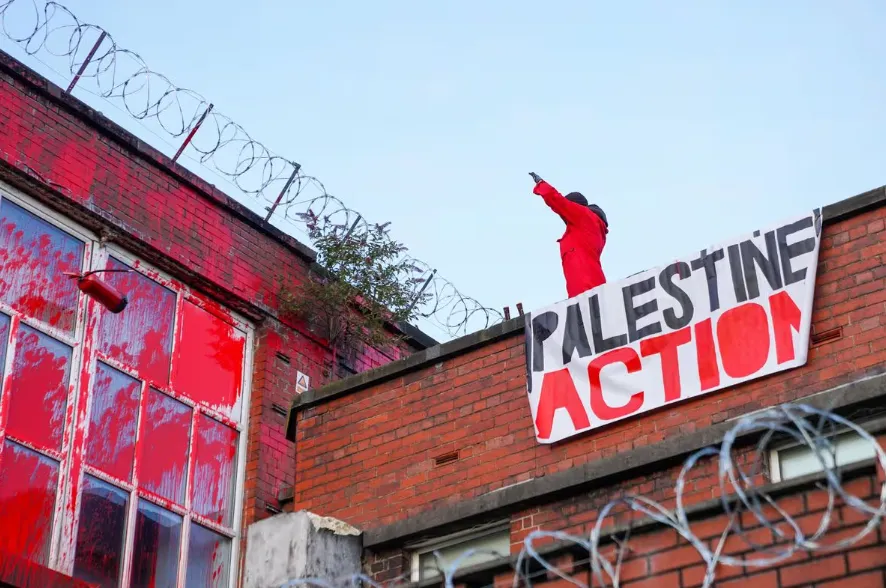
The “Elbit Eight” case was one of the high-profile cases that likely triggered the above ruling by the UK Court of Appeal. Between July 2020 and January 2021, Palestine Action militants targeted Elbit’s UK-based facilities in London and Oldham and at a subsidiary in Shenstone in 15 separate attacks.
See our report on Unity of Fields, the rebranded Palestine Action in the U.S.
Elbit Systems Ltd is an Israeli-owned global defense systems manufacturer. In court during a hearing regarding a May 15, 2022 break-in by Palestine Action protesters, Elbit System UK said it does not supply Israel with arms.
Nevertheless, protesters stormed the company’s offices, broke into its factories, damaged machinery and other equipment, occupied factory roofs (in Shenstone for six days), smashed windows, blocked entrances and drenched Elbit’s facilities with red paint inside and out. In addition, protesters tried to blackmail Elbit’s landlords and pressured suppliers to cut ties with the firm.
The vandalism by the protesters resulted in a slowdown of production, plummeting profits due to increased security costs and, ultimately, the permanent closure of multiple Elbit sites in the UK.
In the end, the defendants, which included Palestine Action co-founders Huda Ammori and Richard Barnard, faced a total of 13 criminal counts ranging from conspiracy to commit burglary to criminal damage and blackmail.
In court, the protesters' attorneys used both the “necessity” and “consent” defenses. They argued that their actions were justified on the basis of necessity. i.e., in order to save Palestinian lives and to protect the property of Gazans, which they claimed was at immediate risk of bombardment by drones made by Elbit.
They further contended that the owners of the buildings that housed the Elbit facilities would have consented to the protesters’ vandalism if they had understood the full extent of Elbit’s activities.
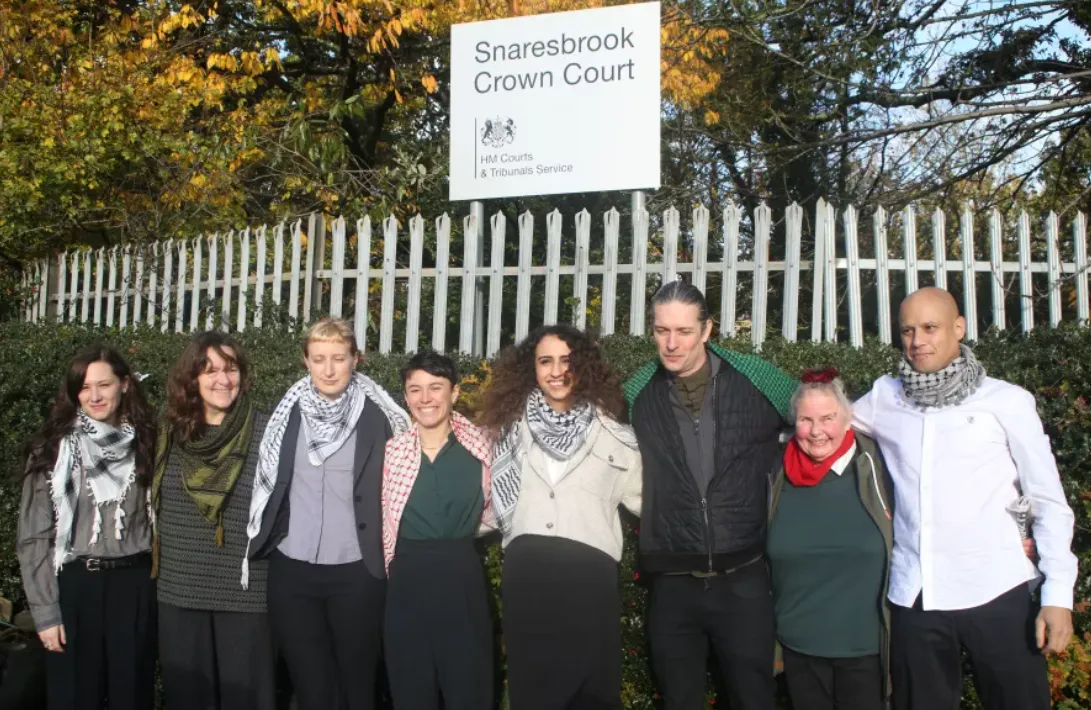
In December 2023, a jury unanimously acquitted two of the Elbit Eight defendants of all charges and the remaining six of 12 charges. In addition, Barnard was convicted of one count of criminal damage. The jury failed to reach a verdict on the remaining charges pending against the six defendants, leading to the group being dubbed the "Elbit Six" as they await a retrial.
The Filton Six
In August 2024, six Palestine Action protesters broke into an Elbit Systems site in Filton and proceeded to smash equipment and attack security guards and police (who were called in later). The attack, which was captured on video, resulted in an estimated $1.4 million in damage.

In a high-profile trial in February 2026, the protesters were all found not guilty of aggravated burglary and violent disorder by a UK jury after arguing their actions were a proportionate response to prevent “war crimes” in Gaza.
In the UK, aggravated burglary involves the intent to use violence not only against property but also against people. Violent disorder involves conduct against people or property that is carried out by three or more people and would cause a "person of reasonable firmness" present at the scene to fear for his or her personal safety.
Watch the video of the attack:
During the trial, prosecutors described how the protesters carried out a carefully planned assault on the Elbit facility in the early hours of August 6, 2024. Using a former prison van to ram the entrance, the protesters, all armed with sledgehammers, entered the facility, throwing fireworks at the security guards and cracking whips in an attempt to overwhelm them.

“The evidence demonstrates that all of these defendants used [their sledgehammers] … to threaten or to attack the security guards and to lend support to one another as they did so,” stated the prosecutor.
“When the police arrived, as the defendants knew they would, Samuel Corner [one of the defendants] attacked them, going so far as to strike a female officer across the back with his sledgehammer while she was on the floor, facing away from him,” the prosecutor continued.
The policewoman, who “screamed in pain after the first of the blows,” suffered a fractured spine from multiple hits through her protective vest.
The protesters used crowbars and hammers to damage Elbit’s computer equipment and smash boxes of technical products. They used fire extinguishers filled with red paint to spray the factory’s walls and floors.
Protesters also used their sledgehammers and whips against the security guards who tried to stop them. One guard was also sprayed with a foam fire extinguisher, according to the prosecutor.
Filton Six Acquittals

Despite the facts presented by the prosecutors, the defense argued against the aggravated burglary charge, saying that the protesters had only intended to use their weapons to damage property. (This was despite the fact that they used whips and firecrackers against the security guards in the initial break-in.)
The defense used a similar argument against the violent disorder charge, claiming that the protesters only used force to protect themselves or fellow protesters from what they described as an “overreaction” by the security guards.
Further, the protesters contended that they did not expect to encounter security guards inside the factory (despite being aware that other Elbit facilities had closed due to increased security costs that had rendered the business unprofitable).
The acquittal of violent disorder was equally surprising, considering the extremely violent nature of the attack – an attack in which it is reasonable to assume a “person of reasonable firmness” would have feared for his or her personal safety.
Limiting the “Necessity” and “Lawful Excuse” Arguments in the Filton Trial
Possibly because of the narrowing of the “lawful excuse” defense by the appeals court, the judge in the Filton case did not allow the defense to present a "lawful excuse" defense, saying that the defendants' belief that they were morally justified in committing the acts to prevent a genocide would not constitute a “lawful excuse” in this case.
For example, when asked by a juror whether it would count as a lawful excuse if a defendant believed they were performing a life-saving action by destroying weapons used to kill civilians in an illegal genocide, the judge said it would not. He then made it clear that the case must be judged on the evidence alone, not whether the jury believed the defendants were morally justified.
However, the defense attorney skirted around these limitations, speaking extensively to the jury about the defendants' motivations. In addition, in his closing arguments, he reminded them of their absolute right to acquit, charging that the defendants had been “restricted” when giving evidence about their knowledge of Elbit Systems’ role in Israel’s war in Gaza.
He added that it would be “ridiculous” for jurors to ignore the wider context of their actions and its impact on the defendants. “Are you supposed to forget your pasts, your knowledge of the world, your experiences of life, your principles, your values, your wisdom, your common sense, your sense of what is right and wrong and fair and reasonable when you consider the evidence in this case? Of course not," he said.
In giving the jury instructions, the judge reminded jurors that their views on Israel's actions in Gaza were “irrelevant” and said that the defendants “were not entitled to give … the reasons why they believed their conduct was lawful.”
Why the UK Jury Acquitted
Despite the instructions of the judge, the jury decided to acquit the defendants on the charges of aggravated burglary and violent disorder. Their acquittal was likely based on one or more of the following points:
- Disproving Intent: The jury accepted the defendants' testimony that the protesters only intended to damage machinery to disrupt weapons production, not to harm security guards or police
- Self-Defense Claims: The jury believed the protesters were acting in self-defense against what they perceived as excessive force by security guards
- Conscience: The verdict was an act of jury nullification, i.e., the jurors agreed with the protesters on the morality of their actions and were willing to disregard the law
The jury was divided on the other charges of criminal damage and the assault of a police officer, and thus were not able to reach a verdict. On these charges, the Palestine Action protesters will be subject to a retrial.
Palestine Action Proscription as Terror Group Challenged
In 2025, Palestine Action was banned in the UK after it broke into a Royal Air Force base and vandalized planes. However, on February 13, 2026, the High Court in London ruled that this ban was unlawful and disproportionate.
Immediately after the decision, the government decided to appeal the decision. At an interim hearing on February 20, 2026, the High Court decided that the ban against Palestine Action would remain in place during the appeal process and that supporting the group would remain a criminal offense.
As of press time, a date has not been confirmed for the appeal hearing.