Stanford's Shame
Despite months of antisemitic, unlawful encampments, the university only acted after protesters broke into the president's office
Stanford's Shame
Despite months of antisemitic, unlawful encampments, the university only acted after protesters broke into the president's office
Share:

Break-In to President's Office

During Stanford’s second encampment, a group of 12 anti-Israel protesters using hammers and crowbars broke into the building housing the office of Stanford University President Richard Saller on June 5, 2024, at 5:30 a.m.
The break-in marked an escalation that finally caused to administration to take action against the antisemitic and illegal pro-Hamas protesters that had been terrorizing the campus for months.
The protesters – which included eight Stanford students, alumni and two staffers from The Stanford Daily (one of whom was an embedded journalist) – used furniture, ladders and chains to barricade themselves inside the building before disabling security cameras and spraying the office with fake blood.
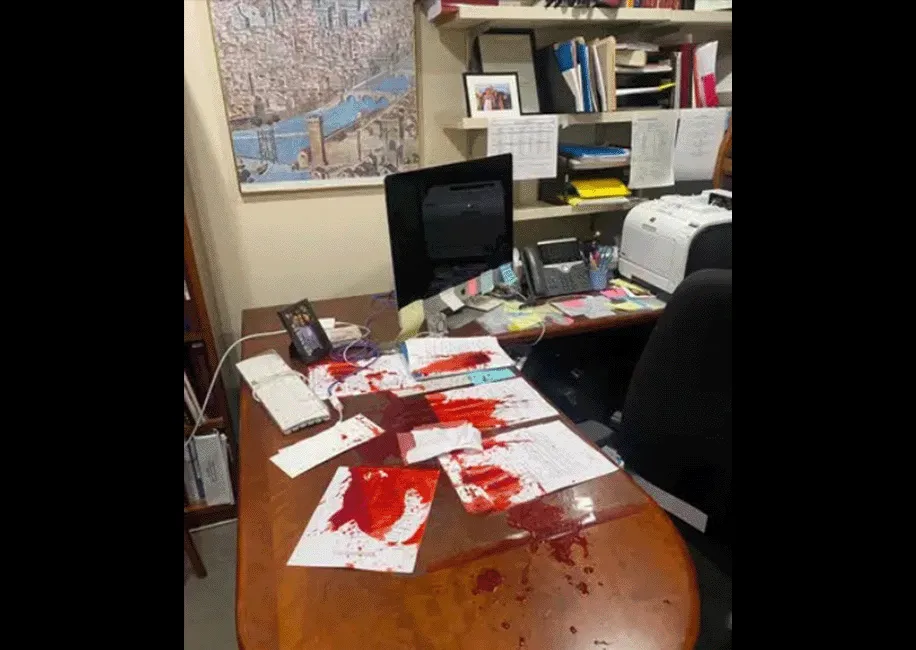
Digging in for what they had planned to be a prolonged occupation of Building 10, the group brought supplies and tools, including an electric grinder, chisels, screwdrivers, goggles, straps and cables.
"They had operational plans, they had lookouts," reported Santa Clara County District Attorney Jeff Rosen. "They were scouting out the area to see what time either uniformed police officers or private security would be around. They took great pains to bring all the equipment with them to break into the building to barricade it."
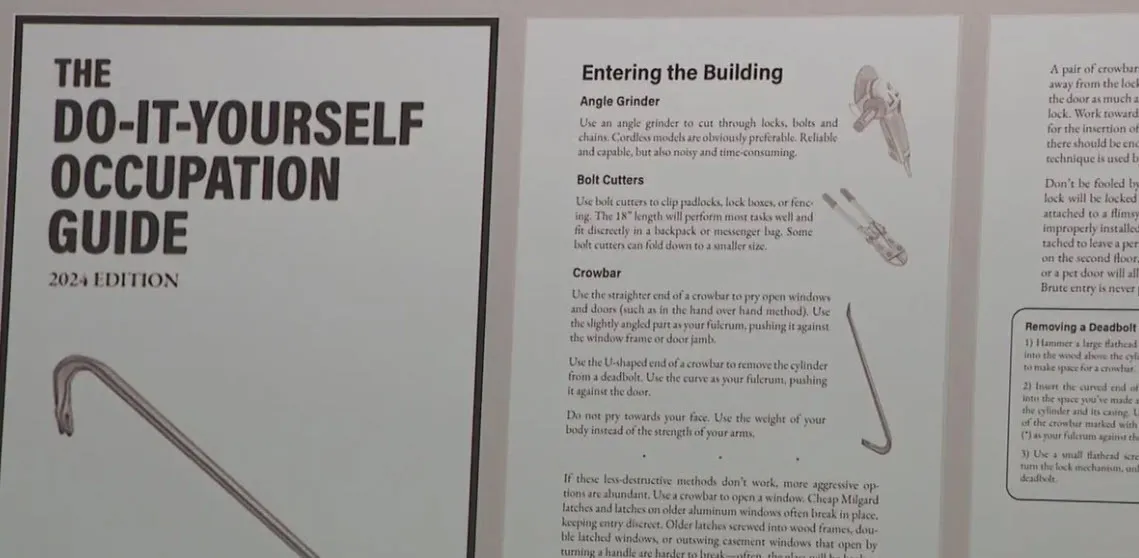
Police later recovered a manual on how to occupy a building and said the protesters used encrypted communications.
The protesters proceeded to record and post videos from the office in which they listed their demands, which included:
- Adding the divestment bill submitted by Stanford Against Apartheid in Palestine (SAAP) to the next Board of Trustees meeting with a recommendation by Saller supporting the bill
- Disclosing all finances from the 2022 fiscal year, including endowment investments
- Dropping all disciplinary and criminal charges against pro-Palestinian students at Stanford

The protesters, who declared their intentions to remain inside the building until all their demands were met, were joined by approximately 50 supporters outside the building, who spray-painted messages such as “Our office now” on the edifice, chanted slogans (“Palestine will be free, we will free Palestine!”) and linked arms, surrounding the building.
Outside protesters also scrawled extensive graffiti on Stanford’s sandstone buildings and columns of the Main Quad. On a veterans’ war memorial, they spray-painted “Our School Now Bitch” and “F--k Amerikkka.”

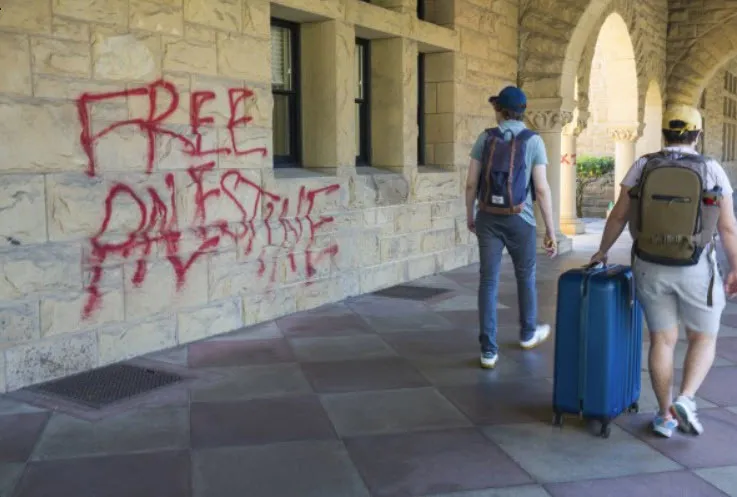
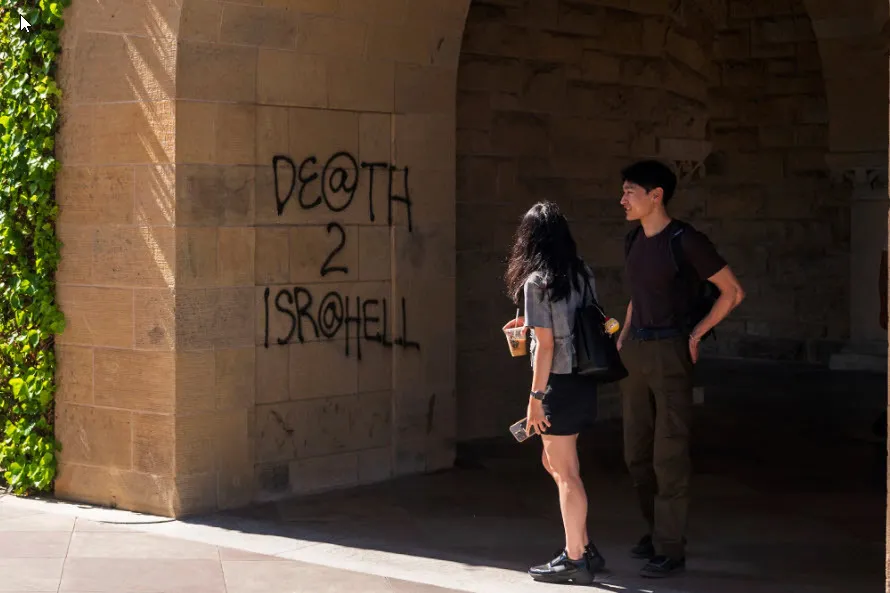

The break-in into Building 10, which also houses the provost’s office, marked the culmination of Stanford’s second pro-Hamas encampment, which began in April 2024 during the university’s Admit Weekend (when the incoming freshman class spends two-and-a-half days on campus to “get a glimpse of what life at Stanford will be like.”)
The university dismantled that encampment the same day as protesters broke into Building 10. The encampment had issued the same “disclose and divest” demands of the university.
Stanford’s first encampment, which began on October 20, 2023, was dismantled by the university after 120 days. During the months of the encampment, Saller said he was reluctant to use police to break up the encampment so as not to “take actions that escalate.”
With the takeover of Building 10, however, that strategy lasted less than two hours before the administration made the decision to call law enforcement. In those hours, the protesters ransacked the building, destroying furniture, spraying fake blood and damaging doorframes.
Beginning around 7:20 a.m., the Stanford University Department of Public Safety (SUDPS), with help from the Santa Clara County Sheriff’s Office, entered the building. Arrests began about 15 minutes later. In less than an hour, the building was completely cleared.
One officer was injured after being shoved by protesters who were interfering with a transport vehicle.
Damages were later assessed at $700,000.
Charges Levied
After a months-long investigation by the law enforcement authorities, Rosen announced in April 2025 that the protesters (minus the embedded journalist) would be charged with vandalism and conspiracy to trespass, both felonies.
Each of the protesters, who ranged in age from 19 to 32, now face up to three years in prison.
Multiple cell phones were recovered from the arrestees during the investigation. A review of the phone data showed encrypted communications between the participants detailing extensive operational plans.
The arrestees met on multiple occasions, days in advance, to plan the takeover of the building. They discussed pre-operational surveillance, how to force entry into the building and using lookouts. Their plans included practicing barricading techniques, wearing layered clothing and/or changing clothes to avoid being identified.
The communications included a “DO-IT-YOURSELF OCCUPATION GUIDE,” which stated:
“Vandalism? Occupying a space removes the space from the capitalist landscape. A group may decide it is better to destroy or vandalize a space than to return it to its usual role in good condition. The role of vandalism may be different in each situation, but it should not be disowned outright.”
All of the students charged with vandalism are U.S. citizens.
"The rule of law includes all of our colleges and universities because these institutions are not accountability-free zones and are not above or beyond the reach of the California Penal Code," Rosen said.
“Dissent is American. Vandalism is criminal,” he added. Surprisingly, however, Rosen said he hoped that the protesters would receive community service instead of jail time.
University Sanctions

The university initially suspended all of the arrested students and banned them from campus through mid-June, the end of the semester. Seniors among the group were also barred from graduating.
Further disciplinary sanctions against the students were later issued, including two-quarter suspensions followed by probation, delayed degree conferrals and community service hours.
The university also launched its own investigation, which was released before the DA’s office brought the charges against the arrestees. According to a “Statement of Facts” by the SUPS, the group demonstrated a conspiracy to occupy a building “in a highly organized and orchestrated manner” and “committed felony vandalism in excess of $400.”
Evidence also suggested that some members of the group attempted to delete their Signal app, an encrypted messaging service, “in an apparent attempt to destroy evidence.”
On April 3, 2025, the university investigator filed a complaint against all 12 protesters in the Superior Court of California, requesting arrest warrants for the entire group. Bail was set at $10,000.
Reaction from CAIR
Zahara Billoo, the executive director of the Council on American Islamic Relations in San Francisco, condemned the charges, saying they send a frightening message to pro-Palestinian students.
Ignoring the illegal and violent nature of the building takeover, Billoo said, "They must now ask themselves, how violent will law enforcement be with us if we choose to protest, and what will be the lifelong consequences again, of peaceful protest, a long celebrated tradition," Billoo said.