Joanne Barker

Overview 

Joanne Barker was the center of a controversy after using university money to fund a trip that met with known terrorists.  


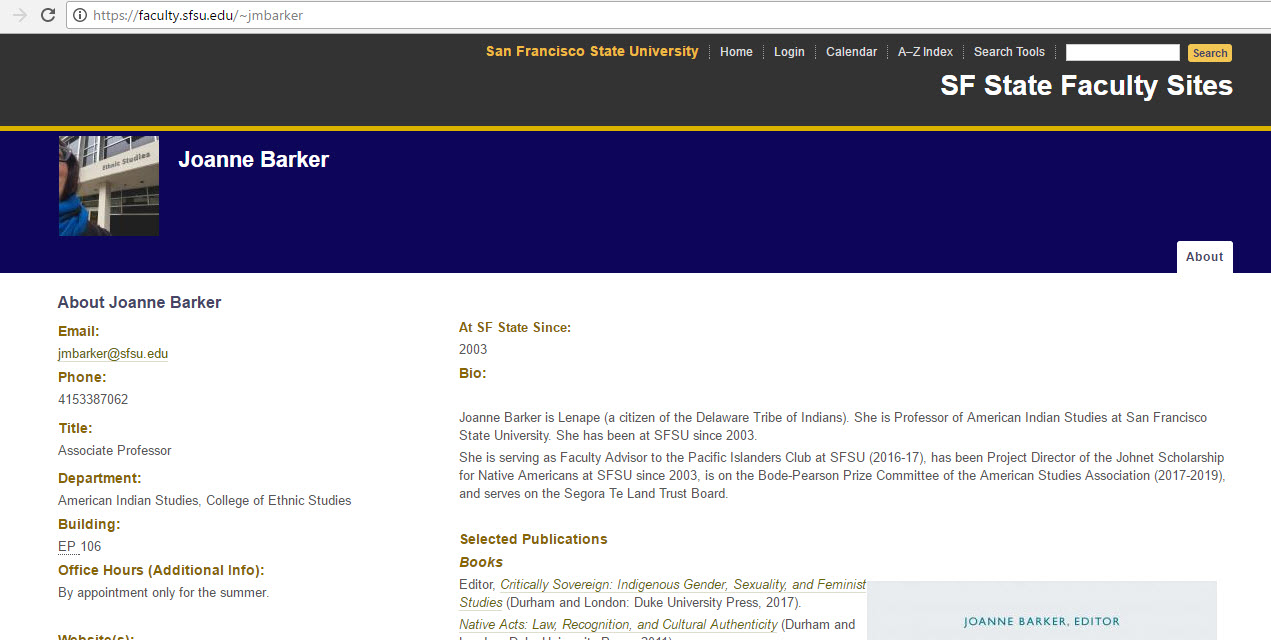
Barker is a professor of American Indian Studies at San Francisco State University (SFSU). 

Using University Funds to Meet with Terrorists

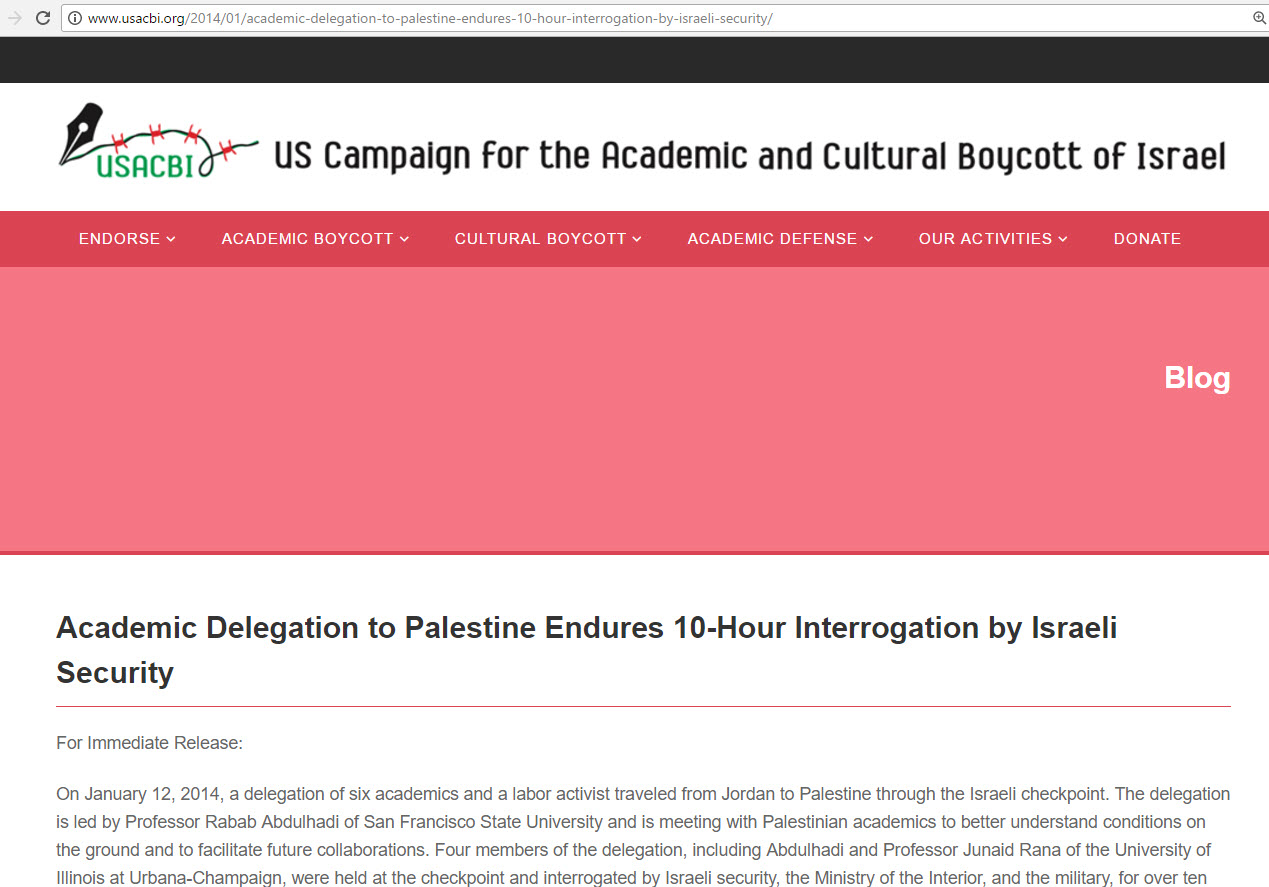
On January 12, 2014, Barker participated in a delegation trip to Israel led by Professor Rabab Abdulhadi, which was funded in part by SFSU.  

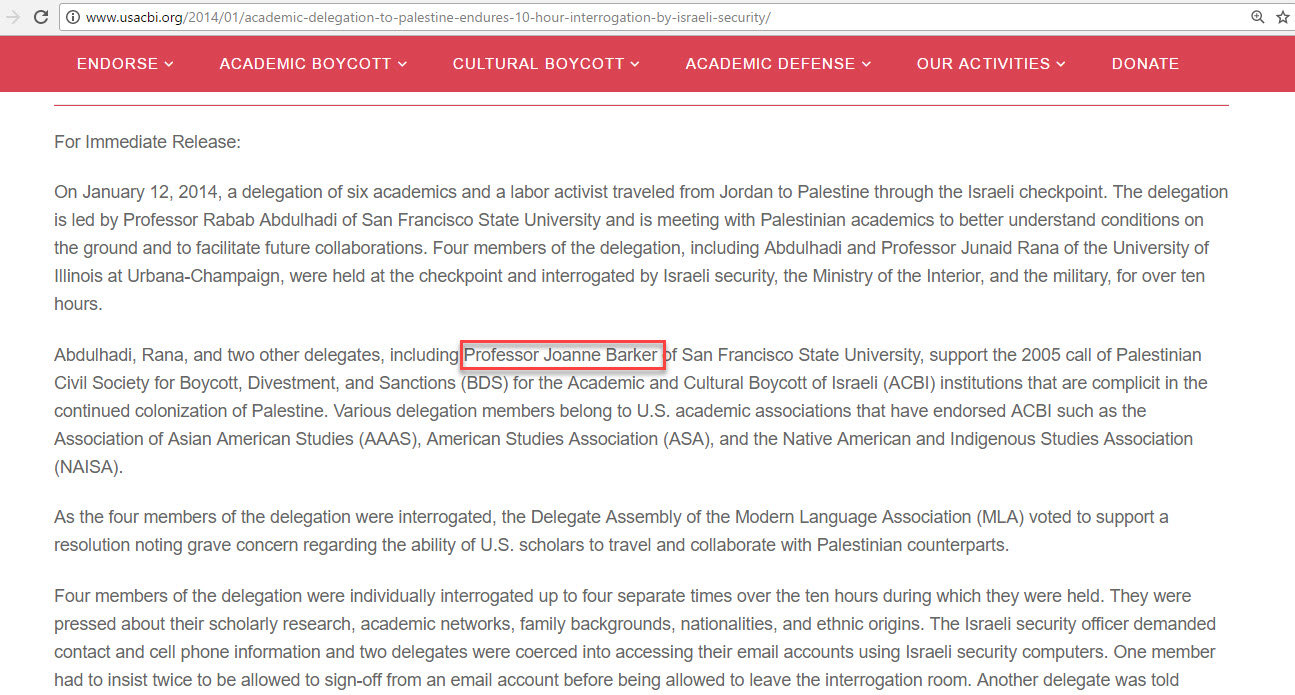
Several members of the delegation, including Barker, were stopped by Israeli security forces for apparent security concerns regarding their affiliations, specifically with the BDS movement.  

During their trip, Barker and Abdulhadi met with members of terrorist organizations such as Hamas and the Popular Front for the Liberation of Palestine (PFLP).  

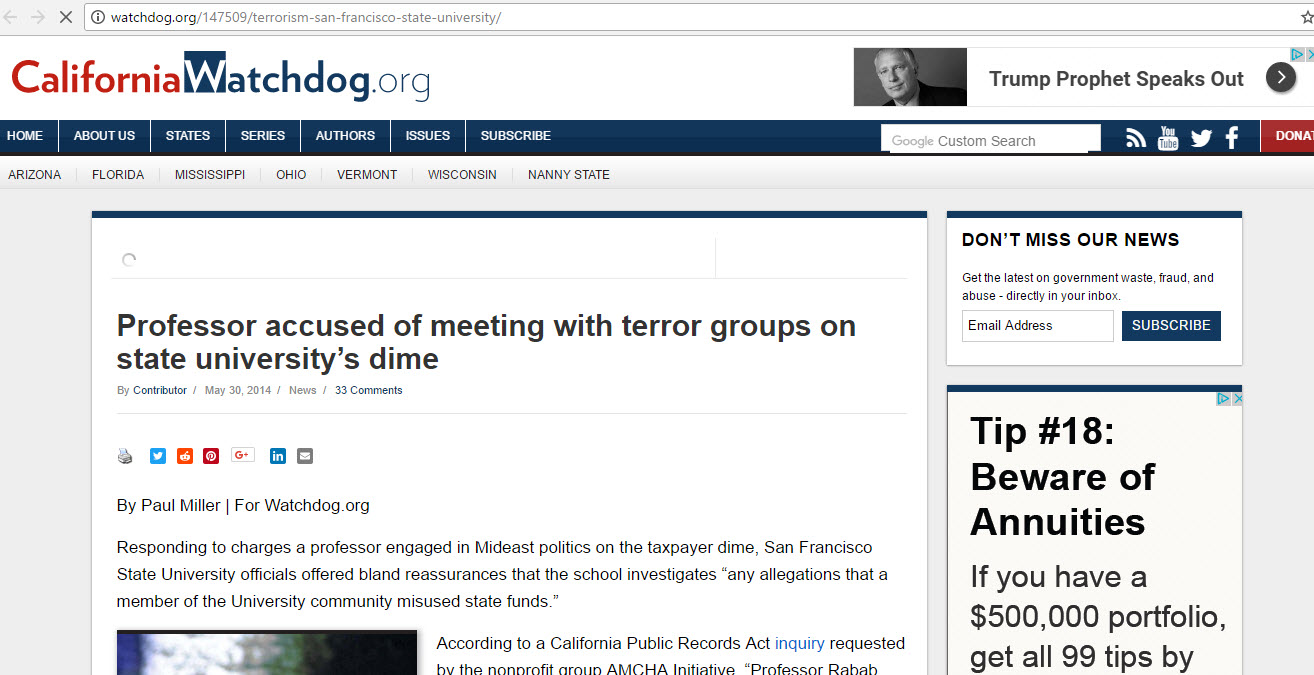
These meetings sparked significant controversy, as the professors had used $7,000 university and taxpayer dollars to fund their trip.  

According to a Middle East Forum report, Professor Rabab Abdulhadi has — since at least January 2014 —  sought to cultivate alliances between SFSU and two Hamas-dominated Palestinian universities.

One of the terrorists the delegation met with was PFLP militant, Leila Khaled.  

Following the trip, Barker reflected on the meeting on her blog and wrote that “Khaled defined solidarity as a strategy of connecting struggles of the people in the U.S. against U.S. imperialism and colonialism to the struggles of Palestinians against Israel. This point has stayed with me every day on and since the delegation, as I have listened and thought about the historical connections of Native peoples in the U.S. to the indigenous people of Palestine.” 

Leila Khaled is a leading member of the Popular Front for the Liberation of Palestine (PFLP) and participated in the hijacking of TWA Flight 840 in 1969 and El Al Flight 219 in 1970. As of 2017, Khaled was a member of PFLP's Political Bureau. Khaled has said that the second intifada failed because it was not violent enough, advocated [00:36:07] for the use of children in terror activities and compared Zionists to Nazis.  

The PFLP claimed “credit” for the 2001 assassination of the Israeli tourism minister and the 2014 Har Nof Massacre — where six people were murdered during morning prayers in a Jerusalem synagogue.  

SFSU spokeswoman, Ellen Griffin responded to the allegations stating, "Universities respect and encourage academic freedom and do not censor their scholars or condone censorship by others, faculty can and do communicate with others relevant to their research, communicating by various methods that can involve travel."  

Griffin went on to state that “"Any allegations that a member of the university community misused state funds will be investigated.”  

As of June 2017, no developments in any such investigation have been made.  

Following the controversy, Barker signed her name to a petition, published by the BDS movement on November 1, 2016, in defense of Abdulhadi. 

Support for BDS 

In December of 2012, Native American poet Joy Harjo rejected demands from the BDS movement to cancel her upcoming performance in Israel.  

In response to Harjo’s decision, Barker wrote a scathing criticism on her blog.  

After condemning Harjo’s performance, Barker went on to state that “I want Native governments to divest themselves from Israel as well (most immediately the Chickasaw and Navajo governments, who support Israeli products and send delegates to the Israeli government).”

BDS

The Boycott, Divestment, Sanctions (BDS) movement was founded by Omar Barghouti in 2005 to challenge “international support for Israeli apartheid and settler-colonialism.” BDS is an allegedly “Palestinian-led movement,” although leading BDS activists have admitted [00:01:01] this is not true. 

One of the demands of BDS includes [point 3] what is generally known as the “right of return,” a demand discredited as a way to eliminate Israel. Barghouti said the “right of return” is a means to “end Israel’s existence as a Jewish state.”  

Barghouti has said that BDS “aims to turn Israel into a pariah state, as South Africa once was.”

In his activism, Barghouti has also said [00:05:55] regarding Israel: “Definitely, most definitely, we oppose a Jewish state in any part of Palestine. No…rational Palestinian, not a sellout Palestinian, will ever accept a Jewish state in Palestine.”

The movement has been linked to numerous terrorist organizations and received a public endorsement from Hamas in 2017.

BDS initiatives include calling on institutions and individuals to divest from Israeli-affiliated companies, promoting academic and cultural boycotts of Israel, and organizing anti-Israel rallies, protests and campaigns.

The movement’s most notable achievement has been the infiltration of university campuses through lobbying for “BDS resolutions.” In these cases, student governments and student groups, backed by their own anti-Israel members and affiliates, have proposed resolutions on some form of boycott of, or divestment from, Israel and Israeli-affiliated entities.

Boycott resolutions, although non-binding, have been passed by student governments on numerous North American campuses.


BDS activity is often aggressive and disruptive. It has been noted that universities that pass BDS resolutions see a marked increase in anti-Semitic incidents on campus. On one campus, when the student government debated a BDS resolution, reports emerged of violent threats against those opposing it.


Social Media and Weblinks


Photos & Screenshots

17 images