


Old Hate, New Language
Post 1948, Jew-hate has evolved into commendable academic jargon
Old Hate, New Language
Post 1948, Jew-hate has evolved into commendable academic jargon
Share:

Intro
Post 1948, Jew-haters evolved in their use of antisemitic rhetoric. Spouting the correct language, they seamlessly transformed their expressions of unbridled Jew hate into commendable academic jargon.
This report will trace the evolution of this rhetoric, from its roots in Nazi-Arab-Soviet propaganda to its laundering in academia through settler-colonial theory and finally, to the current genocide libel, which operates under the guise of justice.
Phase I: “Zionism is Racism”
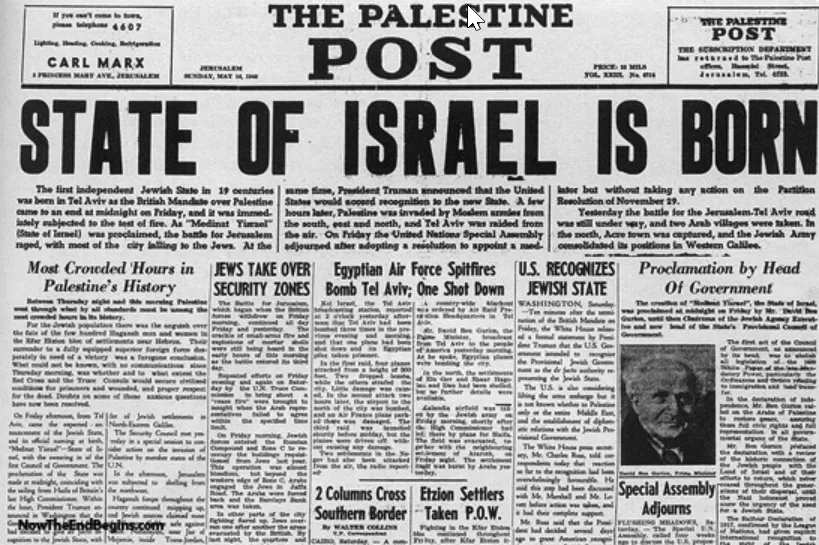
Post-World War II, a significant shift in antisemitic rhetoric occurred, defining the phenomenon as we know it today. The murder of six million Jews in the Holocaust was a fresh memory. This made attacking Jews on the international stage less politically attractive.
While this didn’t stop powerful countries from closing their doors to Jewish refugees from Europe, it did change the discourse. Instead of uttering overtly anti-Jewish expressions, a new concept was introduced: “anti-Zionism.”
Suddenly, Jews were attacked because they were Zionists. Why? Because just as suddenly, Zionism became racism.
Where and how did this ruse begin? Not surprisingly, with the Soviets, world-class propagandists.
The USSR’s Campaign Against Israel
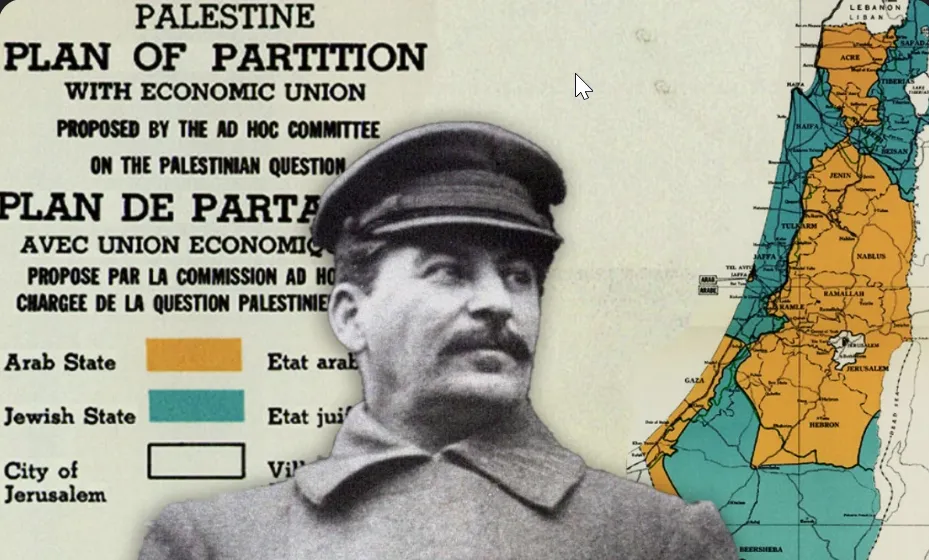
Despite the fact that under the Soviets, Jews lived with state-enforced antisemitism and demonization, during the UN debates on the future of Mandatory Palestine, the USSR surprisingly backed the UN partition plan, including the creation of a Jewish state.
This was done for pure political reasons – to weaken British influence in the Middle East and to bring the nascent state, which had decidedly socialist and communist leanings, under its influence.
- On May 17, 1948, just three days after Israel declared independence, the USSR was the first country to fully recognize Israel
- Through Czechoslovakia and other Eastern Bloc channels, the Soviets sent arms shipments (including rifles, machine guns, artillery and aircraft) to the Haganah during the 1948 war – arms which were crucial to Israel’s ability to survive the Arab onslaught
The Soviets weren’t alone in their support for the newly created Israel. All of the international communist parties supported the partition plan and the creation of a Jewish state. The U.S. Communist Party called Israel “an organic part of the world struggle for peace and democracy.” The French communists viewed the Israelis in solidarity with “resistance” fighters throughout the world.
Immediately after Israel’s 1948 victory in the War of Independence, “Zionism was … celebrated by the left as an organic movement of national return and a model for national liberation and decolonization movements throughout the world,” writes Alex Ryvchin in his essay “Red Terror: How the Soviet Union Shaped Modern Anti-Zionist Discourse.”
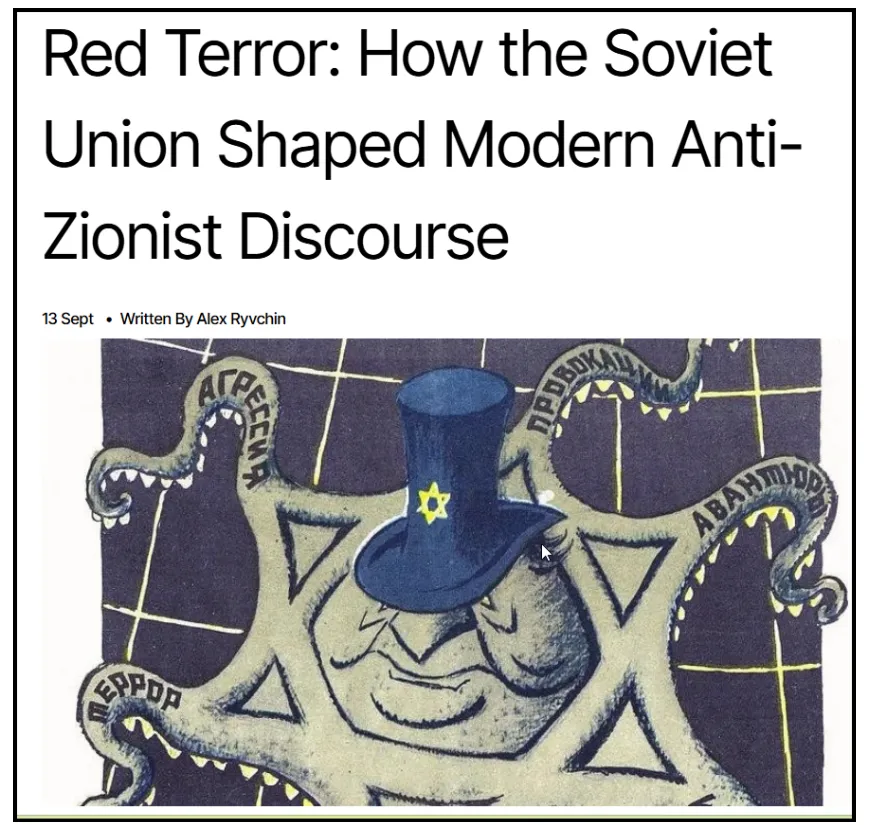
“Israel’s victory in its War of Independence and refusal to succumb to far mightier foes was positively awe-inspiring to adherents of political movements predicated on toppling structures of power,” Ryvchin explained.
Ironically, it was the communists who understood Zionism for what it actually is – namely, the return of the Jewish people to their indigenous homeland.
Soviet Support Quickly Turns Into Opposition
However, communist support for the nascent state of Israel waned quickly, not due to ideology but, again, to politics. When the state of Israel was created, the Cold War between Russia and the United States had already begun. The two superpowers were pitted against each other, each vying for world dominance, including in the Middle East.
By late 1948, it became apparent that Israel was espousing Western democratic values and supporting America. The Soviets realized they needed to significantly downgrade Israel, if not entirely ostracize it in the eyes of the world.
As a first step, the Soviets began spewing and exporting rabid antisemitic rhetoric. Specifically, they embarked on an intense and concentrated campaign against the “Zionists.” Part of this campaign was the infamous “Doctors’ Plot,” in which the Soviet government levied false charges against prominent doctors, many of them Jewish, accusing them of planning to murder high-level government and communist party officials.
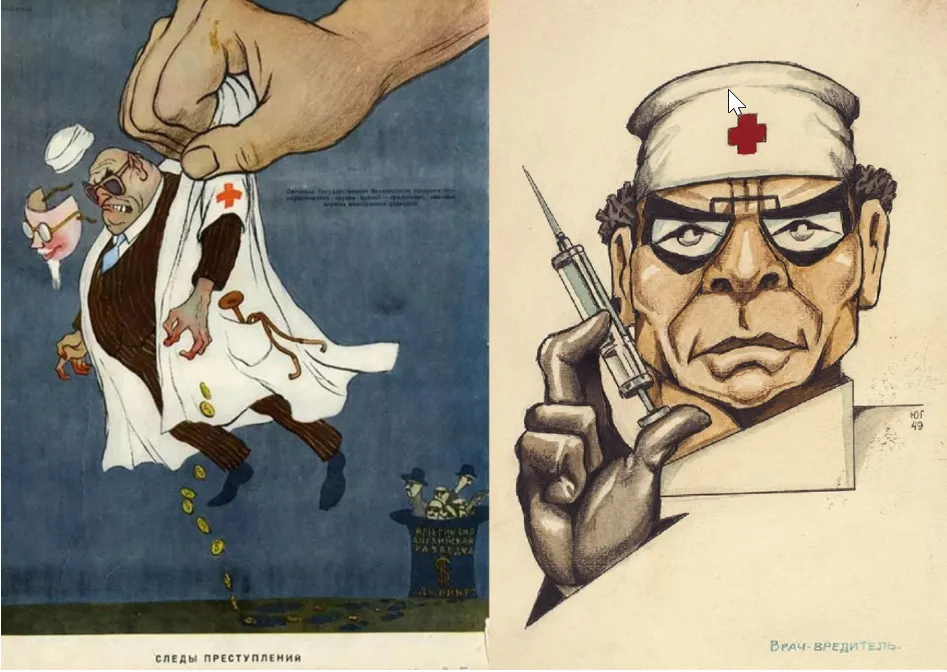
Stalin's security services alleged the doctors were agents of "international Jewry," Zionists, and U.S. and British intelligence. Confessions were extracted under torture, with Stalin reportedly demanding of the interrogators, "beat, beat and beat again."
On January 13, 1953, Pravda publicized the arrests of nine doctors, branding them as "vicious spies and killers under the mask of academic physicians."
“The propaganda was highly compelling and steeped in long-established themes of Jewish bloodthirstiness, greed, corruption, manipulation and cunning. It would contend that the very existence of a Jewish homeland was not only a plot of imperialism, but a mortal danger to the peace of the world,” writes Ryvchin.
While Russia was busy introducing the term “anti-Zionist” into the global lexicon, most Americans were focused on the Vietnam War and the Civil Rights Movement. Yet Soviet-supporting professors at top American universities were paying close attention. In truth, antisemitism had never been in short supply at these universities. (Most of them had Jewish quotas.)
Russia’s Ruse at the UN: ‘Zionism is Racism’
At the UN, the Soviets began employing an audacious strategy against Israel. Although the Nazis were their arch-enemies, the Soviets learned this strategy from none other than Adolf Hitler.
In his 1925 book Mein Kampf, Hitler praises the efficacy of using the psychological technique known as the “Big Lie,”i.e., promoting a lie so big that no one would believe that anyone "could have the impudence to distort the truth so infamously."
Ryvchin documents the fabrication of the “Big Lie” against Israel by the Soviets, beginning around 1963:
“When a sub-commission of the United Nations was tasked with drafting a convention on the 'elimination of all forms of racial discrimination,' the proceedings naturally focused on apartheid [in South Africa], neo-Nazism and antisemitism. But the Soviets viewed the reference to antisemitism as a direct rebuke to their anti-Jewish measures, and served up an amendment that ‘was almost a joke,’ even to the Soviet delegation itself.
“The amendment inserted Zionism into the listed forms of racism. According to sources close to the deliberations, the Soviets understood ‘full well that the idea that Zionism is racism is an indefensible position,’ yet they floated it anyway, in part to turn the US-led initiative into a farce, and in part perhaps, to see how far a ‘big lie’ could go.
“Ultimately, the Convention was adopted with neither antisemitism nor Zionism referred to … But the seed had been planted.”
Lead-up to Resolution 3379
The Soviets refined and amplified this tactic over the next decade.
- By 1973, UNGA Resolution 315 condemned Israel and, for the first time, implicitly linked Zionism to racism
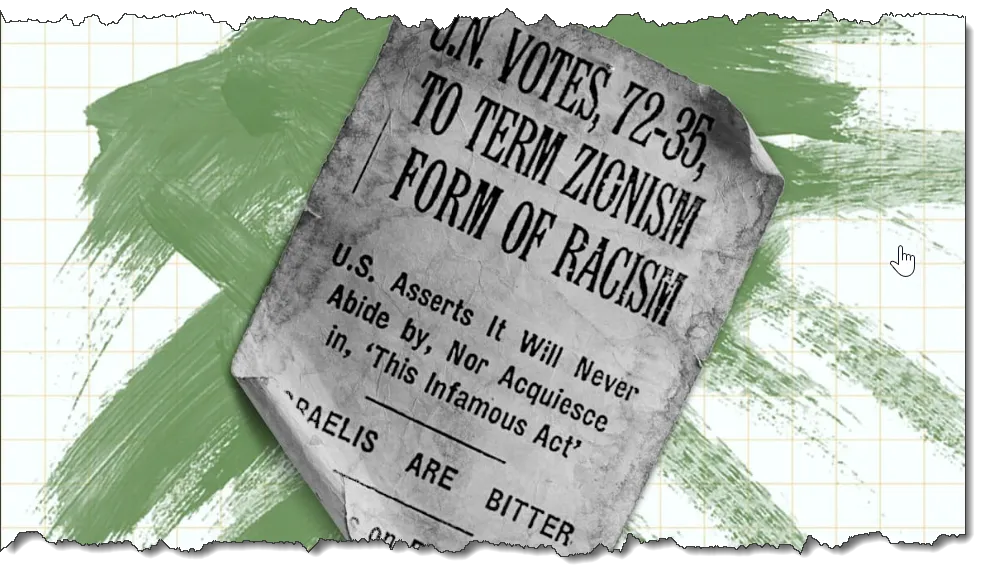
- Finally, on November 10, 1975, the infamous UN General Assembly Resolution 3379, which declared "Zionism is a form of racism and racial discrimination," passed (72-35) with the support of the Soviet bloc, the Arab countries and many non-aligned states
The accusation stuck, and pro-Israel advocates are still fighting this absurd allegation today.
The Genocide Libel
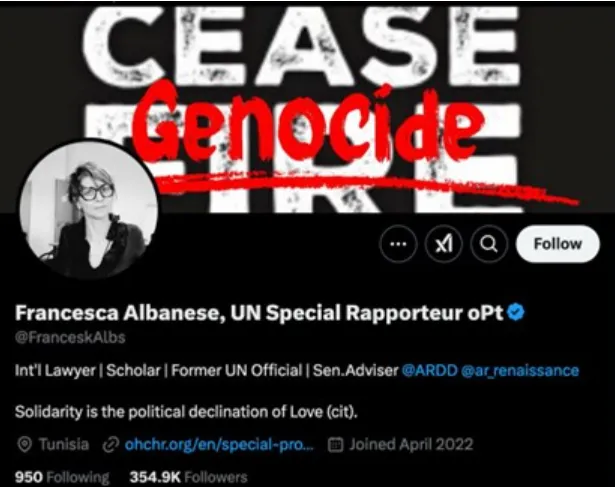
The next year, 1976, the Soviet Union took the accusation one step further, accusing Israel of "racial genocide" against Arabs in the West Bank during a UN Security Council debate.
The Soviets drew directly from Arab delegates' rhetoric, portraying Israeli security measures (i.e., quelling Arab riots in the West Bank) as a systematic extermination technique (building on the racism charge).
The genocide claim wasn’t original. Arnold Toynbee, a prominent British historian, had been comparing Israel’s actions towards Arabs to Nazi crimes for decades.
Recasting Israel as the “New Nazis”
Many Jewish and non‑Jewish scholars have described Toynbee’s position as a classic early case of “Holocaust inversion,” i.e., recasting Jews/Israel as the “new Nazis” and Palestinians as the new Jews. This claim distorts both Holocaust history and the nature of the 1948 war.
Toynbee's main arguments were:
- Jewish treatment of Palestinian Arabs during the 1948 war involved moral crimes akin to Nazism, such as expulsions and civilian suffering, representing a "barbarian relapse" of civilized conduct
- Zionism's creation of Israel mirrored racialist ideologies, imposing a Jewish state on an Arab-majority land through force, like Nazi expansionism and ethnic dominance
- Scale doesn't matter for moral judgment; even if smaller, the intentional infliction of suffering on Arabs paralleled the Nazi persecution of Jews and represented a breakdown of ethical norms
- Israel's policies post-1948 continued this pattern of discrimination and displacement, echoing the systemic oppression Jews faced under Hitler
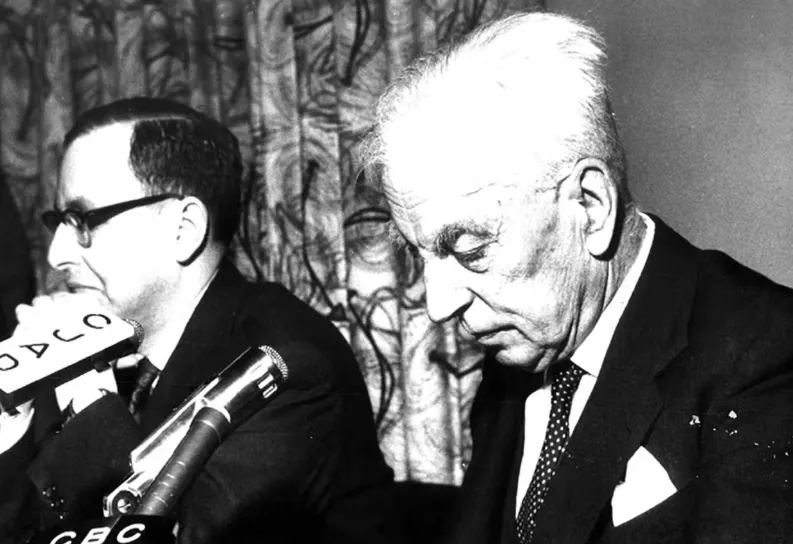
In a famous 1961 debate in Canada with Israeli Ambassador Yaacov Herzog, Toynbee explicitly repeated this comparison. Herzog sharply rejected his thesis, arguing that:
- The 1948 war was defensive, unlike the unprovoked Nazi genocide. It was launched by Arab states rejecting the UN partition plan and vowing Jewish extermination
- No parallel exists between the planned extermination of six million Jews murdered industrially by the Nazis and wartime chaos, where Arabs fled amid fighting they initiated
- Hundreds of thousands of Jews were expelled from Arab countries simultaneously and absorbed by Israel without creating refugee crises like those imposed on Palestinians by Arab leaders
Toynbee was forced to concede many of Herzog’s points in the debate, which ended with a general consensus that the 71-year-old historian had been bested by the then 39-year-old ambassador.
Zionism as a Settler-Colonial State
While antisemites still use the “Zionism is racism” canard against Israel, now, the anti-Semitic rhetoric comes with a litany of another “sin” – namely, that Israel is a “settler-colonial” state. In this context, its “racist” nature is simply a given.
What caused the switch in language? How does it benefit those who desire to bring down the only Jewish state in the world?
The settler-colonial libel was professionalized within Western academic and NGO ecosystems through selective, decontextualized appropriations of Australian anthropologist Patrick Wolfe’s settler-colonial framework.
While Wolfe wasn’t the first to introduce the settler-colonialist canard (Edward Said and other intellectuals had been pushing this narrative since the late 1970s), he pioneered settler-colonial studies as a distinct academic field.
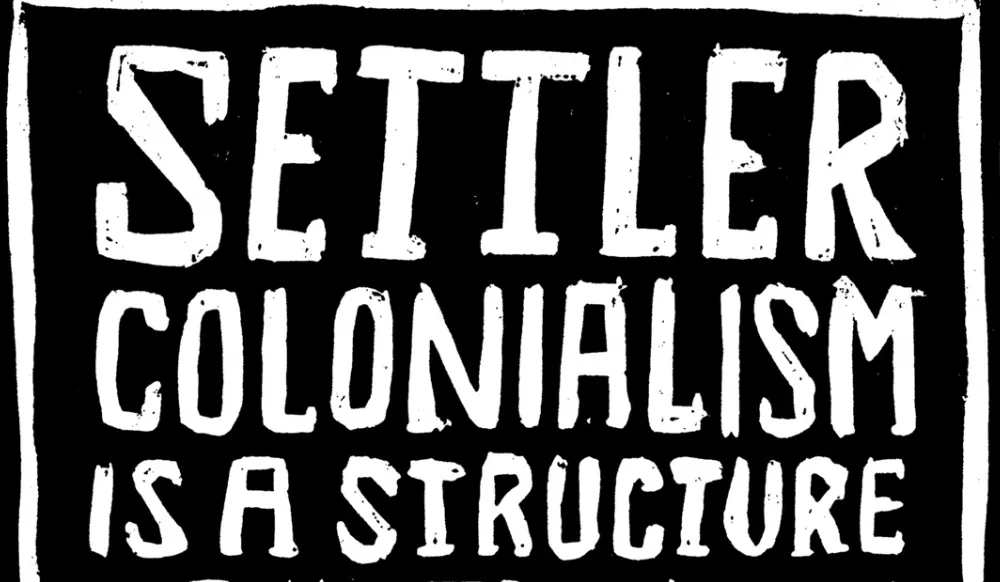
What was unique about Wolfe’s approach was that he framed settler colonialism as an ongoing "structure" rather than a one-time event.
Wolfe argued that settler colonialism differs from "classical" exploitation colonialism (e.g., extracting resources from natives) by aiming to replace native populations entirely (i.e., through genocide or displacement).
Wolfe famously proclaimed, "Invasion is a structure, not an event." He characterized settlers as seeking permanent sovereignty over territory and viewing natives as obstacles to be removed.
In this framework, settler colonialism, he claimed, is an ongoing process. Even after formal conquest, the structure persists through laws, property regimes and cultural erasure to maintain settler dominance.
In this reframing, genocide is no longer a definable crime requiring demonstrable intent and evidentiary thresholds; rather, it is a presumed “structural condition” inherent to certain states or collective identities.
How Wolfe’s Theory Was Applied to Israel
Wolfe’s theory was applied to Israel by ignoring basic historical facts, including:
- Jewish indigeneity to Israel
- The refugee origins of much of Israel’s population
- The absence of any imperial metropole (a parent state of a colony)
- The continuity of Jewish presence in the land
Wolfe, by contrast, recast Jews as "settlers" from Europe who invaded Palestine to eliminate or displace the indigenous Arab population, mirroring the U.S., Australia and Canada. He characterizes the defensive war of 1948 as a tactic to secure land.
Despite the fact that the leaders of the newly formed state of Israel extended their hands in peace to the Arabs living in Israel with an offer to create a partnership in building the state, Wolfe says Zionism inherently requires native erasure.
Thus, anti-Zionists, following Wolfe’s lead, were able to recast Israel’s very existence as inherently genocidal. Today, Wolfe work is canonical in anti-Zionist academia.
October 7: Rapid deployment of a ready-made libel
Within this framework, October 7, 2023, did not generate the genocide accusation so much as re-activate a preexisting script.
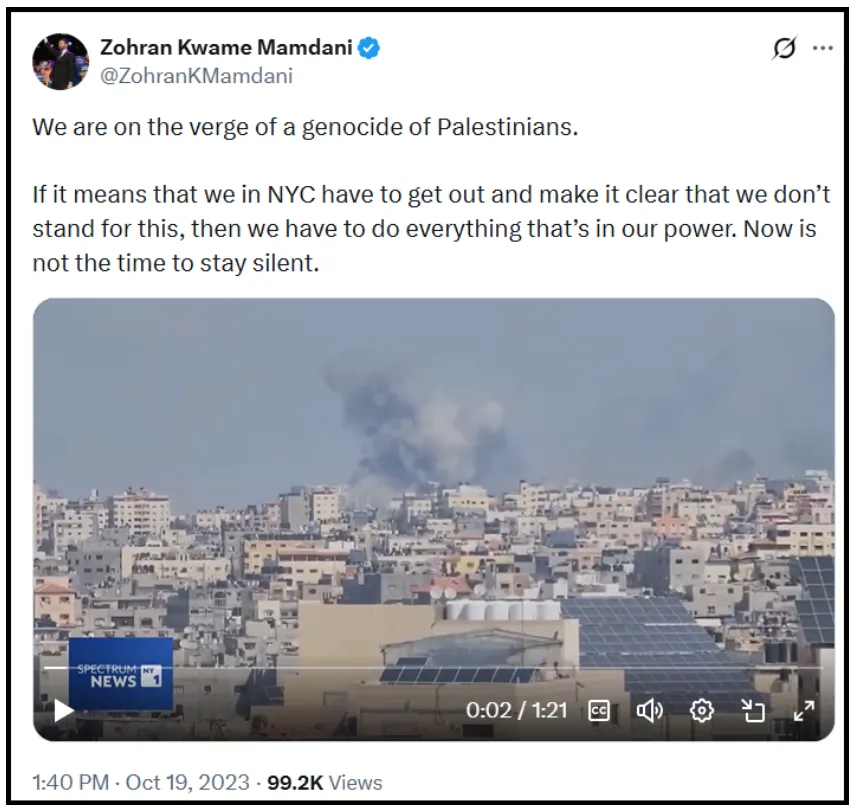
Public warnings of “Israel’s genocide” appeared across social media and anti-Zionist networks within days of Hamas’s rampage, well before any military campaign could plausibly have carried out such an act.
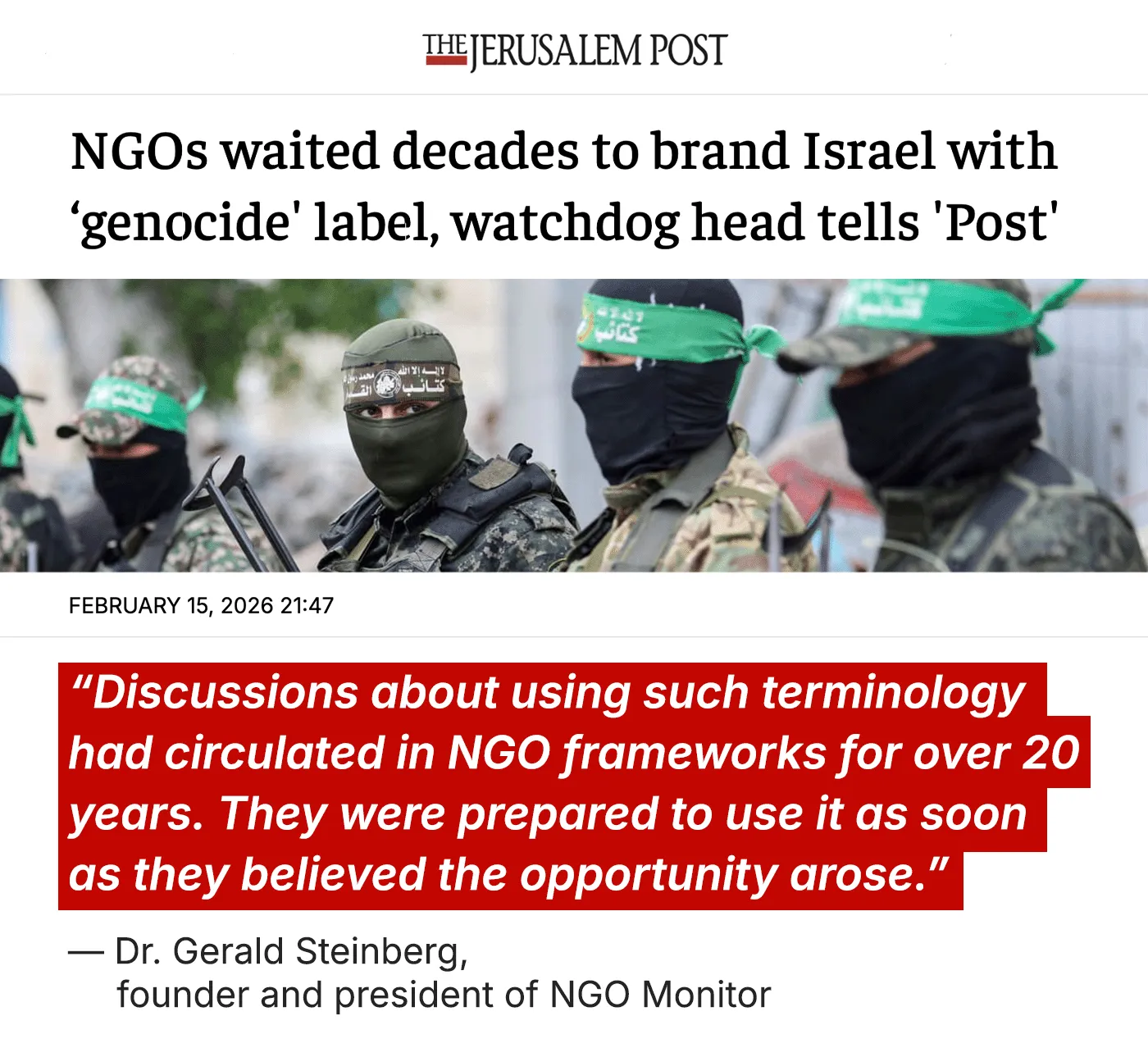
Witness an October 19, 2023 post by Zohran Mamdani, alongside private messages from his wife on November 1, urging others to “shift your energy to speaking out about genocide!!!”
The speed and uniformity of this language suggest the rapid activation of an established framework. In short, the genocide libel was “locked and loaded,” ready for immediate deployment.
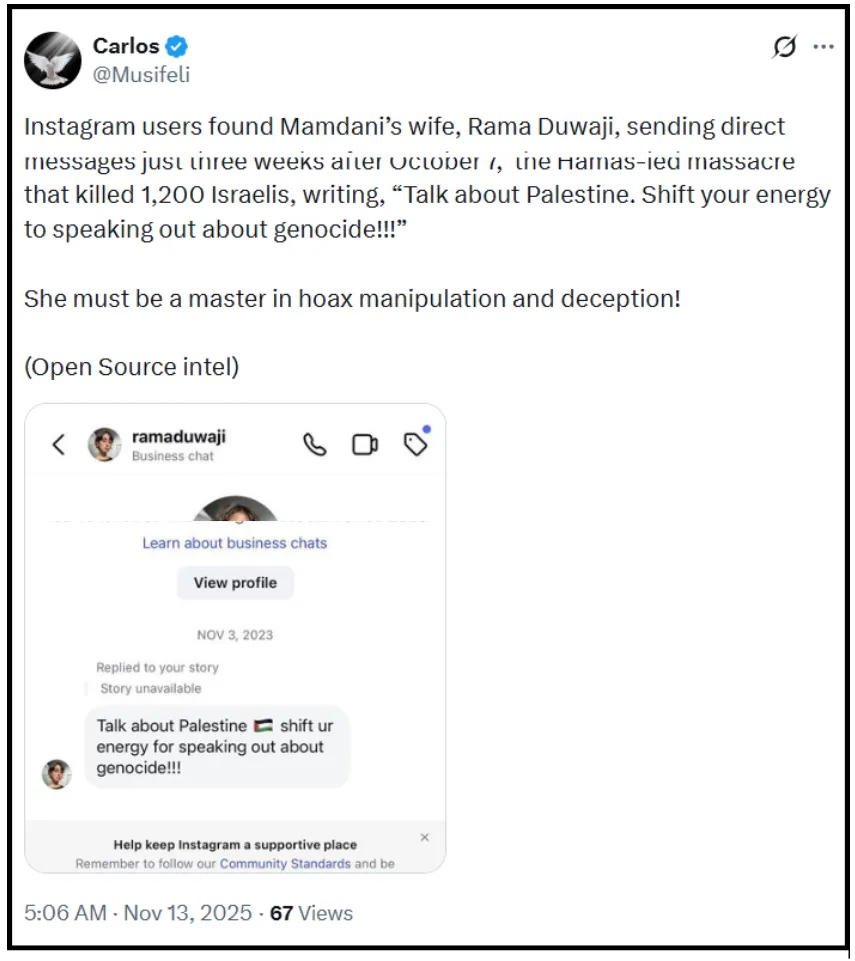
Laundering an Illusion of Consensus
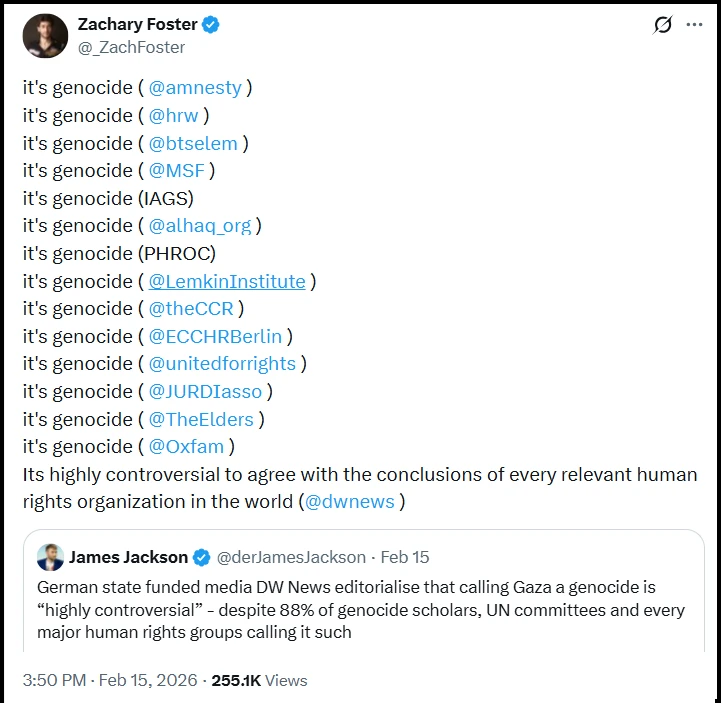
The genocide libel is sustained by a small, insular group of anti-Zionist academics and aligned NGOs, which operate in a closed circuit of mutual citation and affirmation. A handful of academics repeatedly cite one another’s work, dominate professional and media forums, and present their findings as evidence of broad scholarly agreement.
This is despite the fact that a group of 500 academics called Scholars for Truth About Genocide (SFTAG) explicitly rejects their genocide libel against Israel. Yet SFTAG academics are systematically marginalized, ignored or treated as illegitimate by academic and mainstream media outlets.
The result is a manufactured consensus sustained through repetition, institutional signaling and media amplification.
Recasting Jews as Dangerous
Now that it has become normalized, the genocide libel functions as a license for civic targeting, furnishing a moral vocabulary through which synagogues, Jewish campus organizations and cultural institutions are now recast as “dangerous” due to their “links to genocide.”
The movement from theoretical to actual has been swift, resulting in harassment of Jews, vandalism of Jewish institutions and denial of public venues.
In February 2026, a group of anti-Zionist activists targeted 17 Jewish summer camps in Canada in a coordinated campaign to strip the camps of their accreditation due to their support for a “genocidal state.”
What were the camps’ offenses? According to the group, the camps celebrate Israel’s Independence and Memorial Days or employ staffers who have visited Israel. One camp employed someone who served as a social worker in the IDF and the director of another camp was described as a “Zionist who publicly supports Israel.” Another camp was attacked for cultural “appropriation” for using za’atar, a Middle Eastern spice.
In the U.S., Democratic candidates are now using the genocide accusation as a purity test against fellow candidates. For example, Illinois congresswoman Robin Kelly, who is running for U.S. Senate and who received a donation from AIPAC just a year ago, adopted the genocide libel since declaring her Senate candidacy last May.
During a primary debate in February 2026, she said, “It may not have started off being like that, but I believe that is what it turned into.”
Later, on social media, she chided her opponents, writing, “Every candidate on stage tonight had the opportunity to condemn genocide in Gaza. I’m the only one who did.”
The More Things Change
From the establishment of Israel, antisemitic rhetoric has evolved from accusing Zionists of being racists, the state of being a settler-colonial project and now, every Jew who supports it is complicit in genocide.